
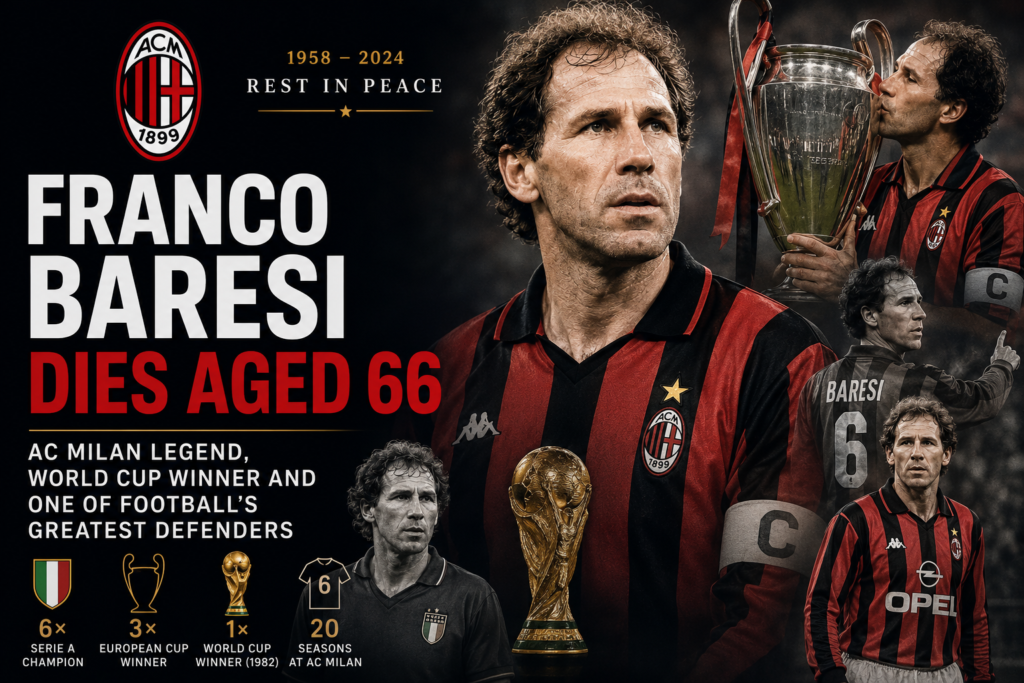
Franco Baresi has died at the age of 66.
AC Milan confirmed on Friday, July 31, 2026, that their legendary former captain and honorary vice-president had passed away.
World football has lost one of the greatest defenders of all time, while AC Milan has lost a man who represented the identity, values and history of the club for more than half a century.
Baresi spent his entire professional club career with AC Milan.
He remained loyal during relegations, financial uncertainty and difficult seasons before captaining Milan through one of the most dominant periods European football has ever witnessed.
According to AC Milan’s official records, Baresi made 719 appearances and scored 33 goals for the Rossoneri. He won six Serie A titles, three European Cups or Champions League trophies, two Intercontinental Cups and four Italian Super Cups.
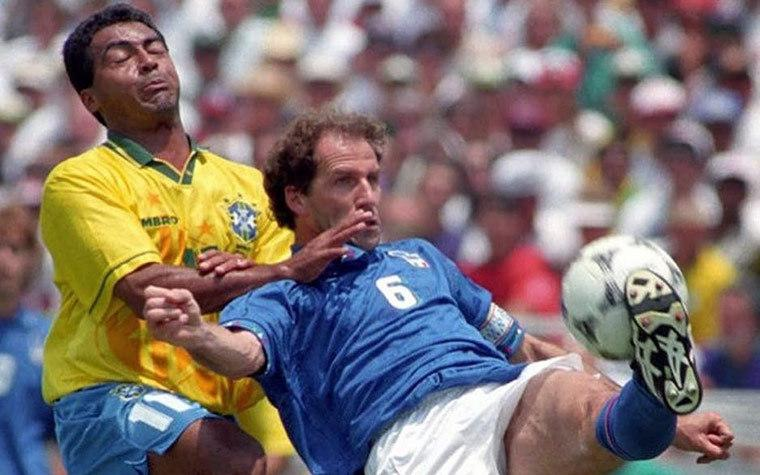
For Italy, he earned 81 international caps, won the 1982 FIFA World Cup and captained his country in the unforgettable 1994 World Cup final against Brazil.
Baresi was not one of football’s tallest or most physically intimidating defenders.
He became a legend because he could see danger before almost anybody else.
He anticipated passes, controlled the defensive line, organised the offside trap and launched attacks from deep with intelligence and composure.
After his retirement in 1997, Milan retired his famous number 6 shirt.
Nobody else would wear the number that Baresi had made immortal.
Franco Baresi was not simply an AC Milan player.
He was AC Milan.
Franco Baresi – Quick Facts
| Fact | Franco Baresi |
|---|---|
| Full name | Franchino Baresi |
| Born | May 8, 1960 |
| Birthplace | Travagliato, Italy |
| Died | July 31, 2026 |
| Age | 66 |
| Height | Approximately 1.76 metres |
| Position | Sweeper and central defender |
| Professional career | 1977–1997 |
| Professional club | AC Milan |
| Seasons with Milan | 20 |
| Official Milan appearances | 719 |
| Official Milan goals | 33 |
| Serie A appearances | 470 |
| Serie A goals | 12 |
| Italy appearances | 81 |
| Italy goals | 1 |
| Seasons as Milan captain | 15 |
| Shirt number | 6 |
| World Cup winner | 1982 |
| Final Milan role | Honorary vice-president |
See Franco Baresi’s official AC Milan Hall of Fame profile
AC Milan Says Goodbye to Its Eternal Number 6
AC Milan published an official tribute titled “Franco Baresi Forever” on July 31, 2026.
The club described him as the Rossonero of the Century and said that his memory would continue to guide Milan through the future.
Baresi remained closely connected to the club after ending his playing career.
He worked as an ambassador and official representative before becoming honorary vice-president in 2020.
His relationship with Milan covered almost every possible role.
He was a youth player.
He was a first-team player.
He was the captain.
He was a club legend.
He later became one of Milan’s most important global representatives.
Baresi’s final major public appearance came only a few months before his death. He appeared at a packed San Siro during the opening ceremony of the Milano Cortina Winter Olympic Games, carrying the Olympic flame alongside former Inter and Italy defender Giuseppe Bergomi.
Read AC Milan’s official tribute: Franco Baresi Forever
What Was Franco Baresi’s Cause of Death?
No official cause of death had been announced when this article was published.
In August 2025, AC Milan revealed that Baresi had undergone surgery to remove a pulmonary nodule discovered during a routine medical examination.
The operation was reported to have been successful, and he was subsequently prescribed immunotherapy treatment.
However, neither his family nor AC Milan has officially confirmed that the condition was the direct cause of his death.
It would therefore be inaccurate to present speculation as fact.
The confirmed information is that Franco Baresi died on July 31, 2026, at the age of 66.
Read the confirmed Reuters report
From Travagliato to the Greatest Stage in Football
Franco Baresi was born in Travagliato, a small town in the province of Brescia in northern Italy.
His childhood included enormous personal tragedy.
Baresi lost both of his parents before reaching the age of 16.
Football became his opportunity to build a future.
Franco and his older brother Giuseppe attended a trial with Inter.
Giuseppe was accepted and eventually made more than 500 appearances for the Nerazzurri.
Franco was rejected.
Inter reportedly considered him too small and physically fragile to develop into an elite defender.
It became one of the most famous misjudgements in Italian football history.
AC Milan saw something different.
Milan recognised his football intelligence, anticipation and technical potential and offered him a place in the club’s youth system.
The two brothers would eventually become captains on opposite sides of the city.
Giuseppe became Inter captain.
Franco became Milan captain.
Their meetings before the Derby della Madonnina became part of Italian football folklore.
His AC Milan Debut at 17
Baresi made his Serie A debut against Hellas Verona on April 23, 1978.
He was only 17.
Milan’s Swedish coach Nils Liedholm quickly recognised that the teenager understood football at a far more advanced level than most players his age.
Baresi was not the biggest defender.
He was not the strongest.
But he constantly looked around him, predicted movements and understood where danger would appear.
Liedholm trusted him as a sweeper, and Baresi became an important first-team player during the following season.
Milan won the 1978/79 Serie A title.
Baresi was only 18 when he collected his first Scudetto.
Read AC Milan’s official history of the title-winning season
Franco Baresi’s Career Timeline
| Year | Event |
|---|---|
| 1977 | Joined the AC Milan first-team environment |
| 1978 | Made his Serie A debut at the age of 17 |
| 1979 | Won his first Serie A title |
| 1980 | Remained with Milan after relegation to Serie B |
| 1981 | Helped Milan return to Serie A |
| 1982 | Won the FIFA World Cup with Italy |
| 1982 | Became Milan captain at the age of 22 |
| 1983 | Helped Milan earn promotion from Serie B again |
| 1988 | Won Serie A under Arrigo Sacchi |
| 1989 | Lifted the European Cup as captain |
| 1989 | Finished second in the Ballon d’Or |
| 1990 | Won a second consecutive European Cup |
| 1990 | Won World Cup bronze with Italy |
| 1991 | Became captain of the Italian national team |
| 1992 | Led Milan through an unbeaten Serie A season |
| 1993 | Won another Italian championship |
| 1994 | Won Serie A and the Champions League |
| 1994 | Captained Italy in the World Cup final |
| 1996 | Won his sixth Serie A title |
| 1997 | Retired at the age of 37 |
| 1997 | Milan retired his number 6 shirt |
| 1999 | Named Milan’s Player of the Century |
| 2020 | Became honorary vice-president of AC Milan |
| 2024 | Became the first honorary member of Milan’s new Hall of Fame |
| 2026 | Died on July 31 at the age of 66 |
He Stayed When Milan Were Relegated
Baresi’s loyalty was established during one of the darkest periods in AC Milan’s history.
Milan were forcibly relegated to Serie B in 1980 following the Totonero betting scandal.
Several players could have left.
Baresi stayed.
He helped Milan win Serie B and return to the top flight.
The club were relegated again shortly afterwards, this time because of their performances on the pitch.
Baresi stayed again.
Milan won Serie B in 1982/83 and returned to Serie A.
Baresi could have chosen an easier career at another major Italian club.
Instead, he remained loyal to the club that had believed in him after Inter rejected him.
That decision became one of the most important parts of his legacy.
He was not only Milan’s captain when the trophies arrived.
He was there when the club needed leadership most.
Milan Captain at Only 22
Baresi was appointed AC Milan captain in 1982.
He was only 22 years old.
The decision demonstrated the respect he had already earned from teammates, coaches and club officials.
Baresi was not always the loudest personality in the dressing room.
He led through positioning, preparation, concentration and personal responsibility.
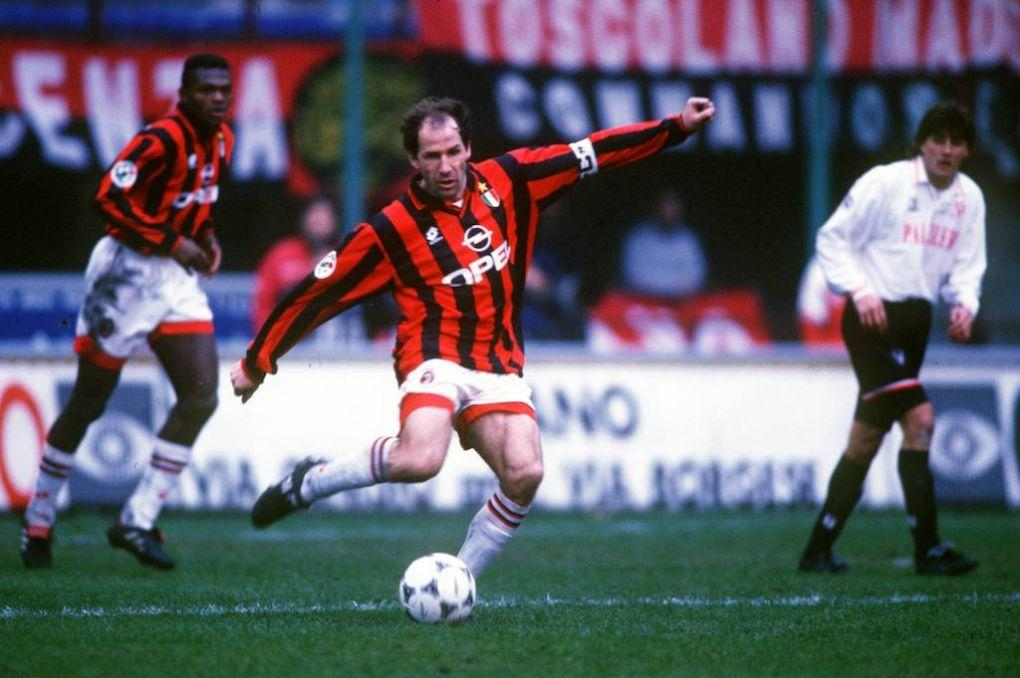
A raised arm could move the entire defensive line forward.
A short command could tell a teammate to hold his position.
A glance could communicate that danger was developing.
Baresi captained Milan for 15 seasons.
He led the club through reconstruction, tactical revolution and one of the greatest periods of success in European football.
Arrigo Sacchi and the Team That Changed Football
Arrigo Sacchi became Milan coach in 1987.
His arrival started one of the most influential tactical revolutions in football history.
Italian football had traditionally been associated with deep defending, man-marking and a free sweeper positioned behind the other defenders.
Sacchi wanted something different.
Milan would:
- Defend with zonal marking.
- Press high up the pitch.
- Keep short distances between the defensive, midfield and attacking lines.
- Move together as one compact unit.
- Use an aggressive offside trap.
- Defend by moving forward instead of constantly retreating.
- Attack and defend collectively.
The system required an extraordinarily intelligent defensive leader.
That leader was Franco Baresi.
He organised a famous back line featuring Mauro Tassotti, Alessandro Costacurta and Paolo Maldini.
Carlo Ancelotti, Frank Rijkaard and Roberto Donadoni provided control in midfield, while Ruud Gullit and Marco van Basten delivered world-class attacking quality.
Sacchi’s Milan did not defend by simply placing players behind the ball.
They defended by controlling space.
Read UEFA’s analysis of the legendary AC Milan team
AC Milan’s Legendary Defensive Line
| Player | Main position | Greatest strengths |
|---|---|---|
| Mauro Tassotti | Right-back | Discipline, positioning and tackling |
| Alessandro Costacurta | Centre-back | Reliability, timing and tactical intelligence |
| Franco Baresi | Sweeper and centre-back | Anticipation, leadership and organisation |
| Paolo Maldini | Left-back and centre-back | Speed, elegance and one-on-one defending |
The greatness of Milan’s defence was not based only on individual ability.
The four defenders moved together.
When one stepped forward, the others followed.
When the opposition played backwards, Milan’s entire defensive line advanced.
When an attacker attempted to run in behind, Baresi had to decide within a fraction of a second whether the defence should drop or step forward.
One incorrect decision could leave an opponent alone against the goalkeeper.
Baresi made the correct decision with remarkable consistency.
The Famous Offside Trap
Baresi became one of the greatest organisers of the offside trap.
Images of him standing with one arm raised became part of his identity.
The movement looked simple.
In reality, it required:
- Perfect timing.
- Collective understanding.
- Courage.
- Constant communication.
- Concentration.
- Awareness of the ball carrier.
- Trust between every defender.
Baresi did not only watch the attacker.
He also studied the player in possession.
Was the ball carrier ready to pass?
Was the player under pressure?
Could he deliver an accurate pass?
Was his body positioned to play forward?
Did he have time to look up?
These details helped Baresi decide whether Milan should step up or retreat.
His intelligence allowed the entire defence to play higher and make the pitch smaller.
The 1987/88 Serie A Title
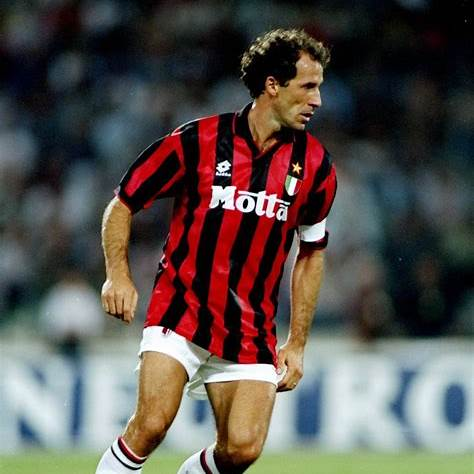
Milan won Serie A in 1987/88 after an intense battle with Diego Maradona’s Napoli.
The championship ended a nine-year wait for the Scudetto.
It also marked the beginning of Milan’s return to the summit of European football.
Baresi was the captain and tactical leader.
Sacchi’s pressing, zonal marking and compact structure were beginning to transform the team.
Milan Conquer Europe in 1988/89
Milan produced some of the greatest performances in European Cup history during the 1988/89 season.
They faced Real Madrid in the semi-finals.
The first leg in Spain ended 1–1.
Milan won the return match 5–0 at San Siro.
Carlo Ancelotti, Frank Rijkaard, Ruud Gullit, Marco van Basten and Roberto Donadoni scored.
In the final, Milan defeated Steaua București 4–0 in Barcelona.
Gullit and Van Basten scored twice each.
Baresi lifted the European Cup as captain.
Watch AC Milan’s official highlights of the 5–0 victory over Real Madrid
A Second Consecutive European Cup
Milan reached the European Cup final again in 1990.
Their opponents were Benfica.
Frank Rijkaard scored the only goal as Milan won 1–0 in Vienna.
Baresi had now captained Milan to consecutive European titles.
The Rossoneri were not simply winning trophies.
They were changing how coaches and supporters understood defensive organisation, pressing and collective movement.
Watch Milan’s 1990 European Cup final highlights on YouTube
Second in the 1989 Ballon d’Or
Defenders rarely finish near the top of the Ballon d’Or vote.
Baresi finished second in 1989.
Marco van Basten won the award, while Frank Rijkaard finished third.
Three Milan players occupied the entire podium.
Baresi did not score large numbers of goals or produce the attacking actions that usually dominate individual awards.
He was nevertheless recognised as one of the best players in the world.
His second-place finish demonstrated how highly his intelligence, leadership and influence were valued.
Fabio Capello and “The Invincibles”
Milan’s dominance continued when Fabio Capello replaced Sacchi.
The team completed the entire 1991/92 Serie A season without losing a match.
Milan eventually produced a run of 58 consecutive league games without defeat.
The side became known as “Gli Invincibili” — The Invincibles.
Baresi remained the captain and defensive leader.
Milan won three consecutive Serie A titles between 1991/92 and 1993/94.
The style changed slightly under Capello, but Baresi’s importance remained.
He was still responsible for maintaining the line, reading transitions and controlling the spaces in front of Milan’s goal.
One of the Greatest Defensive Seasons Ever
Milan conceded only 15 goals in 34 Serie A matches during the 1993/94 season.
That equals approximately 0.44 goals conceded per game.
| Milan’s 1993/94 Serie A season | Total |
|---|---|
| Matches | 34 |
| Goals conceded | 15 |
| Goals conceded per match | 0.44 |
| Final position | First |
| Result | Serie A champions |
Milan also won the Champions League that season.
They defeated Johan Cruyff’s Barcelona 4–0 in the final.
Baresi and Costacurta were suspended for the match, but Baresi had been fundamental throughout the season and Milan’s route to the final.
Read UEFA’s story of Milan’s 4–0 Champions League final victory
Franco Baresi’s Major Trophies
| Competition | Titles |
|---|---|
| Serie A | 6 |
| Serie B | 2 |
| European Cup/Champions League | 3 |
| European Super Cup | 3 |
| Intercontinental Cup | 2 |
| Italian Super Cup | 4 |
| Mitropa Cup | 1 |
| FIFA World Cup | 1 |
His Six Serie A Titles
- 1978/79
- 1987/88
- 1991/92
- 1992/93
- 1993/94
- 1995/96
His Three European Triumphs
- European Cup 1988/89
- European Cup 1989/90
- Champions League 1993/94
Why Was Franco Baresi So Good?
1. He Read the Game Before Everybody Else
Baresi did not wait for the pass to be played.
He attempted to understand the situation before the player in possession made a decision.
He studied:
- The ball carrier’s body position.
- The attacker’s running direction.
- The passing angle.
- The available space.
- The position of his teammates.
- The attacker’s strongest foot.
- The distance between the lines.
This allowed him to intercept passes without always needing to win a physical duel.
2. He Controlled the Entire Defensive Line
Baresi did not focus only on his direct opponent.
He controlled everybody around him.
At the same time, he monitored:
- The ball.
- Opposition attackers.
- His fellow defenders.
- Milan’s midfield.
- The space behind the defence.
- The possibility of offside.
He was effectively a coach on the pitch.
3. He Was Brave in Possession
Baresi was not only a defensive organiser.
He could carry the ball forward and create an overload in midfield.
He could:
- Pass through the opposition’s first line of pressure.
- Find midfielders between the lines.
- Play accurate diagonal passes.
- Start counterattacks.
- Carry the ball into midfield.
- Control the tempo from deep.
4. He Tackled With Timing
Many defenders are remembered for dramatic sliding tackles.
Baresi’s best defensive actions often looked simple.
That was because his positioning was excellent.
He waited.
He read the situation.
He stepped in at the correct moment.
He attempted to win the ball rather than simply hit the opponent.
5. His Concentration Was Exceptional
Milan’s high defensive line required complete concentration.
Baresi constantly had to decide:
- Should the defence step forward?
- Should the line drop?
- Should he intercept?
- Should he cover a teammate?
- Is the ball carrier under pressure?
- Can the opposition play behind the defence?
One mistake could create a clear scoring opportunity.
Baresi made remarkably few decisive errors.
A Sweeper Who Could Play Modern Football
Baresi is usually described as a sweeper or libero.
A traditional sweeper operated behind the other defenders and cleared danger.
Baresi could perform that role, but he also evolved into a modern defensive leader in a flatter back four.
He could:
- Cover behind teammates.
- Defend zonally.
- Control a high defensive line.
- Participate in build-up play.
- Carry the ball forward.
- Organise pressing.
- Receive the ball under pressure.
- Play accurate progressive passes.
Many of the qualities demanded from modern ball-playing centre-backs were already present in Baresi’s game during the 1980s and 1990s.
Baresi Compared With Other Defensive Legends
| Player | Type | Best known for |
|---|---|---|
| Franco Baresi | Sweeper and defensive leader | Anticipation, organisation and the offside trap |
| Paolo Maldini | Full-back and centre-back | One-on-one defending, elegance and consistency |
| Franz Beckenbauer | Attacking sweeper | Ball carrying, passing and creativity |
| Gaetano Scirea | Elegant sweeper | Composure, technique and fair play |
| Alessandro Nesta | Classical centre-back | Timing, positioning and tackling |
| Fabio Cannavaro | Aggressive centre-back | Jumping, duels and leadership |
| Sergio Ramos | Defensive leader | Aggression, goals and mentality |
| Virgil van Dijk | Modern centre-back | Strength, speed and control |
It is impossible to name one defender as the undisputed greatest of all time.
Baresi unquestionably belongs in the highest category.
His case includes:
- 20 seasons with one club.
- 15 seasons as captain.
- 719 Milan appearances.
- Six Serie A titles.
- Three European titles.
- A World Cup winner’s medal.
- A World Cup final as captain.
- Tactical influence on one of history’s greatest teams.
- Exceptional longevity.
- World-class performance despite limited physical size.
World Cup Winner in 1982
Baresi was selected for Italy’s squad at the 1982 World Cup in Spain.
Italy defeated Argentina, Brazil, Poland and West Germany during an unforgettable journey to the title.
Baresi did not play during the tournament.
Gaetano Scirea was Italy’s established sweeper and remained ahead of the young Milan defender.
Baresi was nevertheless able to train alongside and study some of Italy’s greatest players:
- Dino Zoff.
- Gaetano Scirea.
- Claudio Gentile.
- Antonio Cabrini.
- Marco Tardelli.
- Bruno Conti.
- Paolo Rossi.
The experience showed him how world champions prepared, communicated and handled pressure.
The 1990 World Cup in Italy
Baresi had become one of Italy’s most important players by the 1990 World Cup.
Italy reached the semi-finals without conceding a goal in their opening five matches.
They faced Diego Maradona’s Argentina in Naples.
The match ended 1–1 after extra time.
Baresi scored his penalty during the shootout, but Argentina advanced to the final.
Italy later defeated England in the third-place match.
Baresi was selected for the tournament’s All-Star Team and confirmed his position among the world’s greatest defenders.
The 1994 World Cup Final – A Legendary Performance
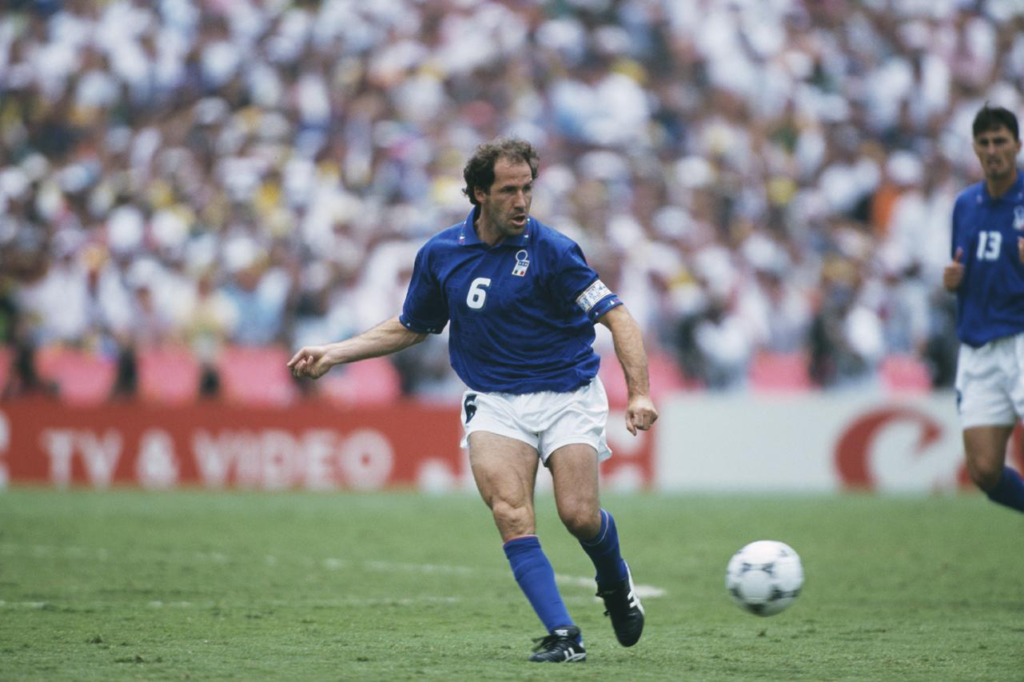
Baresi’s most famous international performance came in the 1994 World Cup final against Brazil.
The remarkable detail is that he should barely have been physically capable of playing.
Baresi suffered a serious knee injury during Italy’s group match against Norway.
He required surgery, and most observers believed his tournament was over.
Baresi refused to give up.
Only 25 days after the operation, he started the World Cup final at the Rose Bowl in Pasadena.
He played all 120 minutes.
Brazil’s attack included Romário and Bebeto, two of the most dangerous forwards in the tournament.
The match ended 0–0.
Baresi produced an extraordinary performance.
He intercepted passes, won duels, organised Italy’s defensive line and remained composed in possession.
During the penalty shootout, he sent Italy’s first attempt over the crossbar.
Daniele Massaro and Roberto Baggio also failed to score, allowing Brazil to become world champions.
Images of Baresi crying after the defeat became one of the defining moments of the tournament.
However, his performance during the match should never be overshadowed by the missed penalty.
Playing 120 minutes at that level only 25 days after knee surgery remains one of the greatest defensive performances in World Cup history.
Watch Brazil vs Italy in the 1994 World Cup final
Franco Baresi’s Italy Statistics
| International statistic | Total |
|---|---|
| Appearances | 81 |
| Goals | 1 |
| International career | 1980–1994 |
| World Cup tournaments | 3 |
| World Cup winner | 1982 |
| World Cup third place | 1990 |
| World Cup runner-up | 1994 |
| Italy captain from | 1991 |
Baresi scored his only international goal against the Soviet Union in 1988.
Read FIFA’s tribute to Franco Baresi
Milan Retired His Number 6
When Baresi retired in 1997, AC Milan announced that no other player would wear his number 6 shirt.
He became the first player in the club’s history to receive the honour.
Milan later retired Paolo Maldini’s number 3.
Baresi’s number represented:
- Loyalty.
- Leadership.
- Responsibility.
- Discipline.
- Intelligence.
- Courage.
- Defensive excellence.
- Commitment to one club.
The number was no longer simply part of a football shirt.
It had become part of AC Milan’s identity.
Baresi Passed the Captaincy to Paolo Maldini
Paolo Maldini became Milan’s natural captain after Baresi retired.
Maldini had played alongside Baresi since entering the first team as a teenager.
Baresi helped the young defender understand:
- Positioning.
- Communication.
- Responsibility.
- Concentration.
- Leadership.
- Milan’s standards.
- The importance of preparation.
Following Baresi’s death, Maldini described how his former captain had protected him as a child, guided him as a young man and inspired him as an adult.
Baresi’s legacy therefore extends beyond his own appearances and trophies.
It continued through the players he educated and inspired.
What Young Players Can Learn From Franco Baresi
Scan Constantly
A defender must always know what is happening around him.
Check:
- The ball.
- The nearest opponent.
- Your teammates.
- The goal.
- The space behind you.
- The next possible pass.
Defend With Your Brain First
You do not always need to be the fastest or strongest player.
Good positioning can prevent the difficult duel from happening.
Win the Ball With Control
A spectacular tackle is not always a good tackle.
Try to win possession in a way that allows your team to keep the ball.
Communicate Early
Give information before your teammate is in trouble.
Do not wait until the danger has already developed.
Be Brave in Build-Up Play
Defending does not end when possession is won.
The first pass can begin the next attack.
Take Responsibility During Difficult Periods
Baresi remained with Milan through two relegations.
Character and loyalty become most visible when results are poor.
Four Training Drills Inspired by Franco Baresi
Drill 1: Intercept the Pass
Place three players in a triangle.
Two attacking players pass between each other while the defender attempts to read and intercept the ball.
Coaching points
- Body position.
- Timing.
- Distance.
- Scanning.
- First movement.
- Controlled interception.
Drill 2: The Back Four Moves Together
Place four defenders in a line.
The coach indicates where the ball is positioned.
The defenders must move together by:
- Stepping forward.
- Dropping.
- Shifting sideways.
- Closing gaps.
- Communicating.
- Maintaining distances.
The drill can initially be performed without attackers.
Drill 3: Win the Ball and Play Forward
A defender begins in a duel against an attacker.
After winning possession, the defender must immediately find a midfielder inside a marked area.
The drill develops
- Defensive duels.
- Tackling.
- First touch.
- Awareness.
- Forward passing.
- Transition from defence to attack.
Drill 4: The Offside Trap
A back four plays against three attackers.
A coach or midfielder starts with the ball.
The defenders must decide:
- When to step forward.
- When to drop.
- Who controls the line.
- Whether the ball carrier is under pressure.
- How to communicate.
- How to protect the space behind them.
An aggressive offside trap requires shared understanding and should be introduced gradually.
Franco Baresi YouTube Videos
The links below are directly clickable. Search links are used where appropriate so the section continues working even when individual uploads are removed.
Franco Baresi – Best Defensive Skills
Watch Franco Baresi’s best defensive moments
Franco Baresi – The Art of Defending
Watch Franco Baresi: The Art of Defending
Franco Baresi Career Documentary
Watch Franco Baresi documentaries
Franco Baresi and Paolo Maldini
Watch Baresi and Maldini defensive highlights
Franco Baresi in the 1994 World Cup Final
Watch Baresi’s performance against Brazil
Brazil vs Italy – 1994 World Cup Final
Watch Brazil vs Italy highlights
AC Milan 5–0 Real Madrid
Watch the official AC Milan highlights
Milan 4–0 Steaua București
Watch the 1989 European Cup final
Milan 1–0 Benfica
Watch the 1990 European Cup final
Milan 4–0 Barcelona
Watch the 1994 Champions League final
Arrigo Sacchi’s Milan Tactics
Watch tactical analysis of Sacchi’s AC Milan
Milan’s Famous Offside Trap
Watch analysis of Milan’s defensive line
Franco Baresi Tributes
Watch tributes to Franco Baresi
20 Incredible Facts About Franco Baresi
- Inter rejected Baresi as a young player but accepted his brother Giuseppe.
- The brothers later captained opposite sides of Milan.
- Baresi spent his entire professional club career with AC Milan.
- He was part of Milan’s senior team for 20 seasons.
- He became club captain at only 22.
- He remained captain for 15 seasons.
- He stayed with Milan through two relegations to Serie B.
- He won Serie B twice.
- He won six Serie A championships.
- He won Europe’s greatest club competition three times.
- He was part of Italy’s 1982 World Cup-winning squad.
- He won World Cup bronze in 1990.
- He captained Italy to the 1994 World Cup final.
- He played the final only 25 days after knee surgery.
- He finished second in the 1989 Ballon d’Or.
- Milan completed a 58-match unbeaten Serie A run with Baresi as a central leader.
- Milan conceded only 15 league goals during the 1993/94 season.
- He made 719 official appearances for Milan.
- He scored 33 official goals for the club.
- Milan retired his number 6 shirt after his retirement.
Read More English Football Articles on Finter.dk
Every Finter.dk link below leads directly to an English football article or English-language guide.
Start With Finter in English
Explore Finter.dk’s English football front page
Football Legends, Records and History
Most Goals Ever: Top 20 in Denmark, the Nordic Countries, Europe and the World
Fastest Hat-Tricks in Football History – Top 25 Records, Stories and Videos
The Players With the Most FIFA World Cup Appearances of All Time
The 100 Greatest Football “What If?” Stories Ever
The 50 Football Moments That Changed the World Forever
The Strangest Football Records Ever
The 25 Most Humiliating Football Goals Ever Scored
The Ultimate Football YouTube Encyclopedia
World Cup Articles
The 25 Biggest Breakout Stars of FIFA World Cup 2026
FIFA World Cup 2026 – The Teams Ready to Shock the World
World Cup 2026: Clubs and Players With the Most Goals and Assists
England vs Argentina World Cup 2026 Semi-Final
Player Guides
Lionel Messi Records – The Complete List
Jude Bellingham – The Ultimate Guide
Bradley Barcola – PSG’s Lightning-Fast Superstar
Ousmane Dembélé – The Complete Story of a Two-Footed Genius
Florian Wirtz vs Jamal Musiala
Defending, Goalkeeping and Technical Skills
Best Penalty-Saving Goalkeepers Ever
Most Headed Goals in Football History
World’s Best Dribblers 2025/26
Why the World’s Best Footballers Scan the Pitch Every Few Seconds
The Complete Guide to Football Intelligence
Why the World’s Best Footballers Never Panic Under Pressure
Why Footballers Lose Their Confidence
Academies and Talent Development
Inside the World’s Greatest Football Academies
The World’s Youngest Football Teams in 2026
Why the World’s Best Footballers Play Multiple Sports as Kids
The 50 Greatest Football Wonderkids Who Never Fulfilled Their Potential
Sporting CP – Academy, Legends and Football Culture
FC Bayern Munich – History, Records and Legends
Frequently Asked Questions About Franco Baresi
When did Franco Baresi die?
Franco Baresi died on Friday, July 31, 2026.
How old was Franco Baresi?
He was 66 years old.
What was Franco Baresi’s cause of death?
No official cause of death had been announced when this article was published. Baresi underwent surgery to remove a pulmonary nodule in 2025, but no direct connection to his death has been officially confirmed.
Which club did Franco Baresi play for?
He spent his entire professional club career with AC Milan.
How many games did Baresi play for Milan?
AC Milan’s official records credit him with 719 appearances in all competitions.
How many goals did Baresi score?
He scored 33 official goals for AC Milan.
How many times did Baresi play for Italy?
He made 81 international appearances and scored one goal.
Did Franco Baresi win the World Cup?
Yes. He was part of Italy’s 1982 World Cup-winning squad but did not play during the tournament.
Why did Baresi not play at the 1982 World Cup?
Gaetano Scirea was Italy’s established sweeper and remained ahead of the young Baresi in the starting line-up.
Why is the 1994 World Cup final so important in Baresi’s career?
He played all 120 minutes against Brazil only 25 days after undergoing knee surgery. He delivered an outstanding defensive performance but missed Italy’s first penalty in the shootout.
How many Serie A titles did Baresi win?
He won six Italian championships with AC Milan.
How many European Cups did Baresi win?
He won Europe’s greatest club competition three times: in 1989, 1990 and 1994.
What number did Franco Baresi wear?
He wore number 6.
Did Milan retire Baresi’s shirt number?
Yes. Milan retired number 6 after his retirement in 1997.
Was Franco Baresi better than Paolo Maldini?
They performed different roles. Baresi was primarily a sweeper and defensive organiser, while Maldini played at left-back and centre-back. Both are considered among the greatest defenders in football history.
Was Baresi captain of Italy?
Yes. He became Italy captain in 1991 and led the team at the 1994 World Cup.
Did Baresi ever play for Inter?
No. Inter rejected him as a young player. His brother Giuseppe played for and captained Inter.
Did Baresi ever win the Ballon d’Or?
No, but he finished second behind Milan teammate Marco van Basten in 1989.
Franco Baresi’s Legacy
Franco Baresi’s importance cannot be explained only through appearances, goals and trophies.
He changed how millions of people understood defending.
He proved that a defender did not need to be the tallest or strongest player to dominate at the highest level.
He demonstrated that:
- Positioning can defeat speed.
- Intelligence can overcome physical limitations.
- Timing can be more effective than aggression.
- Organisation can improve an entire team.
- Loyalty still matters.
- A defender can control a football match.
- Defending can become an art form.
Baresi stayed with Milan through relegations and uncertainty.
He later led the same club to the summit of Italy, Europe and world football.
He played alongside some of the greatest stars the game has ever seen.
Marco van Basten scored the goals.
Ruud Gullit provided power and creativity.
Frank Rijkaard controlled midfield.
Paolo Maldini developed into a legend.
But behind them stood Franco Baresi, organising everything.
He was the player who saw danger before everybody else.
He was the captain who remained when the club faced its most difficult moments.
He was the sweeper who transformed defending into an art.
Franco Baresi died on July 31, 2026.
His number 6 will never return to the pitch for AC Milan.
His influence on the club and the history of football will never disappear.
Franco Baresi will always be Il Capitano.
AC Milan’s eternal number 6.
And one of the greatest defenders the world has ever seen.