

A towering leap above a defender. A perfectly timed run towards the near post. A powerful downward header that gives the goalkeeper almost no chance.
Some of football’s most dramatic goals have been scored with the head.
Cristiano Ronaldo has turned his jumping ability into a global trademark. Peter Crouch holds one of the Premier League’s most famous scoring records. Miroslav Klose built a World Cup legacy through intelligent movement and outstanding timing, while Didier Drogba and Sergio Ramos scored headers that changed Champions League history.
But who has scored the most headed goals in football history?
This guide brings together the biggest heading records from club and international football, including the Premier League, UEFA Champions League and FIFA World Cup.
Last updated: July 26, 2026
Who Has Scored the Most Headed Goals in Football History?
The answer depends on which competition and database is being used.
| Record | Player | Headed goals |
|---|---|---|
| Widely cited all-career historical total | Cristiano Ronaldo and Jimmy McGrory | 157 |
| Premier League record | Peter Crouch | 53 |
| Champions League record | Cristiano Ronaldo | 25 |
| FIFA World Cup historical record | Miroslav Klose | 7 |
| Most in one Premier League season | Harry Kane | 10 |
| Most in one Champions League season | Dwight Yorke | 6 |
Cristiano Ronaldo and Celtic legend Jimmy McGrory are listed on 157 headed goals in widely circulated historical compilations. However, this is not an official FIFA ranking, because there is no single complete database covering the method of every goal scored in every competition throughout football history.
The competition-specific records are more reliable. The Premier League officially lists Peter Crouch on 53, while Opta’s Champions League data places Ronaldo first with 25. FIFA’s latest dedicated historical ranking of World Cup headers lists Miroslav Klose first with seven.
Why All-Time Heading Statistics Are Difficult to Compare
Modern football competitions record almost every detail of a goal:
- which body part was used
- where the shot came from
- who supplied the assist
- the type of attacking move
- expected-goals value
- the position of the goalkeeper
- the game situation
Historical football was documented very differently.
Many older match reports recorded the scorer and the final score but did not always explain whether a goal was scored with the right foot, left foot or head.
Historical totals can therefore vary because:
- some databases include lower divisions
- some include regional competitions
- international and representative matches may be treated differently
- old match reports can be incomplete
- the definition of an official match can vary
- active players continue to add goals
The all-career ranking should therefore be treated as the best available historical compilation rather than an official FIFA record.
Top 10 Players With the Most Headed Goals in Football History
The following ranking is based on a widely cited historical compilation of official matches, updated in May 2026. Because historical coverage is not complete across every league and era, the numbers should be read with caution.
| Rank | Player | Country | Career | Recorded headed goals |
|---|---|---|---|---|
| 1 | Cristiano Ronaldo | Portugal | 2002– | 157 |
| 1 | Jimmy McGrory | Scotland | 1921–1937 | 157 |
| 3 | Fred Roberts | Northern Ireland | 1922–1938 | 134 |
| 4 | Mário Jardel | Brazil | 1991–2011 | 132 |
| 5 | Santillana | Spain | 1970–1988 | 129 |
| 6 | Jared Borgetti | Mexico | 1994–2010 | 127 |
| 7 | Dixie Dean | England | 1923–1940 | 125 |
| 8 | Telmo Zarra | Spain | 1939–1957 | 122 |
| 9 | Robert Lewandowski | Poland | 2005– | 119 |
| 10 | Hakan Şükür | Türkiye | 1987–2008 | 118 |
The list mixes modern stars with players from eras in which tactical systems, equipment, pitches and record-keeping were completely different.
That makes direct comparisons difficult—but it also shows that elite heading has been a decisive part of football for more than a century.
Cristiano Ronaldo: The Greatest Modern Header of the Ball?
Cristiano Ronaldo has the strongest claim to being the greatest aerial goalscorer of the modern era.
When Opta analysed his first 900 senior career goals in September 2024, 152 had been scored with his head. Later historical compilations placed his total at 157 by May 2026.
Ronaldo has scored headed goals for:
- Manchester United
- Real Madrid
- Juventus
- Al-Nassr
- Portugal
He has also scored them in:
- domestic leagues
- domestic cups
- the UEFA Champions League
- European Championships
- World Cups
- international qualifiers
- continental club competitions
What Makes Ronaldo So Good in the Air?
Ronaldo’s aerial ability is based on far more than jumping height.
Explosive take-off
He creates power through his final steps before leaving the ground.
His take-off is often similar to a basketball player attacking the rim: fast approach, strong plant foot and full extension.
Elite timing
Ronaldo does not simply jump as high as possible.
He judges:
- the speed of the cross
- the flight of the ball
- the defender’s position
- the goalkeeper’s movement
- the correct moment to attack the space
Body control
He can rotate his hips and shoulders while airborne, allowing him to redirect the ball even when the cross is slightly behind him.
Movement before the cross
Many of Ronaldo’s headed goals are created before the ball enters the penalty area.
He begins outside the defender’s direct line of sight and then accelerates into the scoring zone.
Variety
Ronaldo can score with:
- powerful downward headers
- glancing headers
- headers across the goalkeeper
- near-post headers
- far-post headers
- standing headers
- headers after a running jump
That variety is one reason he has remained dangerous against different defensive systems.
Premier League Players With the Most Headed Goals
Peter Crouch holds the official Premier League record with 53 headed goals. The league’s own records page continues to list him first.
| Rank | Player | Headed goals | Total Premier League goals | Percentage headed |
|---|---|---|---|---|
| 1 | Peter Crouch | 53 | 108 | 49.1% |
| 2 | Alan Shearer | 46 | 260 | 17.7% |
| 3 | Dion Dublin | 45 | 111 | 40.5% |
| 4 | Les Ferdinand | 40 | 149 | 26.8% |
| 4 | Harry Kane | 40 | 213 | 18.8% |
| 6 | Dwight Yorke | 38 | 123 | 30.9% |
| 7 | Duncan Ferguson | 35 | 60 | 58.3% |
| 8 | Christian Benteke | 33 | 86 | 38.4% |
| 9 | Olivier Giroud | 32 | 90 | 35.6% |
| 10 | Chris Wood | 29 | 75 | 38.7% |
The ranking illustrates the different types of aerial scorers who have succeeded in England.
Some were traditional target forwards. Others were mobile strikers who used timing, anticipation and intelligent movement rather than extraordinary height.
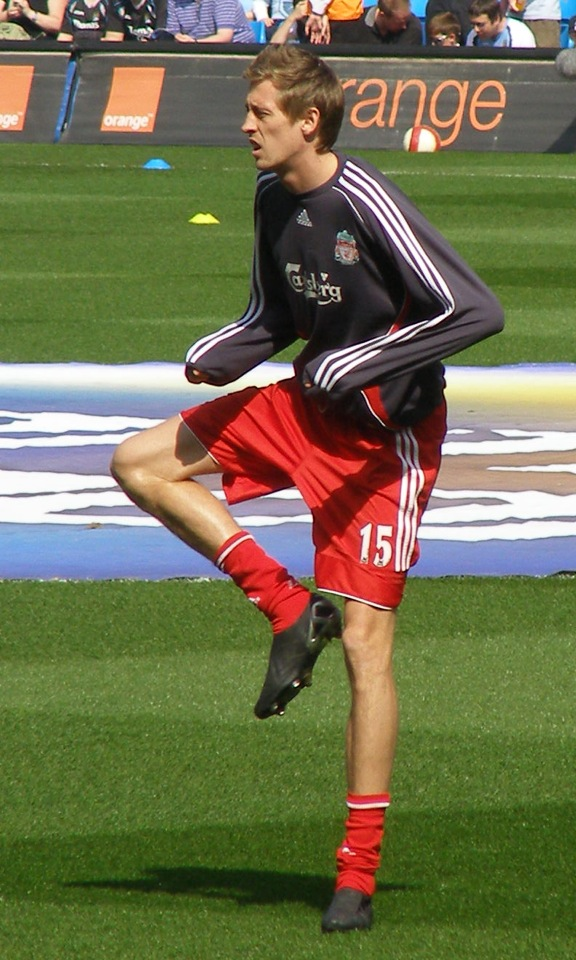
Peter Crouch: The Premier League’s Heading King
Peter Crouch scored 108 Premier League goals, with 53 of them coming from headers. That means almost half of his Premier League goals were scored with his head.
At 201 centimetres tall, Crouch had an obvious physical advantage.
But height alone does not explain the record.
He was particularly good at:
- moving away from the centre-back before attacking the ball
- adjusting his feet under a high cross
- directing headers rather than merely hitting them hard
- protecting his position with his body
- attacking the far post
- recognising when to head towards goal or back across the area
Crouch also played for teams with different attacking styles.
He had to adapt to early crosses, long passes, set pieces, second balls and more technical possession-based football.
That adaptability helped him score headed goals for several Premier League clubs.
Watch Peter Crouch’s best headed goals on YouTube
Duncan Ferguson: The Highest Heading Percentage
Duncan Ferguson scored 35 headed goals among his 60 Premier League goals.
That gives him a heading percentage of approximately 58.3%—the highest among the players in this top 10.
Ferguson was aggressive, physically powerful and fearless in aerial duels.
However, his greatest quality may have been his determination to reach the ball first.
He rarely waited for a cross to arrive.
He attacked it.
That distinction is essential for young players learning to head the ball effectively.
Dwight Yorke Proved That Height Is Not Everything
Dwight Yorke was not an unusually tall striker, yet he scored 38 Premier League headers and six in a single Champions League campaign.
Les Ferdinand also scored 40 Premier League headers despite being smaller than many of the centre-backs he faced.
Their records demonstrate that aerial success depends on much more than height.
Important qualities include:
- anticipation
- courage
- explosive acceleration
- positioning
- balance
- neck strength
- movement away from defenders
- reading the flight of the ball
A tall striker standing still is often easier to defend than a smaller forward attacking the cross at speed.
Most Headed Goals in a Premier League Season
Harry Kane scored ten headed goals during the 2022/23 Premier League season.
That established a new single-season competition record, moving him ahead of Duncan Ferguson’s nine headed goals for Everton in 1997/98.
| Rank | Player | Season | Headed goals |
|---|---|---|---|
| 1 | Harry Kane | 2022/23 | 10 |
| 2 | Duncan Ferguson | 1997/98 | 9 |
| 3 | Dwight Yorke | 1995/96 | 8 |
| 3 | Dion Dublin | 1995/96 | 8 |
| 3 | Roque Santa Cruz | 2007/08 | 8 |
| 3 | Dwight Yorke | 1999/00 | 8 |
Kane’s record is particularly impressive because he was never simply a traditional target man.
He could drop into midfield, create chances, shoot from distance and combine with teammates.
His heading record came from intelligent penalty-area movement, including:
- runs between the full-back and centre-back
- late movement towards the far post
- attacks on low, fast crosses
- stopping while defenders continued towards their own goal
- placing headers against the goalkeeper’s movement
Watch Harry Kane heading and finishing analysis
Most Headed Goals in Champions League History
Opta’s historical Champions League data places Cristiano Ronaldo first with 25 headed goals.
| Rank | Player | Headed Champions League goals |
|---|---|---|
| 1 | Cristiano Ronaldo | 25 |
| 2 | Robert Lewandowski | 21 |
| 3 | Karim Benzema | 18 |
| 4 | Fernando Morientes | 13 |
| 4 | Raúl | 13 |
| 6 | Filippo Inzaghi | 12 |
| 6 | Mário Jardel | 12 |
| 6 | Andriy Shevchenko | 12 |
| 9 | Mario Mandžukić | 10 |
| 9 | Harry Kane | 10 |
| 11 | Thomas Müller | 9 |
| 11 | Giovane Élber | 9 |
Ronaldo is four clear of Robert Lewandowski and seven ahead of Karim Benzema.
He took the record from Fernando Morientes after scoring his 14th Champions League header against Shakhtar Donetsk in September 2015.
He then added another 11 headed goals in the competition.
Dwight Yorke’s Champions League Season Record
Dwight Yorke scored six headed goals during Manchester United’s 1998/99 Champions League campaign.
That remains the highest total by one player in a single Champions League season.
Manchester United finished the campaign by winning the final against Bayern Munich and completing the treble.
Yorke’s success demonstrates the importance of movement and timing.
He was not the competition’s tallest striker, but he consistently reached crosses before larger defenders.
The Only Champions League Hat-Tricks of Headers
Only two players have scored three headed goals in the same Champions League match:
| Player | Club | Opponent | Year |
|---|---|---|---|
| Uwe Rösler | Kaiserslautern | HJK Helsinki | 1998 |
| Walter Pandiani | Deportivo La Coruña | Paris Saint-Germain | 2001 |
Rösler achieved the feat in December 1998, while Pandiani repeated it in March 2001.
A hat-trick of headers requires more than one repeated attacking pattern.
The scorer normally has to dominate several different situations, such as:
- open-play crosses
- corners
- free-kicks
- rebounds
- far-post deliveries
- second-phase attacks
Are Headed Goals Disappearing From Modern Football?
Opta’s Champions League analysis reveals a clear long-term decline.
During the competition’s first decade, almost one in every five goals was a header.
That fell to approximately one in six during the second decade and has since dropped to around one in seven.
Several tactical developments may help explain the trend.
More cutbacks
Modern teams frequently attack the byline and play low passes backwards into central shooting areas.
These passes often create higher-quality chances than hopeful aerial crosses.
Inverted wingers
Many wide players now move inside onto their stronger foot instead of staying near the touchline and crossing early.
Greater control of possession
Elite teams often prefer to recycle possession rather than send a contested ball into the penalty area.
Better defensive organisation
Teams use detailed video analysis to prepare for:
- set-piece routines
- blocking movements
- near-post runs
- far-post overloads
- aerial mismatches
Fewer traditional target forwards
Many modern strikers are expected to press, combine and move across the attacking line.
The classic penalty-area target player has become less common at the highest level.
Headed goals have not disappeared—but the opportunities are becoming more specific and more tactical.
Most Headed Goals in FIFA World Cup History
FIFA’s latest dedicated historical ranking of World Cup headers lists Miroslav Klose first with seven.
| Rank | Player | Country | World Cup headed goals |
|---|---|---|---|
| 1 | Miroslav Klose | Germany | 7 |
| 2 | Gerd Müller | West Germany | 5 |
| 3 | Sándor Kocsis | Hungary | 4 |
| 3 | Tomáš Skuhravý | Czechoslovakia | 4 |
| 3 | Oldřich Nejedlý | Czechoslovakia | 4 |
| 3 | Andrzej Szarmach | Poland | 4 |
| 3 | Jürgen Klinsmann | Germany | 4 |
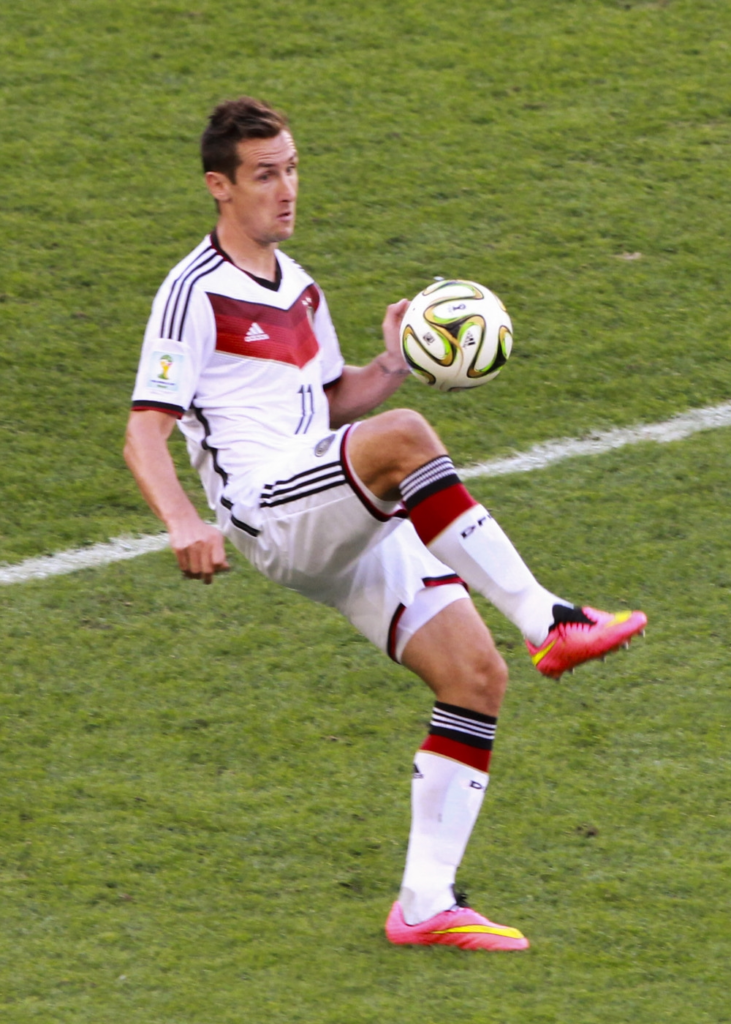
Klose is also one of the most successful goalscorers in World Cup history, scoring 16 tournament goals across four editions.
Miroslav Klose’s Incredible World Cup Debut
Klose made his World Cup debut against Saudi Arabia in 2002.
Germany won 8-0, and Klose scored a hat-trick.
Every one of his three goals was a header.
He went on to score five goals at the 2002 tournament, all with his head.
Klose was not simply overpowering defenders.
His greatest strengths included:
- changing direction before the cross
- finding space between two defenders
- delaying his run
- accelerating at the final moment
- attacking the ball rather than waiting
- placing headers into difficult areas for the goalkeeper
Watch all 16 of Miroslav Klose’s World Cup goals
Five of the Greatest Headed Goals Ever Scored
1. Zinedine Zidane vs Brazil – 1998 World Cup Final
Zinedine Zidane scored two headers as France defeated Brazil 3-0 in the 1998 World Cup final.
He remains the only player to have scored two headed goals in a World Cup final.
Both goals came from corners.
The first gave France control of the match. The second transformed a promising performance into a historic night.
Zidane was known for technique, elegance and vision rather than traditional centre-forward play.
That made his two headers even more remarkable.
2. Cristiano Ronaldo vs Chelsea – 2008 Champions League Final
Ronaldo rose above the Chelsea defence and headed Manchester United into the lead in Moscow.
Chelsea equalised before half-time, and the final eventually went to penalties.
Manchester United won the shootout and Ronaldo lifted his first Champions League trophy.
The goal was a classic example of Ronaldo’s aerial technique:
- movement behind the defender
- explosive take-off
- strong body position
- contact at the highest point
- downward direction
3. Didier Drogba vs Bayern Munich – 2012 Champions League Final
Chelsea appeared to be heading towards defeat after Thomas Müller gave Bayern Munich the lead in the 83rd minute.
Five minutes later, Drogba attacked a corner at the near post and scored with a powerful header.
Chelsea survived extra time and won the penalty shootout, with Drogba converting the decisive kick.
Few players have scored a more important header.
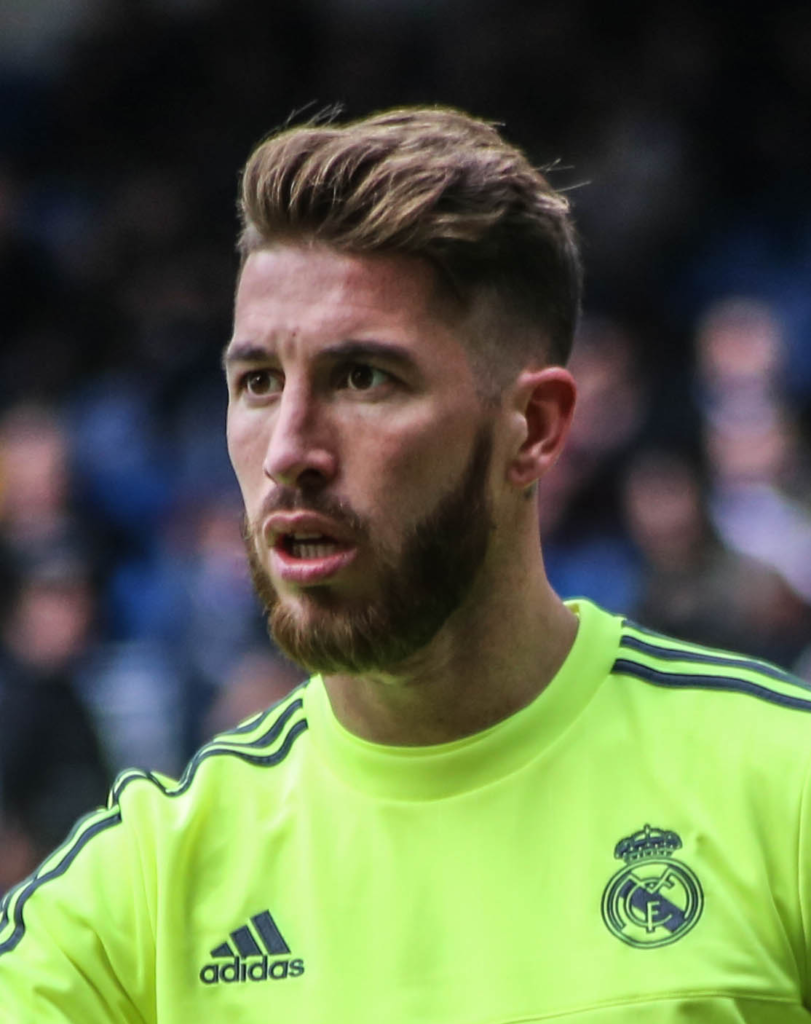
4. Sergio Ramos vs Atlético Madrid – 2014 Champions League Final
Atlético Madrid were seconds away from becoming European champions.
Then Luka Modrić delivered a corner and Sergio Ramos headed Real Madrid level in added time.
Real Madrid went on to win 4-1 after extra time and secured the club’s long-awaited tenth European Cup.
Ramos’ goal became one of the clearest examples of a defender changing football history at the opposite end of the pitch.
5. Miroslav Klose’s Header Hat-Trick – 2002 World Cup
Scoring a World Cup hat-trick is rare.
Scoring all three goals with the head is extraordinary.
Klose accomplished it in his first World Cup appearance and immediately established himself as one of international football’s greatest aerial forwards.
What Do the Greatest Headers Have in Common?
Cristiano Ronaldo, Peter Crouch, Miroslav Klose and Didier Drogba had different physiques and playing styles.
However, their best headed goals share several characteristics.
They attack the ball
The best headers do not wait for the ball to hit them.
They move towards it.
This movement adds power and helps the attacker reach the ball before the defender.
They begin outside the defender’s vision
Attackers often position themselves behind a defender’s shoulder.
The defender must then watch both the ball and the player.
A small delay can be enough to create a free header.
They change speed
A successful run rarely begins with a full sprint.
The attacker may:
- move slowly
- pause
- change direction
- accelerate towards the delivery
The change of pace creates separation.
They read the flight early
The player must judge:
- height
- speed
- spin
- direction
- the goalkeeper’s position
- possible contact from defenders
The earlier this information is processed, the better the chance of making clean contact.
They direct the header
Maximum power is not always necessary.
Close to goal, accuracy can be more important.
Effective options include:
- heading down towards the ground
- directing the ball across the goalkeeper
- attacking the near post
- returning the ball across the penalty area
- glancing the ball into the far corner
The Five Most Important Attacking Runs for Headers
1. The near-post run
The attacker begins centrally and accelerates in front of the nearest defender.
This works particularly well against:
- fast crosses
- inswinging corners
- low deliveries from the byline
2. The far-post run
The attacker begins behind the defender and delays the run.
This can create a favourable aerial duel against a smaller full-back.
3. The stop-and-drop movement
The attacker initially runs towards goal.
As the defender continues towards the six-yard box, the attacker stops and moves back towards the penalty spot.
This creates space for a controlled header.
4. Crossing runs
Two attackers exchange positions.
One runs towards the near post while the other attacks the centre or far post.
Defenders must decide whether to follow their original opponent or pass responsibility to a teammate.
5. The late midfield run
A midfielder remains outside the penalty area while the forwards occupy the defenders.
The midfielder then arrives late to attack the cross.
Because the defensive line is focused on the strikers, the late runner can be difficult to track.
Coaching Analysis: How Teams Create Better Heading Chances
A team does not become dangerous in the air by delivering as many crosses as possible.
The quality of the delivery and the movement inside the area are more important than the total number of crosses.
Strong crossing teams create:
- different running lanes
- near-post and far-post threats
- space around the penalty spot
- players ready for second balls
- protection against counter-attacks
- variation between high and low deliveries
- movement before the cross is played
The best teams also match the cross to the attacker.
A high far-post cross may suit a tall striker.
A faster near-post delivery may suit a smaller player with explosive movement.
A cutback may be better when defenders are running towards their own goal.
Good crossing is therefore a decision-making skill—not simply an ability to kick the ball into the penalty area.
Heading Training Drill: Three Different Runs
Players: 6–12
Area: One side of the penalty area
Equipment: Balls, cones and a full-sized or age-appropriate goal
Duration: 12–18 minutes
Organisation
Use:
- one wide player
- one attacker
- one goalkeeper
- one passive or active defender
- three starting cones representing different runs
Round One: Near post
The attacker begins centrally and accelerates in front of the defender.
Round Two: Far post
The attacker begins closer to the ball and moves away towards the far post.
Round Three: Stop and drop
The attacker runs towards goal, stops and moves back towards the penalty spot.
Scoring system
- one point for clean contact
- two points for hitting the target
- three points for scoring
- one bonus point for correctly timed movement
Coaching points
- Do not begin the run too early.
- Watch the ball and the defender.
- Attack the ball actively.
- Keep the eyes open during contact.
- Use the forehead.
- Direct the header instead of always trying to generate maximum power.
- Land with balance and control.
- Use limited, age-appropriate repetitions.
Heading practice for children should always follow the current guidance of the relevant national football association and should use appropriate balls, distances and repetition levels.
Who Is the Greatest Header of the Ball Ever?
There is no completely objective answer.
Cristiano Ronaldo has the strongest modern case
Ronaldo combines:
- one of the highest recorded career totals
- the Champions League record
- goals in multiple elite leagues
- decisive goals in major matches
- extraordinary longevity
- outstanding jumping ability
- varied heading technique
Jimmy McGrory has the historical numbers
The Celtic legend shares the top position in widely cited historical compilations.
However, comparing his era directly with modern football is difficult because the competitions, tactical environment and available data were completely different.
Miroslav Klose is the World Cup specialist
Klose’s seven World Cup headers and his debut hat-trick make him one of the greatest tournament specialists in football history.
Peter Crouch owns the Premier League record
Crouch’s 53 headed goals remain the official Premier League benchmark.
Didier Drogba was built for decisive moments
Drogba combined power, bravery and technique.
His equaliser in the 2012 Champions League final remains one of the most important headed goals ever scored.
Sergio Ramos changed history from defence
Ramos was a centre-back, yet he repeatedly produced crucial headed goals in major matches.
His late equaliser in the 2014 Champions League final changed Real Madrid history.
Finter’s Ranking of the Greatest Headers
This is an editorial assessment rather than an official statistical ranking.
| Player | Records | Timing | Jumping | Big-game impact | Overall aerial ability |
|---|---|---|---|---|---|
| Cristiano Ronaldo | 10/10 | 10/10 | 10/10 | 10/10 | 10/10 |
| Miroslav Klose | 9/10 | 10/10 | 8/10 | 10/10 | 9.4/10 |
| Sándor Kocsis | 9/10 | 10/10 | 9/10 | 9/10 | 9.3/10 |
| Alan Shearer | 9/10 | 9/10 | 9/10 | 9/10 | 9.2/10 |
| Didier Drogba | 8/10 | 9/10 | 9/10 | 10/10 | 9.2/10 |
| Sergio Ramos | 8/10 | 9/10 | 9/10 | 10/10 | 9.1/10 |
| Peter Crouch | 9/10 | 9/10 | 8/10 | 8/10 | 9.0/10 |
| Robert Lewandowski | 9/10 | 9/10 | 8/10 | 9/10 | 9.0/10 |
| Olivier Giroud | 8/10 | 9/10 | 8/10 | 9/10 | 8.8/10 |
| Duncan Ferguson | 8/10 | 8/10 | 9/10 | 8/10 | 8.5/10 |
Best Heading Videos to Watch
- Cristiano Ronaldo’s greatest headed goals
- Peter Crouch’s best Premier League headers
- Miroslav Klose’s World Cup goals
- Didier Drogba’s 2012 Champions League final header
- Sergio Ramos’ 2014 Champions League final goal
- How to head a football correctly
- Attacking heading drills for football
- Football crossing and finishing exercises
Explore More Football Guides on Finter
- Visit Finter in English
- Welcome to Finter – Football Development and Training
- World Cup 2026 Goals and Assists
- Lionel Messi Records – The Complete Guide
- The Strangest Football Records Ever
- The Complete Guide to Football Leadership
- Why the World’s Best Footballers Never Panic
- The Greatest Football Academies in the World
- Why the Best Footballers Play Multiple Sports as Children
- The Ultimate Football YouTube Encyclopedia
- The 20 Greatest Football Celebrations
- The 50 Football Moments That Changed the World
- Jude Bellingham – The Ultimate Guide
- England at the 2026 World Cup
- Parents in Youth Football
- Where Are Most Football Goals Scored From?
- When Are Most Goals Scored in Football?
- How to Become a Better Football Player
- The Ultimate Football Summer Training Guide
- The Greatest Goalscorers in Football History
- The Fastest Football Players Ever
- Finishing Training and Football Exercises
- Football Intelligence and Decision-Making
- Heading Guides on Finter
Frequently Asked Questions
Who has scored the most headed goals in football history?
Cristiano Ronaldo and Jimmy McGrory are both listed on 157 headed goals in widely circulated historical compilations. However, no single official FIFA database covers the method of every goal scored across all competitions and eras.
How many headed goals has Cristiano Ronaldo scored?
Historical compilations listed Cristiano Ronaldo on 157 headed goals by May 2026. Opta had previously recorded 152 headers among his first 900 senior career goals in September 2024.
Who has scored the most headed goals in Premier League history?
Peter Crouch holds the official Premier League record with 53 headed goals.
Who has scored the most headed goals in Champions League history?
Cristiano Ronaldo leads the Champions League ranking with 25 headed goals.
Who has scored the most World Cup headers?
FIFA’s dedicated historical ranking lists Miroslav Klose first with seven headed World Cup goals.
Who has scored the most headers in one Premier League season?
Harry Kane scored ten headed goals for Tottenham during the 2022/23 season.
Who has scored the most headers in one Champions League season?
Dwight Yorke scored six headed goals for Manchester United during the 1998/99 Champions League campaign.
Has anyone scored a hat-trick of headers in the Champions League?
Yes. Uwe Rösler and Walter Pandiani are the only two players recorded by Opta as scoring three headed goals in one Champions League match.
Do you need to be tall to become a good header of the ball?
No. Height can help, but timing, movement, bravery, balance and anticipation are equally important. Players such as Dwight Yorke and Les Ferdinand scored many headers without being unusually tall strikers.
Where should a player aim a header?
A downward header or an effort directed against the goalkeeper’s movement is often effective. The best choice depends on the cross, the angle and the goalkeeper’s position.
Why are headed goals becoming less common?
Modern teams use more low crosses, cutbacks, inverted wingers and possession-based attacks. Defences are also better organised against traditional crosses and set pieces.
Conclusion
Cristiano Ronaldo has the strongest claim to being the greatest modern header of the ball.
He shares the leading position in widely cited all-career historical compilations and holds the Champions League record with 25 headed goals.
Peter Crouch remains the Premier League’s heading king with 53.
Harry Kane owns the single-season Premier League record with ten.
Miroslav Klose built a unique World Cup legacy through seven headed goals and an unforgettable hat-trick on his tournament debut.
But the records reveal a bigger lesson.
Heading is not simply about being tall.
The greatest aerial scorers understand space, timing, movement and the flight of the ball. They begin their work before the cross is delivered and attack the ball with purpose.
Timing beats height. Movement beats standing still. Courage creates goals.