
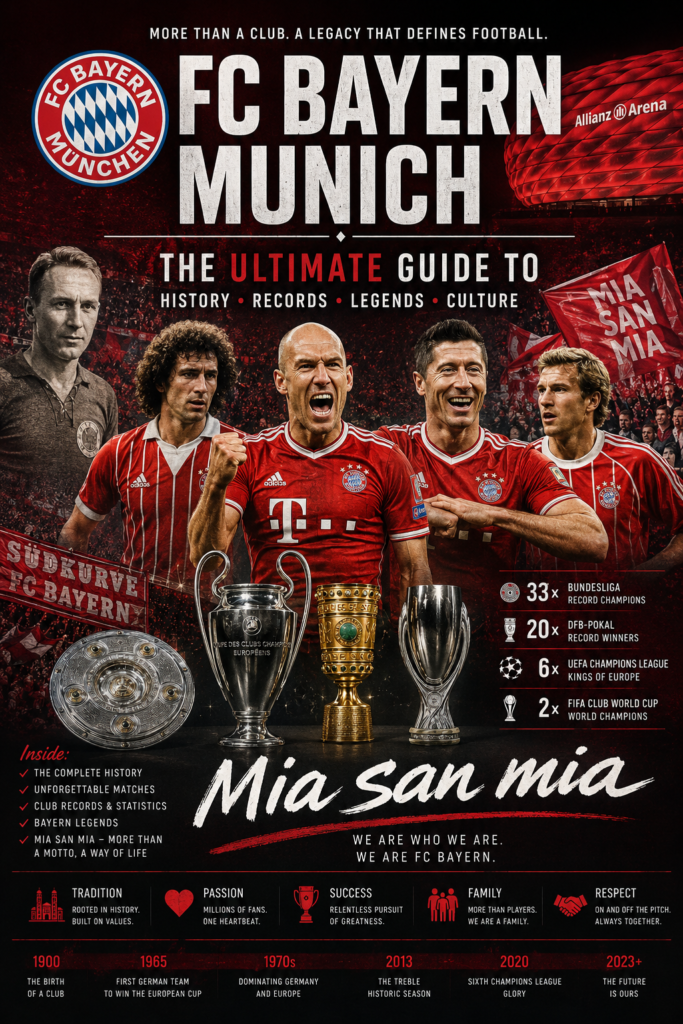
Meta title: FC Bayern Munich History, Records, Legends, Trophies & Greatest Stories
Meta description: Discover the complete FC Bayern Munich history: trophies, legends, European glory, unusual stories, records, Bayern mentality and the meaning of Mia San Mia.
SEO URL: fc-bayern-munich-history-records-legends-mia-san-mia
Last updated: June 2026
🇩🇰 Dansk læser
English: FC Bayern Munich – The Ultimate History, Records, Legends and “Mia San Mia” Guide
Denne artikel er på engelsk og fortæller FC Bayern Münchens store historie fra starten i 1900 til de første tre Europa Cup-triumfer. Her får du statistikskemaer, legender, skæve historier, Bayern-links og billedidéer løbende.
Find flere fodboldhistorier, videoer, finter og træningsøvelser på Finter.dk. Sproget kan ændres nederst i menuen til venstre.
FC Bayern Munich: more than Germany’s biggest football club
FC Bayern Munich are not simply Germany’s most successful football club.
They are a club built on expectation.
At many clubs, a league title becomes a memory supporters speak about for decades. At Bayern, the trophy is lifted, the confetti falls, the photographs are taken — and then the next question arrives almost immediately:
What comes next?
That is what makes Bayern different.
The club are admired, disliked, feared and sometimes accused of arrogance. But Bayern’s confidence did not appear from nowhere. It was created through more than a century of setbacks, strange turns, legendary players, painful defeats and spectacular comebacks.
Bayern were founded by football rebels in a Munich restaurant. They were left out of the first Bundesliga season. They were hit hard during the Nazi era because of the club’s Jewish background and the persecution of president Kurt Landauer. Then they built a European dynasty that turned Bayern from a major German club into a global football institution.
At Bayern, winning is not treated as a dream.
It is treated as the standard.
Read the full official FC Bayern honours list here.
FC Bayern Munich statistics and trophies
| Competition | Titles |
|---|---|
| German championships | 35 |
| DFB-Pokal | 21 |
| Champions League / European Cup | 6 |
| UEFA Cup Winners’ Cup | 1 |
| UEFA Cup | 1 |
| Intercontinental Cup | 2 |
| FIFA Club World Cup | 2 |
| UEFA Super Cup | 2 |
| German Super Cup | 12 |
Bayern’s huge trophy collection explains why “Mia san mia” is more than a slogan.
It is Bavarian dialect for:
We are who we are.
In football language, it means:
- Do not panic after conceding.
- Do not hide after losing.
- Do not accept excuses.
- Respect the shirt.
- Treat pressure as a privilege.
- Believe that the biggest matches belong to Bayern.
The club that began with a late-night rebellion
FC Bayern Munich were founded on 27 February 1900.
The story did not begin in a giant stadium. It did not begin with a billionaire owner. It began at Café Gisela in central Munich.
A group of young footballers wanted to break away from the conservative leadership of MTV München, a gymnastics club that did not fully support football. At the time, football was still viewed with suspicion by some traditional sports leaders.
The players wanted freedom.
They wanted ambition.
They wanted their own club.
So the founding document was signed by 17 members at Café Gisela, with Franz John becoming Bayern’s first president.
That small act of rebellion explains a lot about Bayern’s modern personality.
They did not wait for permission.
They did not accept being limited by someone else’s idea of what football should be.
They created their own future.
Read Bayern’s official history of the club’s foundation and early years.
The strange reason Bayern wear red and white
Bayern did not always wear the famous red shirts we know today.
In 1906, the club joined forces with Münchner Sport-Club because of financial pressure and problems finding a pitch. Bayern kept their independence, but accepted one important change.
They adopted the colours of their new partner:
White shirts and red shorts.
Those became the colours that developed into Bayern’s famous red-and-white identity.
It is a small historical detail, but it matters. Bayern’s colours were not invented as a giant marketing project. They came from a practical football solution more than a century ago.
Bayern’s early history in numbers
| Year | Milestone | Why it matters |
|---|---|---|
| 1900 | FC Bayern founded at Café Gisela | The beginning of the club |
| 1906 | Bayern join forces with Münchner Sport-Club | Red-and-white colours become part of the identity |
| 1910 | Max Gablonsky becomes Bayern’s first Germany international | Bayern begin producing national-team players |
| 1920 | Bayern reach 700 members | The club becomes Munich’s biggest football club |
| 1926 | South German championship | Bayern become a serious regional power |
| 1932 | First German championship | Bayern become national champions |
One of the most charming details from 1932 is that some Bayern fans reportedly travelled to the championship final in Nuremberg by bicycle.
They wanted to see Bayern face Eintracht Frankfurt.
They saw a 2-0 win.
They saw history.
Read Bayern’s official account of the 1932 championship season.
Kurt Landauer: the president Bayern must never forget
The most important person in Bayern’s early history was not a striker, goalkeeper or manager.
It was Kurt Landauer.
Landauer served as Bayern president across four different periods between 1913 and 1951. He helped modernise the club, pushed Bayern towards national success and was central to the club’s first German championship in 1932.
But his story is also one of the most serious chapters in Bayern history.
Landauer was Jewish.
During the Nazi era, Bayern were discriminated against because of the club’s Jewish background. Membership, attendance and the number of teams fell dramatically. Landauer was forced out, interned at Dachau in 1938 and later escaped into exile in Switzerland.
He survived.
After the war, he returned to Munich and became Bayern president again in 1947.
That is why Bayern’s history is not only about trophies.
It is also about survival.
It is about memory.
It is about recognising the people who built the club before the global fame arrived.
Read the official Bayern history of Kurt Landauer and the difficult years.
Read Bayern’s complete list of club presidents here.
The hidden wartime story: Bayern’s trophies were buried on a farm
One of the most unusual stories in Bayern history has nothing to do with a final or a goal.
During the Second World War, long-serving captain Conny Heidkamp and his wife Magdalena helped save Bayern’s trophies from destruction.
As air raids hit Munich, the trophies were packed into boxes and moved to a farm near Ascholding. When danger increased again, the boxes were buried.
Imagine it.
The trophies that represented Bayern’s history were hidden in the ground while the club fought simply to survive.
It is an extraordinary story because it shows that football clubs are not only made from matches. They are made from people who protect their identity when everything else is falling apart.
Bayern’s first DFB-Pokal title in 1957
Before Bayern became champions of Germany again, they won their first DFB-Pokal in 1957.
Rudi Jobst scored the only goal in a 1-0 final win against Fortuna Düsseldorf.
At the time, Bayern were not Germany’s dominant team. In fact, the club would still face one of the biggest disappointments in its history only six years later.
They would be left out of the first Bundesliga season.
Read Bayern’s official 1957 DFB-Pokal milestone.
The biggest surprise in Bayern history: they were not invited to the first Bundesliga
When the Bundesliga began in 1963, Bayern Munich were not included.
It sounds impossible today.
The club that now defines German football was outside Germany’s new national league.
The German FA selected TSV 1860 Munich as the city’s representative. Bayern had to remain outside the Bundesliga and earn promotion the difficult way.
For Bayern, the rejection hurt.
But looking back, it may have helped create their future.
The club could not simply buy expensive stars. Finances forced Bayern to trust young players from their academy and talented footballers from Bavaria.
That decision helped create the generation that would change everything:
- Franz Beckenbauer
- Sepp Maier
- Gerd Müller
- Hans-Georg Schwarzenbeck
- Franz Roth
Bayern finally won promotion in 1965 after an 8-0 play-off victory over Tennis Borussia Berlin.
They have never been relegated from the Bundesliga since.
Read Bayern’s official story of why 1860 Munich were chosen ahead of Bayern.
Franz Beckenbauer and the slap that changed football history
Franz Beckenbauer nearly joined TSV 1860 Munich.
Instead, he became Bayern’s greatest symbol.
The reason was a slap.
As a 13-year-old, Beckenbauer played in a youth match against TSV 1860. A player from the rival side slapped him during the game.
Beckenbauer changed his mind about joining 1860.
He joined Bayern’s youth section in 1958.
That one strange incident may have changed the history of German football.
Without Beckenbauer, Bayern may not have become the European giant they did. Without Bayern, the Bundesliga might have developed differently. Without the Kaiser, perhaps the entire story of German football changes.
Instead, Beckenbauer became:
Der Kaiser — The Emperor.
He helped Bayern earn Bundesliga promotion in 1965, won four German championships, four DFB-Pokals, one Cup Winners’ Cup and three consecutive European Cups.
Read Bayern’s official Franz Beckenbauer Hall of Fame profile.
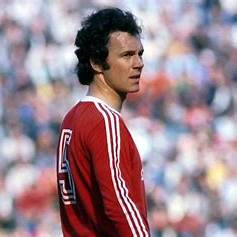
Image suggestion: Franz Beckenbauer carrying the ball forward in a classic Bayern shirt.
Place image here: Under the quote.
The golden axis: Beckenbauer, Gerd Müller and Sepp Maier
Bayern’s rise in the 1960s was built around three extraordinary players.
Franz Beckenbauer.
Gerd Müller.
Sepp Maier.
They were different personalities, different positions and different types of footballers.
Together, they became Bayern’s “golden axis”.
Beckenbauer brought calm, intelligence and leadership.
Müller brought goals.
Maier brought reflexes, humour and a little controlled madness.
The three players became the spine of Bayern’s first great team.
Read Bayern’s official story of the golden years from 1966 to 1979.
Bayern’s golden axis: statistics
| Player | Bayern role | Key Bayern statistic | Major Bayern honours |
|---|---|---|---|
| Franz Beckenbauer | Libero, leader | 396 Bundesliga matches, 44 goals | 4 German titles, 3 European Cups |
| Gerd Müller | Striker | 566 goals in 607 competitive games | 4 German titles, 3 European Cups |
| Sepp Maier | Goalkeeper | 473 Bundesliga matches | 4 German titles, 3 European Cups |
| Hans-Georg Schwarzenbeck | Defender | 416 Bundesliga matches | 6 German titles, 3 European Cups |
| Franz Roth | Midfielder | 322 Bundesliga matches, 72 goals | 3 European Cups, 1 Cup Winners’ Cup |
Franz Beckenbauer: the defender who changed football
Before Beckenbauer, defenders were usually expected to defend.
Beckenbauer did much more.
He could tackle, intercept, carry the ball forward, organise teammates, start attacks and control the rhythm of a match.
He made football look calm.
Even under pressure, Beckenbauer seemed to have more time than everyone else.
That was why “Der Kaiser” suited him so perfectly.
He did not play like a defender trying to survive.
He played like a leader controlling the entire pitch.
For young players, Beckenbauer offers a timeless lesson:
A calm first touch, a lifted head and one accurate pass can be more powerful than a desperate clearance.
Read more in Bayern’s official Beckenbauer profile.
For more football technique, first-touch ideas and ball mastery, explore Finter.dk’s football skills section.
Gerd Müller: the man who made goals look easy
Gerd Müller did not need long dribbles.
He did not need spectacular runs from the halfway line.
He did not need to look stylish.
He needed one chance.
One rebound.
One defender looking the wrong way.
Then the ball was in the net.
Müller scored 566 goals in 607 competitive games for Bayern. He remains the Bundesliga’s all-time top scorer with 365 goals.
His movement in the penalty area was extraordinary.
He knew where rebounds would land.
He could turn in tiny spaces.
He could shoot before defenders understood what had happened.
Müller was so good at sharp, close-range goals that football created a phrase around him:
To müller.
It meant scoring with ruthless timing inside the penalty area.
Franz Beckenbauer once said about his teammate:
“If it hadn’t been for him we might still be living in the old wood shed!”
Read Bayern’s official Gerd Müller profile.
For finishing inspiration and attacking drills, see Finter.dk’s football video section.
Sepp Maier: the goalkeeper who became a legend almost by accident
Sepp Maier became one of Germany’s greatest goalkeepers.
But he was never a boring goalkeeper.
Maier became known as:
The Cat from Anzing.
The nickname came from his reflexes, flexibility and ability to make difficult saves look easy.
He played 473 Bundesliga matches for Bayern, including an incredible run of 422 consecutive league appearances.
But Maier also brought something else.
Humour.
Personality.
The ability to make a huge football club feel human.
The best teams need serious players, but they also need characters. Maier brought confidence and joy to one of football’s greatest teams.
His Bayern career ended after a serious car accident in 1979, but by then he had already won almost everything there was to win.
Read Bayern’s official Sepp Maier profile.
Image suggestion: Sepp Maier making a diving save in one of his classic goalkeeper shirts.
Place image here: Directly under this section.
1967: Bayern win their first European trophy
In 1967, Bayern won the European Cup Winners’ Cup.
It was the club’s first major European trophy.
The final against Rangers went to extra time.
Then Franz “Bulle” Roth scored.
Bayern won 1-0.
Roth became known as “The Bull” because of his strength, power and thunderous shooting.
There is a famous Bayern story that he once struck the ball so hard he tore a net in a match against Rapid Vienna. Another legend says one of his shots hit the old Grünwalder Stadion scoreboard so hard that the clock on top began to wobble.
Roth later admitted that he did not destroy the clock.
But he did make it shake.
That is almost better.
Read Bayern’s official Franz “Bulle” Roth profile.
Image suggestion: Franz Roth scoring or Bayern celebrating the 1967 Cup Winners’ Cup.
Place image here: After this section.
1969: Bayern win the Bundesliga and their first domestic double
Bayern’s first Bundesliga title came in 1969.
The club also won the DFB-Pokal that season, completing the first domestic double in Bayern history.
The team had grown from talented youngsters into a real German power.
| Season | Competition | Result |
|---|---|---|
| 1965/66 | DFB-Pokal | Winners |
| 1966/67 | European Cup Winners’ Cup | Winners |
| 1968/69 | Bundesliga | Champions |
| 1968/69 | DFB-Pokal | Winners |
| 1968/69 | Domestic double | Bayern’s first |
Read about Bayern’s 1968/69 Bundesliga title here.
The move to Olympiastadion: Bayern become bigger than their old home
Bayern’s move from Grünwalder Stadion to the Olympiastadion in 1972 was about more than a new stadium.
It was a sign that the club was growing.
Their first match at the new stadium ended in a 5-1 win against Schalke, and Bayern celebrated another German championship.
The Olympiastadion gave Bayern a bigger stage.
Soon, they would need it.
European football was about to belong to them.
Read more in Bayern’s official golden-years history.
1974: the impossible rescue against Atlético Madrid
The 1974 European Cup final against Atlético Madrid is one of the wildest stories in Bayern history.
Bayern were close to defeat.
The final had gone into extra time. Atlético scored in the 114th minute through Luis Aragonés.
Bayern were seconds away from losing.
Then Hans-Georg Schwarzenbeck stepped forward.
Schwarzenbeck was not known for spectacular long-range goals. He was known as:
The Kaiser’s Bodyguard.
He defended beside Beckenbauer, tackled, cleared danger and did the difficult jobs that rarely made headlines.
But in the final moments, he hit one of the most important shots in Bayern history.
The ball flew in.
1-1.
The final had to be replayed two days later.
Bayern won the replay 4-0.
Uli Hoeneß scored twice.
Gerd Müller scored twice.
Bayern had won their first European Cup.
Read Bayern’s official match details from the 1974 European Cup final and replay.
Read Bayern’s official Hans-Georg Schwarzenbeck profile.
Image suggestion: Schwarzenbeck’s equaliser or Bayern lifting the 1974 European Cup.
Place image here: Directly after this section.
Three European Cups in a row: Bayern conquer Europe
Between 1974 and 1976, Bayern won the European Cup three years in a row.
| Season | Final opponent | Result | Bayern goalscorers |
|---|---|---|---|
| 1973/74 | Atlético Madrid | 4-0 in replay after 1-1 draw | Hoeneß 2, Gerd Müller 2 |
| 1974/75 | Leeds United | 2-0 | Franz Roth, Gerd Müller |
| 1975/76 | Saint-Étienne | 1-0 | Franz Roth |
Only the greatest clubs can win the European Cup more than once.
Winning it three times in a row placed Bayern among football’s true giants.
The 1975 final against Leeds United was especially revealing. Leeds created pressure, Bayern defended strongly and then struck with ruthless efficiency.
That is an early Bayern lesson:
You do not need to dominate every minute to win a final.
You only need to be ready when the decisive moment arrives.
In 1976, Franz Roth scored again against Saint-Étienne.
Bayern had completed their European hat-trick.
Read Bayern’s official 1975 European Cup final story.
Read the official Bayern golden-years timeline here.
Image suggestion: Bayern lifting one of the three European Cups, with Beckenbauer, Maier and Müller visible.
Place image here: Directly below the table.
Bayern’s first great era: summary statistics
| Category | 1965–1976 total |
|---|---|
| Bundesliga titles | 4 |
| DFB-Pokals | 4 |
| European Cup Winners’ Cups | 1 |
| European Cups | 3 |
| Intercontinental Cups | 1 |
| European Cup finals won | 3 |
| Consecutive European Cups | 3 |
This was the team that changed Bayern forever.
Before this era, Bayern were a major club from Munich.
After this era, Bayern were one of football’s biggest names.
What young footballers can learn from Bayern’s first great generation
Learn from Gerd Müller: move before the ball arrives
Do not wait for the pass.
Watch defenders.
Predict rebounds.
Attack dangerous spaces before anyone else sees them.
Learn from Beckenbauer: stay calm under pressure
Not every difficult situation needs a desperate clearance.
Take your first touch away from pressure.
Lift your head.
Find the next pass.
Learn from Sepp Maier: personality matters
Football is serious, but confidence and joy are important too.
Encourage teammates.
Bring energy.
Do not be scared of responsibility.
Learn from Schwarzenbeck: every team needs an unsung hero
Not every player has to score the winning goal every week.
A team also needs players who tackle, cover, communicate and make the difficult work look simple.
For more skills, dribbling and player inspiration, explore Finter.dk’s football skills section, dribbling guides and football videos.
FC Bayern links used in Del 1
- FC Bayern honours and trophies
- FC Bayern milestones since 1900
- Bayern’s foundation and early years
- Bayern during the Nazi era, war and reconstruction
- The golden Bayern years from 1966 to 1979
- Franz Beckenbauer – The Kaiser
- Gerd Müller – The Bomber
- Sepp Maier – The Cat from Anzing
- Hans-Georg Schwarzenbeck – The Kaiser’s Bodyguard
- Franz “Bulle” Roth – The Bull
- FC Bayern Hall of Fame
Continue reading on Finter.dk
- Football skills, tricks and inspiration
- Dribbling, 1v1 moves and attacking football
- Football videos and legendary clips
- The Ultimate Football YouTube Encyclopedia
- The 50 football moments that changed the world
- More football stories on Finter.dk
FC Bayern Munich – Part 2: Rebuilding the Empire, FC Hollywood, 1999 Heartbreak and 2001 Redemption
Bayern Munich in the 1980s: a new generation after Beckenbauer, Müller and Maier
The Bayern Munich team of the 1970s had become legendary.
Franz Beckenbauer left for New York Cosmos. Gerd Müller moved to the United States. Sepp Maier’s career ended after a serious car accident.
For many clubs, losing three figures like that would have caused a long decline.
Bayern rebuilt.
The 1980s did not bring another three consecutive European Cups, but they proved that Bayern were more than one golden generation. A new team, led by Karl-Heinz Rummenigge, Paul Breitner, Lothar Matthäus and later Uli Hoeneß behind the scenes, restored Bayern as Germany’s dominant force. Bayern won six Bundesliga titles in the decade and became Germany’s record champions in 1986.
| Bayern Munich in the 1980s | Total |
|---|---|
| Bundesliga titles | 6 |
| DFB-Pokal titles | 3 |
| European Cup finals reached | 2 |
| European Cup titles | 0 |
| Year Bayern became Germany’s record champions | 1986 |
| Karl-Heinz Rummenigge goals for Bayern | 218 |
| Paul Breitner goals for Bayern | 110 |
Image suggestion: Karl-Heinz Rummenigge and Paul Breitner celebrating in Bayern’s classic red-and-white kit.
Place image: Directly below this table.
Read more: FC Bayern’s official 1980–1989 history
Karl-Heinz Rummenigge: the teenager who walked into a giant team
Karl-Heinz Rummenigge joined Bayern in 1974 as an 18-year-old from Borussia Lippstadt.
It was hardly an easy place to break through.
Bayern had just won three Bundesliga titles in a row. The dressing room contained Beckenbauer, Gerd Müller and Sepp Maier. Rummenigge later described the transfer as a kind of “kamikaze mission”.
But he did not disappear in the shadows of the old legends.
He became a new one.
Rummenigge developed into one of Europe’s finest forwards: quick, technically sharp, intelligent in his movement and ruthless in front of goal. He won the Ballon d’Or twice and scored 218 goals in all competitions for Bayern.
His career showed that Bayern’s identity was not based on nostalgia.
The club respected its old heroes, but it always demanded that the next generation create its own story.
Read more: Karl-Heinz Rummenigge in FC Bayern’s Hall of Fame
Breitnigge: Bayern’s strange but brilliant partnership
German journalists gave Karl-Heinz Rummenigge and Paul Breitner a nickname:
Breitnigge
It combined their surnames.
Rummenigge was the elegant forward. Breitner was the powerful midfielder who could tackle, pass, shoot and argue with almost anyone.
Breitner was not a quiet footballer. He had strong opinions, a huge personality and the confidence to take responsibility in important matches.
That made him perfect for Bayern.
The club has always needed players who do not hide when a match becomes difficult. Breitner brought leadership, aggression and quality. Rummenigge brought goals.
Together, they helped rebuild Bayern after the old European Cup team began to break apart.
The 1982 DFB-Pokal final: Dieter Hoeneß, a bandaged head and a Bayern comeback
The 1982 DFB-Pokal final against Nürnberg is one of the most unusual trophy stories in Bayern history.
Bayern were losing 2-0.
Then Dieter Hoeneß suffered a heavy head injury.
He returned to the pitch with a large white bandage wrapped around his head. It was already a dramatic image, but the story became even better when Hoeneß scored during Bayern’s comeback.
Bayern won 4-2.
The photograph of Hoeneß playing with blood on his bandage became part of Bayern folklore because it captured a familiar pattern:
- Bayern were behind.
- Bayern were hurt.
- Bayern refused to disappear.
- Bayern came back and won.
The club’s official history still highlights the match as one of the defining moments of the decade.
Image suggestion: Dieter Hoeneß in the famous white head bandage.
Place image: Directly below this section.
Read more: Bayern’s official 1980s history
Bayern Munich’s painful European Cup finals in the 1980s
Bayern reached two European Cup finals in the 1980s.
They lost both.
That mattered because Bayern supporters remembered the 1970s. They remembered winning three European Cups in a row. They knew what European dominance felt like.
| European Cup final | Opponent | Result | Defining moment |
|---|---|---|---|
| 1982 | Aston Villa | Bayern lost 1-0 | Bayern created chances but could not score |
| 1987 | Porto | Bayern lost 2-1 | Porto scored twice late in three minutes |
The 1987 final against Porto was especially cruel.
Bayern led 1-0 until the 78th minute.
Then Rabah Madjer scored with an extraordinary backheel finish. Two minutes later, Juary scored Porto’s winner.
Bayern had controlled most of the final, but football can be brutally quick. One strange goal and one sharp counterattack changed everything.
Image suggestion: Bayern before the 1987 European Cup final in Vienna.
Place image: Below the table.
Lothar Matthäus: Bayern’s leader of the pack
Franz Beckenbauer made leadership look elegant.
Lothar Matthäus made it look intense.
Matthäus could tackle, run, pass, shoot, organise and demand more from the players around him. He played every match as though it was personal.
He was powerful enough to dominate midfield but technically gifted enough to control games from deep. Later in his career, he could also operate as a sweeper.
Bayern call him:
The leader of the pack.
That description fits.
Matthäus gave Bayern energy, edge and authority. He was a player who could make a difficult match feel smaller simply because he looked completely unafraid of it.
Image suggestion: Lothar Matthäus captaining Bayern or striking from distance.
Place image: Below this section.
Read more: Lothar Matthäus in FC Bayern’s Hall of Fame
Uli Hoeneß: from fast winger to Bayern’s master builder
Uli Hoeneß had been a rapid, direct winger in Bayern’s great 1970s team.
But his largest influence came after his early retirement.
Hoeneß moved into management and became one of the key figures behind modern Bayern Munich. He helped strengthen the club commercially, professionally and sporting-wise while Bayern developed into one of Europe’s most powerful institutions.
He was never known for quiet diplomacy.
He spoke directly, argued fiercely for Bayern and treated the club almost as a personal responsibility.
For supporters, he became the person who made sure Bayern did not simply remember the glory of the 1970s.
He made sure the club kept growing.
Image suggestion: Uli Hoeneß as a young Bayern winger beside a later photo of him as club executive.
Place image: Under this section.
Read more: FC Bayern’s historical milestones
FC Hollywood: when Bayern became Germany’s biggest football soap opera
The 1990s were one of Bayern Munich’s strangest decades.
The team still won trophies.
But the club also had coaching changes, player arguments, huge personalities, newspaper drama and interviews that became national stories.
German media gave Bayern the perfect nickname:
FC Hollywood
It was not always meant as praise.
Bayern had become a club that produced headlines every day. There were major personalities such as Lothar Matthäus, Jürgen Klinsmann, Stefan Effenberg, Mehmet Scholl and Oliver Kahn. There were managers under pressure. There were public disagreements.
But the strange thing about FC Hollywood was that Bayern still won.
The drama did not stop the trophies.
It only made the club more fascinating. Bayern’s own history describes the era as a period of coaching changes, constant attention and success despite the noise.
Image suggestion: A Bayern team photograph from the 1990s with Matthäus, Kahn, Scholl and Effenberg.
Place image: Directly below this section.
Read more: FC Hollywood, coaching changes and trophies
Franz Beckenbauer: Bayern’s emergency answer
In 1996, Bayern had a major problem.
Coach Otto Rehhagel left shortly before the UEFA Cup final against Bordeaux.
Bayern needed a calm figure with authority.
So they called Franz Beckenbauer.
Again.
Beckenbauer stepped in as coach and helped Bayern win the UEFA Cup. It was one of the most Bayern-like stories imaginable: when the club was in trouble, the Kaiser returned and delivered. Bayern beat Bordeaux 2-0 and 3-1 across the two legs.
Image suggestion: Franz Beckenbauer on the Bayern touchline during the 1996 UEFA Cup run.
Place image: After this section.
Read more: Bayern’s official 1990s history
Stefan Effenberg: the man Bayern called “The Boss”
Stefan Effenberg was made for Bayern’s biggest matches.
He had a powerful left foot.
He had enormous confidence.
He had a stare that warned teammates not to play lazy passes.
He was demanding, emotional and fearless.
Bayern called him:
The Boss
Effenberg’s second spell at Bayern, from 1998 to 2002, turned him into a club legend. Under Ottmar Hitzfeld, he became the team’s on-pitch commander and captained Bayern to the 2001 Champions League title. Bayern’s Hall of Fame still lists him as “The Boss”.
Image suggestion: Stefan Effenberg shouting instructions while wearing Bayern’s captain’s armband.
Place image: Below this section.
Read more: Stefan Effenberg in FC Bayern’s Hall of Fame
1999: two minutes that haunted Bayern Munich
The 1999 Champions League final against Manchester United remains one of football’s cruellest stories.
Bayern took an early lead through Mario Basler’s free-kick.
They struck the post.
They hit the crossbar.
They were seconds away from lifting the Champions League trophy.
Then, in stoppage time, everything changed.
Teddy Sheringham equalised in the 91st minute.
Ole Gunnar Solskjær scored Manchester United’s winner in the 93rd minute.
Bayern had gone from almost-champions to devastated runners-up in a matter of seconds.
The image of Samuel Kuffour collapsing in agony became one of football’s most painful photographs.
For Bayern supporters, Barcelona 1999 became known as the “mother of all defeats”.
But it was not the end of the story.
It became the fuel for 2001. Bayern’s own history describes the 1999 final as a trophy slipping away seconds from the end, before the club’s later redemption.
Image suggestion: Bayern players after the 1999 final, with a caption about how defeat shaped the 2001 redemption.
Place image: At the end of this section.
Oliver Kahn: “The Titan”
Oliver Kahn did not play football quietly.
He shouted at defenders.
He celebrated saves.
He treated every corner as dangerous.
He seemed furious even when Bayern were winning comfortably.
That intensity made him one of football’s greatest goalkeepers.
Bayern called him:
Der Titan — The Titan
Kahn became the symbol of a team that refused to accept defeat. Bayern’s Hall of Fame still uses “The Titan” as his title.
| Oliver Kahn’s Bayern legacy | Achievement |
|---|---|
| Bundesliga titles | 8 |
| DFB-Pokals | 6 |
| Champions League titles | 1 |
| UEFA Cup titles | 1 |
| Intercontinental Cup titles | 1 |
| World Goalkeeper of the Year awards | 3 |
Image suggestion: Oliver Kahn roaring after a save in his classic blue Bayern goalkeeper shirt.
Place image: Directly under this table.
Read more: Oliver Kahn in FC Bayern’s Hall of Fame
2001 Champions League final: Bayern’s redemption in Milan
On 23 May 2001, Bayern faced Valencia in the Champions League final at San Siro.
The match began badly.
Valencia scored an early penalty through Gaizka Mendieta.
Bayern then received a penalty, but Santiago Cañizares saved Mehmet Scholl’s attempt.
For Bayern supporters who still remembered 1999, it must have felt as though another European nightmare was beginning.
But Bayern responded.
Stefan Effenberg scored a second-half penalty to make it 1-1.
The score stayed level through extra time.
Then came penalties.
| 2001 Champions League final | Detail |
|---|---|
| Match | Bayern Munich vs Valencia |
| Venue | San Siro, Milan |
| Full-time score | 1-1 |
| Bayern scorer | Stefan Effenberg, penalty |
| Final result | Bayern won 5-4 on penalties |
| Bayern hero | Oliver Kahn |
| Penalties saved by Kahn | 3 |
| European Cup won | Bayern’s fourth |
Kahn saved three penalties in the shootout, including Mauricio Pellegrino’s decisive kick. Bayern had won their first European Cup in 25 years.
Image suggestion: Oliver Kahn holding the Champions League trophy in Milan.
Place image: Directly under the table.
Read more: How Bayern’s 2001 heroes brought San Siro to Munich
The Kahn and Cañizares moment: the other side of winning
The celebration after the final was enormous.
Bayern had waited 25 years to be European champions again.
But one of the strongest images from that night was not a trophy lift.
It was Oliver Kahn with Valencia goalkeeper Santiago Cañizares.
Cañizares was devastated after the shootout. Kahn later recalled that he could feel for him because he had experienced something similar in the 1999 final against Manchester United.
That is what makes the moment so memorable.
Kahn was not celebrating as a player who had never suffered.
He was celebrating as someone who had survived one of football’s worst possible defeats and returned to win the biggest trophy.
You can be ruthless in competition and still understand the pain of the opponent.
That is why the 2001 final is not only remembered for penalty saves.
It is remembered for redemption.
Weiter, immer weiter.
Keep going. Always keep going.
Image suggestion: Oliver Kahn beside Santiago Cañizares after the penalty shootout.
Place image: At the end of this section.
Bayern Munich: key statistics from 1980 to 2001
| Category | Bayern record |
|---|---|
| Bundesliga titles, 1980–2001 | 10 |
| DFB-Pokal titles, 1980–2001 | 6 |
| UEFA Cup titles | 1 |
| Champions League titles | 1 |
| European Cup / Champions League finals lost | 4 |
| Most painful final defeat | Manchester United, 1999 |
| Biggest redemption | Valencia, 2001 |
| Bayern nickname in the 1990s | FC Hollywood |
What young players can learn from Bayern’s 1980s and 1990s
Learn from Rummenigge: do not fear a difficult path
He joined a team full of legends.
He did not wait for an easy chance.
He worked until he became a legend himself.
Learn from Dieter Hoeneß: keep playing when things go wrong
Bayern were 2-0 down.
He was injured.
He came back, scored and won the cup.
Learn from Effenberg: do not hide in big matches
Great matches need players who demand the ball when everyone else is nervous.
Learn from Kahn: use disappointment as motivation
The 1999 pain did not disappear.
But Bayern used it to become champions in 2001.
For more football skills, finishing ideas and 1v1 inspiration, explore Finter.dk’s football skills section, dribbling guides and football videos.
FC Bayern links used in Part 2
- FC Bayern 1980–1989: Upheaval and Change
- FC Bayern 1990–1999: FC Hollywood and trophies
- FC Bayern Hall of Fame
- Karl-Heinz Rummenigge
- Lothar Matthäus
- Stefan Effenberg
- Oliver Kahn
- Bayern’s 2001 Champions League triumph
- Owen Hargreaves on the 2001 final
- FC Bayern honours and trophies
FC Bayern Munich – Part 3: The Allianz Arena, Robbery, Finale dahoam and the Pain Before the Treble
Bayern Munich from 2002 to 2012: a new stadium, new stars and huge European heartbreak
After the 2001 Champions League triumph, Bayern Munich had to build another era.
Oliver Kahn, Stefan Effenberg and Giovane Élber had carried the club through the redemption years. Now Bayern needed a younger team, a new home and a new identity.
This decade gave Bayern the Allianz Arena, Michael Ballack, Roy Makaay, Franck Ribéry, Arjen Robben, Philipp Lahm, Bastian Schweinsteiger, Thomas Müller and Manuel Neuer.
It also gave the club two painful Champions League final defeats.
But those defeats became essential to Bayern’s future.
The 2010 defeat against Inter Milan showed Bayern they were close to Europe’s elite again. The 2012 final against Chelsea in Munich was even more painful — but it created the hunger that helped produce the historic treble one year later.
Bayern Munich from 2002 to 2012: statistics
| Category | Bayern record |
|---|---|
| Bundesliga titles | 5 |
| DFB-Pokal titles | 5 |
| Domestic doubles | 5 |
| Champions League finals reached | 2 |
| Champions League titles | 0 |
| Allianz Arena opening year | 2005 |
| Key new stars | Ribéry, Robben, Lahm, Schweinsteiger, Müller, Neuer |
| Most painful final defeat | Chelsea, 2012 |
Bayern won doubles in 2003, 2005, 2006, 2008 and 2010. The club’s history also changed permanently in 2005, when Bayern left the Olympiastadion after 33 seasons and moved into the Allianz Arena.
Image suggestion: Allianz Arena glowing red at night.
Place image: Directly below this table.
Official Bayern link: Bayern’s move to the Allianz Arena
Michael Ballack: the midfielder who stepped into Effenberg’s shadow
When Stefan Effenberg left Bayern, the club needed a new midfielder who could control games, score goals and handle pressure.
Michael Ballack became that player.
Ballack joined Bayern in 2002 and immediately helped the club win the Bundesliga and DFB-Pokal double in 2002/03. Bayern finished 16 points ahead of Stuttgart, while Ballack scored twice in the 3-1 DFB-Pokal final victory over Kaiserslautern. He was later named Germany’s Player of the Year.
Ballack was not exactly like Effenberg.
Effenberg was loud and confrontational.
Ballack was more controlled, but he still had authority. He could arrive late in the box, score from distance, dominate the air and take responsibility when Bayern needed a big moment.
| Michael Ballack at Bayern | Statistic |
|---|---|
| Bayern spell | 2002–2006 |
| Bundesliga titles | 3 |
| DFB-Pokals | 3 |
| Domestic doubles | 3 |
| Major strength | Late runs, headers and powerful shooting |
Image suggestion: Michael Ballack celebrating after scoring for Bayern.
Place image: Below the table.
Read more: FC Bayern’s 2002–2009 history
Roy Makaay: Bayern bought the player who knocked them out
Roy Makaay’s Bayern story is unusual.
In 2003, Makaay scored for Deportivo La Coruña in the match that eliminated Bayern from the Champions League group stage.
A year later, Bayern signed him.
The striker became one of the club’s most dangerous finishers. He was nicknamed:
The Phantom.
It suited him because he could disappear from a defender’s attention for one second — then suddenly appear inside the penalty area and score.
Makaay’s arrival was also a sign of Bayern’s ambition. The club did not simply accept elimination from Europe. They signed one of the players who had helped cause it.
Image suggestion: Roy Makaay celebrating a Bayern goal.
Place image: After this section.
Felix Magath: medicine balls, discipline and back-to-back doubles
Felix Magath became Bayern coach in 2004.
He was famous for discipline, hard training and unusual fitness methods. Bayern’s official history notes that he used medicine balls and weighted vests in training.
Players knew Magath was demanding.
But his methods worked.
Bayern won the Bundesliga and DFB-Pokal double in both 2004/05 and 2005/06. It was the first time Bayern had achieved back-to-back doubles.
| Felix Magath at Bayern | Achievement |
|---|---|
| Seasons as coach | 2004–2007 |
| Bundesliga titles | 2 |
| DFB-Pokals | 2 |
| Domestic doubles | 2 |
| Famous for | Fitness, discipline and hard training |
Magath proved that Bayern’s success was not only built on famous names.
It was built on standards.
At Bayern, talent mattered.
But running, working and suffering for the team mattered too.
Image suggestion: Felix Magath coaching Bayern during training.
Place image: Directly below the table.
Read more: Bayern’s official Magath-era history
Allianz Arena: Bayern’s red football spaceship
In 2005, Bayern moved from the Olympiastadion to the Allianz Arena.
The Olympiastadion had been home to some of Bayern’s greatest triumphs, including the three European Cups in the 1970s. But Bayern had outgrown it.
The Allianz Arena gave the club a stadium that looked like the future.
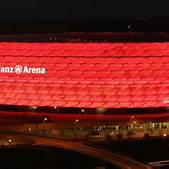
Its glowing outer shell, built from thousands of illuminated panels, made the stadium instantly recognisable. On Bayern matchdays, it shines red.
For supporters, it became known as a modern football cathedral.
For opponents, it became intimidating.
Bayern’s official history describes the move as the beginning of a new era after 33 successful seasons at the Olympiastadion.
| Allianz Arena fact | Detail |
|---|---|
| Opened | 2005 |
| Replaced | Olympiastadion |
| Bayern’s first home | 2005/06 season |
| Famous feature | Illuminated outer shell |
| Bayern colour on matchdays | Red |
| Nickname among fans | The red spaceship |
Image suggestion: Allianz Arena exterior at night, glowing red.
Place image: Under the table.
Read more: Allianz Arena history
The strange 2007/08 rebuild: Ribéry, Luca Toni and the return of Bayern’s fear factor
By 2007, Bayern had finished fourth in the Bundesliga and missed out on Champions League qualification for the first time in a decade.
For a club like Bayern, that was unacceptable.
The response was enormous.
Bayern changed transfer strategy and brought in major international names, including Franck Ribéry and Luca Toni.
Ribéry arrived with speed, dribbling, imagination and chaos.
Luca Toni arrived with goals, strength and a penalty-box presence that defenders hated.
Bayern immediately won the Bundesliga and DFB-Pokal double in 2007/08. They finished ten points clear of Werder Bremen in the league and beat Borussia Dortmund in the cup final.
Image suggestion: Franck Ribéry dribbling for Bayern in his first season.
Place image: Directly below this section.
Franck Ribéry: Bayern’s joyful football artist
Franck Ribéry was not just a winger.
He was chaos with a football.
He could dribble past defenders, lose the ball, win it back, run at another defender and create a chance in the same move.
Ribéry played with joy, aggression and personality.
He smiled.
He argued.
He fought.
He entertained.
That made him perfect for Bayern.
For more than a decade, Ribéry became one of the faces of the club. In 2025, he said that what he and Arjen Robben experienced together for ten years at Bayern was something he would never forget.
Image suggestion: Franck Ribéry dribbling past a defender in a Champions League match.
Place image: Below this section.
Arjen Robben: the move everyone knew but nobody could stop
Arjen Robben arrived from Real Madrid in 2009.
He was one of football’s most predictable geniuses.
Every defender knew what Robben wanted to do.
He wanted to receive the ball on the right wing.
He wanted to cut inside onto his left foot.
He wanted to shoot into the far corner.
Everyone knew it.
Almost nobody could stop it.
Robben’s ability to repeat one move at an elite level is a lesson for every young footballer.
You do not need 20 tricks.
You need one or two weapons that become nearly impossible to defend.
Bayern signed Robben in the same summer Louis van Gaal arrived as coach. Mario Gomez also joined, while Thomas Müller and Holger Badstuber were given major opportunities in the first team.
Image suggestion: Arjen Robben cutting inside from the right wing onto his left foot.
Place image: After this section.
Robbery: when Ribéry and Robben ruled the wings
Franck Ribéry and Arjen Robben became known as:
Robbery.
The nickname was perfect.
They stole space.
They stole confidence.
They stole matches from defenders.
Ribéry was unpredictable and explosive on the left.
Robben was precise and ruthless on the right.
They were different, but together they gave Bayern one of football’s most dangerous wing attacks.
Their friendship also became important. In a 2025 Bayern interview, Ribéry said that the pair’s years together on the pitch and in the dressing room were almost impossible to describe.
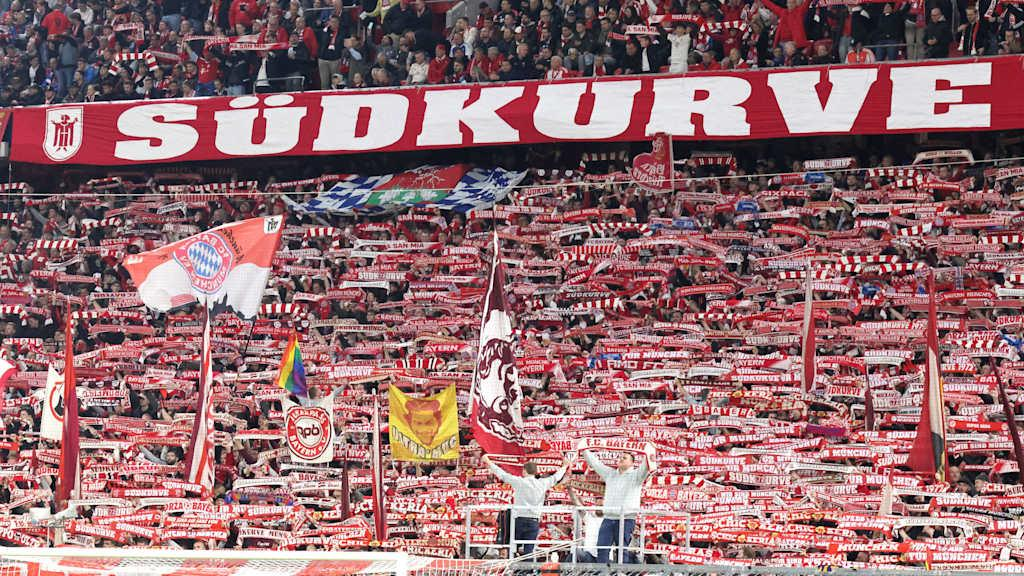
Louis van Gaal: the coach who trusted Thomas Müller
Louis van Gaal arrived in 2009.
He brought a clear tactical idea.
Bayern would play with structure, possession, pressing and bravery.
But one of his greatest decisions was trusting young players.
Thomas Müller and Holger Badstuber were still relatively unknown, but Van Gaal gave them real opportunities.
That decision changed Bayern history.
Thomas Müller became a club legend.
Badstuber became a key defender before injuries cruelly interrupted his career.
Van Gaal also helped transform Bastian Schweinsteiger from an attacking wide player into one of football’s best central midfielders.
Bayern won the Bundesliga and DFB-Pokal double in 2010, then reached the Champions League final against Inter Milan.
| Bayern 2009/10 | Result |
|---|---|
| Bundesliga | Champions |
| DFB-Pokal | Winners |
| Champions League | Runners-up |
| Coach | Louis van Gaal |
| Important new star | Arjen Robben |
| Breakthrough player | Thomas Müller |
Image suggestion: Louis van Gaal giving instructions to Thomas Müller or Bayern’s young 2010 team.
Place image: Under the table.
Read more: Bayern’s historic treble era begins
2010: Bayern reach another Champions League final
Bayern reached the 2010 Champions League final in Madrid.
It was their first final since the 2001 victory over Valencia.
The opponents were Inter Milan.
Bayern had already won the Bundesliga and DFB-Pokal. A treble was possible.
But Inter won 2-0 through two Diego Milito goals.
Bayern lost the final, but the team had sent a message to Europe:
They were back.
They had rebuilt after the 2001 generation.
They had created a new core with Lahm, Schweinsteiger, Robben, Ribéry, Müller and Neuer soon to follow.
UEFA records Inter’s 2-0 final win, while Bayern’s official history describes the season as one of the most successful in the club’s history despite missing out on the treble.
Philipp Lahm: the quiet leader who understood everything
Philipp Lahm was not Bayern’s loudest leader.
He did not need to be.
Lahm led through intelligence.
He was small for a defender, but almost impossible to expose because he read the game so well.
He could play right-back.
He could play left-back.
He could play central midfield.
He was one of those players who made football look simpler than it really was.
Lahm was Bayern’s future captain because he understood the club’s values: calmness, responsibility, quality and professionalism.
Bastian Schweinsteiger: from winger to Bayern’s beating heart
Bastian Schweinsteiger grew up as a Bayern supporter.
That mattered.
He knew the club’s history, the pressure and the expectations.
As a young player, Schweinsteiger played wide on the wing. Under Van Gaal, he developed into a central midfielder.
Suddenly, he became Bayern’s heartbeat.
He could win the ball, dictate the tempo, pass forward and fight through pain.
His biggest Bayern moment before the treble came in 2012 against Real Madrid.
Bayern won the first Champions League semi-final 2-1 in Munich. In Madrid, they quickly fell two goals behind. Arjen Robben scored a penalty, the match went to extra time and then penalties.
Schweinsteiger took Bayern’s decisive penalty.
He scored.
Bayern had reached the Champions League final in Munich.
Image suggestion: Schweinsteiger celebrating after scoring the decisive penalty at the Bernabéu.
Place image: Directly below this section.
2012: Finale dahoam — the night Bayern could not believe
The 2012 Champions League final was played at the Allianz Arena.
Bayern’s own stadium.
Bayern’s own city.
Bayern’s own dream.
The German phrase became:
Finale dahoam.
It means:
The final at home.
Bayern faced Chelsea.
The match seemed made for Bayern.
They had more possession.
They created more chances.
Thomas Müller scored in the 83rd minute.
The Allianz Arena exploded.
Then Didier Drogba equalised in the 88th minute.
Bayern had a penalty in extra time.
Arjen Robben stepped up.
Petr Čech saved it.
The final went to penalties.
Chelsea won 4-3.
UEFA’s official records confirm the 1-1 draw and Chelsea’s 4-3 shootout victory.
| 2012 Champions League final | Detail |
|---|---|
| Match | Bayern Munich vs Chelsea |
| Venue | Allianz Arena, Munich |
| Bayern scorer | Thomas Müller |
| Chelsea scorer | Didier Drogba |
| Full-time score | 1-1 |
| Penalty shootout | Chelsea won 4-3 |
| Bayern possession | 64% |
| Bayern shots | 35 |
| Defining feeling | Shock |
Image suggestion: Thomas Müller celebrating his goal, followed by Bayern players after the shootout.
Place image: Directly below the table.
Read more: UEFA’s official 2012 final page
Read more: Bayern’s memories of the Finale dahoam
Why the 2012 defeat hurt more than almost any other Bayern loss
Bayern had lost Champions League finals before.
They had lost to Aston Villa in 1982.
They had lost to Porto in 1987.
They had suffered the nightmare against Manchester United in 1999.
They had lost to Inter in 2010.
But 2012 was different.
This was Bayern’s own stadium.
Their own city.
Their own supporters.
Their own opportunity to lift the Champions League trophy at home.
Franck Ribéry said in 2025 that the defeat was a shock for the club, the city and the fans. He also explained that one year later, Bayern won the title — “that’s football.”
That is the key to Bayern’s story.
The pain did not destroy them.
It prepared them.
What young players can learn from Bayern’s 2002–2012 era
Learn from Robben: perfect one move
Every defender knew he wanted to cut inside onto his left foot.
He still created goals.
Practice your best move until it becomes a real weapon.
Learn from Ribéry: play with joy
Football is serious, but it is still a game.
Dribble.
Take risks.
Smile when you play.
Learn from Lahm: intelligence can beat size
You do not need to be the biggest player to dominate a match.
Good positioning and calm decisions can make you elite.
Learn from Schweinsteiger: take responsibility when you are tired
His decisive penalty against Real Madrid came after a long injury lay-off and 120 exhausting minutes.
Big players do not wait until they feel perfect.
They step up anyway.
For more football skills, dribbling ideas and player inspiration, explore Finter.dk’s football skills section, dribbling guides and football videos.
YouTube videos for this part of the article
- Allianz Arena history and Bayern stadium videos
- Robben and Ribéry Bayern Munich highlights
- Bayern vs Inter Milan 2010 Champions League final highlights
- Bayern vs Real Madrid 2012 penalty shootout
- Bayern vs Chelsea 2012 Champions League final highlights
FC Bayern links used in Part 3
- FC Bayern: Move to the Allianz Arena
- FC Bayern: The historic treble era
- Bayern’s special European nights against Real Madrid
- Robben and Ribéry on Bayern, dominance and the 2012 final
- UEFA: Bayern Munich vs Inter Milan, 2010 final
- UEFA: Bayern Munich vs Chelsea, 2012 final
- FC Bayern history and milestones
Continue reading on Finter.dk
More football stories on Finter.dk
Football skills, tricks and inspiration
Dribbling, 1v1 moves and attacking football
Football videos and legendary clips
The Ultimate Football YouTube Encyclopedia
The 50 football moments that changed the world
FC Bayern Munich – Part 4: The 2013 Treble, Pep Guardiola, Lewandowski’s Nine-Minute Madness and the 2020 Sextuple
From heartbreak in Munich to the greatest Bayern season ever
The 2012 Champions League final against Chelsea was supposed to be Bayern Munich’s perfect night.
It was played at the Allianz Arena.
Bayern’s own stadium.
Bayern’s own city.
Bayern’s own dream.
Instead, Chelsea won on penalties.
For many clubs, such a defeat could have caused a collapse.
For Bayern, it created fuel.
The following season became one of the greatest in European football history.
Bayern did not merely win trophies in 2012/13.
They destroyed records, answered every major question and became the first German club ever to win the continental treble: Bundesliga, DFB-Pokal and Champions League.
The club’s official history calls the campaign its most successful season to that point. Bayern won the Bundesliga with 91 points, finished 25 points ahead of Borussia Dortmund, conceded only 18 league goals and then beat Dortmund 2-1 in the Champions League final at Wembley.
Read Bayern’s official historic-treble story
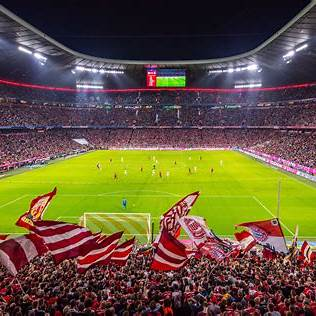
Bayern Munich’s 2012/13 treble season: statistics
| Category | Bayern Munich record |
|---|---|
| Bundesliga points | 91 |
| Bundesliga wins | 29 |
| Bundesliga goal difference | +80 |
| Bundesliga goals conceded | 18 |
| Points ahead of Dortmund | 25 |
| Champions League final | Bayern 2-1 Borussia Dortmund |
| DFB-Pokal final | Bayern 3-2 VfB Stuttgart |
| Matches in all competitions | 53 |
| Wins in all competitions | 45 |
| Defeats in all competitions | 3 |
| Major trophies won | 3 |
Bayern secured the Bundesliga title on Matchday 28, earlier than any previous champion in Bundesliga history. They then beat Barcelona 7-0 on aggregate in the Champions League semi-finals before defeating Dortmund at Wembley. The DFB-Pokal final against Stuttgart completed the treble.
Read Bayern’s official report from the DFB-Pokal final
Image suggestion: Bayern’s 2013 team lifting the Champions League trophy at Wembley.
Place image: Directly below the table.
Jupp Heynckes: the calm coach behind Bayern’s greatest comeback
Jupp Heynckes did not respond to the 2012 defeat with panic.
He made Bayern more focused.
More balanced.
More ruthless.
His 2012/13 team had elite players everywhere:
- Manuel Neuer in goal
- Philipp Lahm and David Alaba at full-back
- Jérôme Boateng and Dante in defence
- Javi Martínez protecting midfield
- Bastian Schweinsteiger controlling the tempo
- Franck Ribéry and Arjen Robben attacking from the wings
- Thomas Müller creating chaos between the lines
- Mario Mandžukić finishing moves inside the box
Heynckes gave Bayern structure, but he also gave the players trust.
They were not a team that needed one star to save them.
They had leaders everywhere.
That is why Bayern looked almost impossible to stop.
The club had lost three major finals in the modern era: 1999, 2010 and 2012.
In 2013, they finally turned all that pain into one of football’s greatest seasons.
Image suggestion: Jupp Heynckes celebrating with the Champions League trophy.
Place image: Under this section.
Bayern vs Barcelona 2013: the 7-0 statement
Before the 2013 Champions League semi-final, Barcelona were still viewed by many as European football’s ultimate team.
They had Lionel Messi.
They had Xavi.
They had Andrés Iniesta.
They had years of dominance.
Then Bayern arrived.
The two-legged semi-final ended:
| Champions League semi-final, 2013 | Result |
|---|---|
| Bayern Munich vs Barcelona, first leg | Bayern won 4-0 |
| Barcelona vs Bayern Munich, second leg | Bayern won 0-3 |
| Aggregate score | Bayern won 7-0 |
It was not simply a victory.
It felt like a changing of the guard.
Bayern pressed Barcelona, overpowered them physically and punished every weakness. The 7-0 aggregate scoreline remains one of the biggest statements ever made in a Champions League semi-final.
The message was clear:
Bayern were not coming back to Europe’s top table.
Bayern were taking over the table.
Read Bayern’s official account of the 2012/13 season and the Barcelona semi-final:
The historic treble
Image suggestion: Thomas Müller, Arjen Robben or Bayern players celebrating against Barcelona.
Place image: Directly below the table.
Wembley 2013: Arjen Robben’s redemption
Arjen Robben carried a lot of pain into the 2013 Champions League final.
He had missed a penalty against Chelsea in the 2012 final.
He had faced criticism.
He had lost important finals before.
Then Bayern faced Borussia Dortmund at Wembley in the first all-German Champions League final.
The match was tense.
Dortmund started brilliantly.
Manuel Neuer made key saves.
Mario Mandžukić gave Bayern the lead.
Ilkay Gündoğan equalised from the penalty spot.
Then came the 89th minute.
Robben ran into the penalty area, touched the ball past Roman Weidenfeller and scored.
Bayern won 2-1.
Robben had changed his story.
For a year, he had been remembered by many people for missed chances and final defeats.
Now he was the player who gave Bayern their fifth European Cup.
| 2013 Champions League final | Detail |
|---|---|
| Match | Borussia Dortmund vs Bayern Munich |
| Venue | Wembley Stadium, London |
| Result | Bayern won 2-1 |
| Bayern scorers | Mario Mandžukić, Arjen Robben |
| Dortmund scorer | Ilkay Gündoğan |
| Winning goal | Robben, 89th minute |
| Bayern European Cup number | 5 |
UEFA’s official match page records Bayern’s 2-1 victory and Robben’s decisive late goal.
UEFA: Borussia Dortmund 1-2 Bayern Munich, 2013 final
“For a footballer, this is the peak.”
— Arjen Robben after the final
Image suggestion: Arjen Robben celebrating after his 89th-minute winner at Wembley.
Place image: Directly below this section.
The strange thing about Robben: everyone knew his move
Arjen Robben was one of football’s most predictable geniuses.
Every defender knew what he wanted to do.
He would receive the ball on the right wing.
He would cut inside onto his left foot.
He would shoot towards the far corner.
Everyone knew it.
Almost nobody could stop it.
That is a fantastic lesson for young players.
You do not need 20 different tricks.
You need one or two weapons that you practise until defenders know what is coming — but still cannot prevent it.
For more football tricks, 1v1 ideas and dribbling inspiration, visit:
Image suggestion: Robben cutting inside from the right against a defender.
Place image: Under this section.
Franck Ribéry: the player who created the winner
Robben scored the goal at Wembley.
But Franck Ribéry helped create it.
Ribéry played the decisive pass with his back to goal, using a clever touch to put Robben through.
It was typical Ribéry.
He could be wild, physical, unpredictable and creative all at once.
Ribéry was not simply a winger who crossed the ball.
He could dribble through pressure, link play centrally and create something from a situation that looked closed.
The 2013 season became the greatest of his Bayern career. He won the treble and was named UEFA Best Player in Europe later that year.
Read Bayern’s look back at Franck Ribéry’s ten years at the club.
Image suggestion: Ribéry celebrating with Robben after the 2013 final.
Place image: Under this section.
Pep Guardiola arrives: Bayern become even more dominant
After the treble, Jupp Heynckes left.
Pep Guardiola arrived in 2013.
For Bayern supporters, it was exciting and strange.
The club had just completed the best season in its history.
Now they were hiring one of the world’s most influential coaches.
Guardiola changed Bayern’s football.
He demanded control through possession, precise positioning and intelligent movement. Full-backs moved into midfield. Midfielders dropped deeper. Defenders were expected to build attacks.
Bayern did not become less successful under Guardiola.
They became even more dominant in Germany.
| Pep Guardiola at Bayern | Record |
|---|---|
| Seasons | 2013/14 to 2015/16 |
| Bundesliga titles | 3 |
| DFB-Pokals | 2 |
| UEFA Super Cups | 1 |
| FIFA Club World Cups | 1 |
| Major trophies won | 7 |
| Champions League semi-finals | 3 |
Bayern’s official history says Guardiola won seven trophies in three years, but his Bayern teams fell in three consecutive Champions League semi-finals.
Read Bayern’s official Guardiola-era history
Image suggestion: Pep Guardiola holding the Bundesliga trophy or coaching on the Allianz Arena touchline.
Place image: Directly below the table.
Guardiola’s first season: Bayern win the league in March
In Guardiola’s first Bundesliga season, Bayern became champions on Matchday 27.
That was extraordinary.
The title was won in March.
No Bundesliga club had ever sealed the championship that early.
Bayern then beat Borussia Dortmund 2-0 after extra time in the DFB-Pokal final to complete another domestic double.
The club also won the UEFA Super Cup against Chelsea on penalties and the FIFA Club World Cup in Morocco.
But there was one disappointment.
Real Madrid destroyed Bayern 5-0 on aggregate in the Champions League semi-final.
That result stayed in the memory because Bayern had so much possession in the tie but could not stop Real Madrid’s brutal counterattacks.
The lesson was simple:
Possession is powerful.
But possession without protection can become dangerous.
Robert Lewandowski’s nine-minute madness
On 22 September 2015, Bayern were losing 1-0 to Wolfsburg at half-time.
Pep Guardiola brought Robert Lewandowski on as a substitute.
Then football went completely mad.
Lewandowski scored five goals in nine minutes.
Not nine minutes of normal football.
Nine minutes of total chaos.
| Robert Lewandowski vs Wolfsburg | Time |
|---|---|
| Goal 1 | 51st minute |
| Goal 2 | 52nd minute |
| Goal 3 | 55th minute |
| Goal 4 | 57th minute |
| Goal 5 | 60th minute |
| Final score | Bayern won 5-1 |
| Time for five goals | 8 minutes, 59 seconds |
The performance set multiple Bundesliga records, including the fastest five-goal haul.
Bayern’s official history describes the moment simply: Lewandowski entered the history books with five goals in nine minutes.
Read Bayern’s official Guardiola-era history
It was one of those football moments that feels impossible even when you watch it back.
The first goal looked like a typical poacher’s finish.
The final goal was an acrobatic strike.
In between, Wolfsburg’s defenders seemed to lose all sense of time.
Image suggestion: Robert Lewandowski celebrating during the five-goal Wolfsburg match.
Place image: Immediately below the table.
The Bayern lesson from Lewandowski: finishing is repetition
Lewandowski did not score five goals in nine minutes because he was lucky.
He scored because he had spent years repeating the same movements:
- Arriving early in the penalty area
- Using both feet
- Finishing rebounds
- Shooting quickly
- Reading where the second ball will fall
- Staying calm under pressure
The biggest goalscorers often look effortless.
But “effortless” usually means they have practised thousands of times.
For more football videos, finishing inspiration and technical ideas, see:
Guardiola’s Champions League frustration
Pep Guardiola’s Bayern teams were exceptional.
They won the Bundesliga every season.
They played some of the best possession football Germany had ever seen.
But the Champions League remained just out of reach.
| Season | Champions League exit | Opponent |
|---|---|---|
| 2013/14 | Semi-final | Real Madrid |
| 2014/15 | Semi-final | Barcelona |
| 2015/16 | Semi-final | Atlético Madrid |
In 2015/16, Bayern dominated the tie against Atlético Madrid but lost on the away-goals rule after a 2-1 home win followed a 1-0 defeat in Madrid.
That was perhaps the most frustrating Guardiola exit.
Bayern created chances.
Bayern controlled the ball.
Bayern pushed forward.
But Atlético defended with enormous discipline.
Sometimes football is not won by the team that has the ball most often.
It is won by the team that survives the most dangerous moments.
The end of Robbery: a beautiful Bayern farewell
Arjen Robben and Franck Ribéry spent a decade together at Bayern.
They won titles.
They created goals.
They drove defenders mad.
They became “Robbery”.
In 2019, both players said goodbye after Bayern won another domestic double under Niko Kovač.
The farewell mattered because Robben and Ribéry were not simply talented wingers.
They represented a whole Bayern era.
They arrived when Bayern were rebuilding.
They helped create the treble team.
They stayed long enough to become legends.
Bayern’s official history notes that Robben spent ten years at the club and Ribéry twelve, with both honoured at the Allianz Arena in 2019.
Read Bayern’s official 2013–2019 history
Image suggestion: Robben and Ribéry together during their final Bayern home match.
Place image: Under this section.
Hansi Flick: the assistant who became the architect of the sextuple
In November 2019, Bayern had problems.
The team was not playing at its usual level.
Niko Kovač left.
Hansi Flick, who had been an assistant coach, stepped forward.
What happened next was extraordinary.
Flick created a team that played with speed, aggression and confidence. Bayern pressed high, attacked quickly and scored goals in waves.
They went from uncertainty to one of the most dominant teams in modern football.
The club’s official history says Bayern climbed back to the top of the Bundesliga on Matchday 20 and then finished the season with the Bundesliga, DFB-Pokal and Champions League.
Read Bayern’s official 2019–2021 history
Bayern 8-2 Barcelona: the night Europe stopped laughing
The 2020 Champions League quarter-final against Barcelona was played as a one-match knockout tie in Lisbon because of the pandemic.
Bayern won 8-2.
It remains one of the most shocking scorelines in Champions League history.
Barcelona were not a small club.
They were Barcelona.
But Bayern attacked them without mercy.
| Bayern vs Barcelona, 2020 | Statistic |
|---|---|
| Competition | Champions League quarter-final |
| Venue | Lisbon |
| Result | Bayern won 8-2 |
| Bayern goals | 8 |
| Barcelona goals | 2 |
| Bayern message to Europe | We are the favourites |
Bayern’s official history says Barcelona were “completely overpowered” and sent home 8-2.
Read Bayern’s official six-trophy history
Image suggestion: Bayern players celebrating one of the goals against Barcelona in Lisbon.
Place image: Below this table.
The 2020 Champions League run: Bayern win every match
Bayern’s 2019/20 Champions League campaign was historic.
They won every match.
Eleven games.
Eleven victories.
They scored 43 goals.
| Stage | Result |
|---|---|
| Group stage | 6 wins from 6 matches |
| Round of 16, first leg | Chelsea 0-3 Bayern |
| Round of 16, second leg | Bayern 4-1 Chelsea |
| Quarter-final | Barcelona 2-8 Bayern |
| Semi-final | Lyon 0-3 Bayern |
| Final | Paris Saint-Germain 0-1 Bayern |
| Total Champions League wins | 11 |
| Total Champions League goals | 43 |
Bayern’s final victory over Paris Saint-Germain completed an 11-match winning run, setting a Champions League record at the time.
UEFA: Bayern’s 11-match Champions League winning run
Read Bayern’s complete 2020 Champions League route here:
Champions League winner 2020
Image suggestion: Bayern’s 2020 Champions League route graphic or team celebration in Lisbon.
Place image: Under the table.
Kingsley Coman against PSG: the perfect final twist
The 2020 Champions League final was Bayern Munich against Paris Saint-Germain.
Kingsley Coman had developed at PSG before moving on in his career.
Then, in the final, he scored the winning goal against the club where he began.
Coman headed Bayern into the lead in the 59th minute.
Bayern won 1-0.
It was not a wild final.
It was tense.
It was full of nerves.
Manuel Neuer made important saves.
Joshua Kimmich created the winning goal with a perfect cross.
Coman finished it.
| 2020 Champions League final | Detail |
|---|---|
| Match | Paris Saint-Germain vs Bayern Munich |
| Venue | Estádio da Luz, Lisbon |
| Result | Bayern won 1-0 |
| Winning goalscorer | Kingsley Coman |
| Assist | Joshua Kimmich |
| Bayern Champions League title | 6th |
| Treble number | 2nd |
UEFA’s official final page records Bayern’s 1-0 win over PSG, while Bayern’s official match page lists Coman as the scorer.
UEFA: Paris Saint-Germain 0-1 Bayern Munich
FC Bayern: 2020 Champions League final
Image suggestion: Kingsley Coman heading the ball into the net against PSG.
Place image: Directly after the table.
Robert Lewandowski’s 2020 season: goals without mercy
Robert Lewandowski’s 2019/20 season was one of the greatest individual seasons in Bayern history.
He scored 55 competitive goals.
He was the top scorer in the Bundesliga, the DFB-Pokal and the Champions League.
In Europe, he scored 15 Champions League goals.
| Robert Lewandowski, 2019/20 | Statistic |
|---|---|
| Competitive goals | 55 |
| Champions League goals | 15 |
| Champions League matches | 10 |
| Bundesliga titles that season | 1 |
| DFB-Pokal titles that season | 1 |
| Champions League titles that season | 1 |
| Treble completed | Yes |
Bayern’s official 2020 Champions League squad gallery describes Lewandowski as the treble top scorer with 55 competitive goals, while UEFA lists him as the competition’s top scorer with 15 goals.
FC Bayern: 2020 Champions League winners
UEFA: 2019/20 Champions League season statistics
Image suggestion: Robert Lewandowski celebrating in the Champions League during 2020.
Place image: Below the table.
The sextuple: Bayern win six trophies in one extraordinary year
The treble was not the end.
Bayern added three more trophies.
They won:
- Bundesliga
- DFB-Pokal
- Champions League
- UEFA Super Cup
- German Super Cup
- FIFA Club World Cup
| Bayern’s sextuple | Trophy |
|---|---|
| 1 | Bundesliga |
| 2 | DFB-Pokal |
| 3 | Champions League |
| 4 | UEFA Super Cup |
| 5 | German Super Cup |
| 6 | FIFA Club World Cup |
The Club World Cup final against Tigres UANL was decided by Benjamin Pavard’s goal.
Bayern became only the second club after Barcelona to win all six available trophies from one campaign.
The official FC Bayern Museum describes the six trophies as the most successful year in the club’s history to that point.
FC Bayern Museum: all six trophies from the record year
Image suggestion: All six Bayern trophies displayed together in the FC Bayern Museum.
Place image: Immediately below the table.
Bayern Munich from 2013 to 2021: key statistics
| Category | Bayern record |
|---|---|
| Bundesliga titles | 9 in a row, 2013–2021 |
| Champions League titles | 2 |
| Continental trebles | 2 |
| FIFA Club World Cups | 2 |
| UEFA Super Cups | 2 |
| Domestic doubles | 5 |
| Guardiola trophies | 7 |
| Flick trophies in 19 months | 7 |
| 2020 Champions League wins | 11 from 11 |
| Lewandowski goals in 2019/20 | 55 |
Bayern’s 2020 success was not simply about one great final.
It was about a club showing that it could rebuild itself again and again.
The 1970s gave Bayern its first European dynasty.
2013 gave Bayern redemption.
2020 gave Bayern a second treble and a sextuple.
What young players can learn from Bayern’s 2013–2021 era
Learn from Robben: a missed chance does not have to define you
He missed a crucial penalty in 2012.
One year later, he scored the Champions League final winner.
Your worst moment does not have to become your final moment.
Learn from Ribéry: creativity can decide the biggest match
His touch and assist created Robben’s winner at Wembley.
Be brave enough to make something unexpected happen.
Learn from Lewandowski: great finishing comes from repetition
Five goals in nine minutes look magical.
But they come from years of training movement, timing and finishing.
Learn from Neuer: confidence changes a whole team
A goalkeeper who is calm and brave gives defenders courage.
Learn from Hansi Flick’s Bayern: attack with purpose
Bayern’s best teams did not keep the ball simply to keep the ball.
They used possession to create danger.
For more football inspiration, see:
- Football skills and tricks on Finter.dk
- Dribbling and 1v1 ideas on Finter.dk
- Football videos and legendary matches on Finter.dk
YouTube videos for this part of the article
- Bayern vs Borussia Dortmund 2013 Champions League final highlights
- Bayern 7-0 Barcelona 2013 highlights
- Robert Lewandowski five goals in nine minutes vs Wolfsburg
- Bayern 8-2 Barcelona 2020 highlights
- Paris Saint-Germain vs Bayern Munich 2020 final highlights
- Bayern Munich sextuple celebration
FC Bayern links used in Part 4
- Bayern’s historic treble, 2010–2013
- Bayern’s dominance and trophies, 2013–2019
- Bayern’s six-trophy era, 2019–2021
- Champions League winner 2020
- All six trophies together at the FC Bayern Museum
- FC Bayern honours and trophies
- FC Bayern history milestones
Continue reading on Finter.dk
- Football skills, tricks and inspiration
- Dribbling, 1v1 moves and attacking football
- Football videos and legendary clips
- The Ultimate Football YouTube Encyclopedia
- The 50 football moments that changed the world
- More football stories on Finter.dk
FC Bayern Munich – Part 5: Kane, Kompany, Müller’s Farewell and Bayern’s New Double Era
Bayern after the sextuple: a club that had to rebuild again
The 2020 sextuple had made Bayern Munich look almost unbeatable.
But football never stays still.
Hansi Flick left in 2021. Robert Lewandowski left in 2022. Several coaches came and went. Bayern won more league titles, then experienced the unusual feeling of finishing a season without a trophy in 2023/24.
For most clubs, a titleless year would be disappointing.
For Bayern, it felt like an alarm.
Then came a new chapter: Harry Kane’s goals, Vincent Kompany’s surprising appointment, Thomas Müller’s emotional farewell and a return to the ruthless Bayern standard.
By the end of 2025/26, Bayern had won their 35th German championship, their 21st DFB-Pokal and their 14th domestic double.
Bayern Munich from 2021 to 2026: statistics
| Season | Head coach | Bundesliga result | Major trophies | Defining story |
|---|---|---|---|---|
| 2021/22 | Julian Nagelsmann | Champions | Bundesliga | Record 10th title in a row |
| 2022/23 | Nagelsmann / Thomas Tuchel | Champions | Bundesliga | Musiala’s late goal in Cologne |
| 2023/24 | Thomas Tuchel | No title | None | Kane scores 36 league goals, but Leverkusen win the title |
| 2024/25 | Vincent Kompany | Champions | Bundesliga | Kane wins his first major team trophy |
| 2025/26 | Vincent Kompany | Champions | Bundesliga + DFB-Pokal | Bayern score 122 league goals and win the double |
Bayern clinched their tenth consecutive Bundesliga title in 2021/22 with a 3-1 win over Borussia Dortmund. Robert Lewandowski scored 35 league goals, while Bayern finished the campaign with 97 goals.
Image suggestion: Bayern celebrating the 2022 Bundesliga title, with Lewandowski, Müller and Neuer visible.
Place image: Directly below the table.
Source link: Bayern clinch their 10th consecutive Bundesliga title
2022/23: the title decided in two cities at the same time
The 2022/23 Bundesliga season produced one of the strangest final days in Bayern history.
Borussia Dortmund began the final matchday at the top of the table. Bayern travelled to Cologne. Dortmund hosted Mainz.
For long periods, Dortmund looked ready to become champions.
Then the afternoon became madness.
Bayern were drawing 1-1 in Cologne. Dortmund were struggling against Mainz. Bayern needed one final goal.
In the 89th minute, Jamal Musiala received the ball near the edge of the penalty area.
He turned.
He shot.
He scored.
Bayern won 2-1.
Dortmund drew 2-2 with Mainz.
Bayern won the Bundesliga on goal difference.
Musiala had not just scored a goal. He had scored one of the most valuable goals in Bayern history.
“Musiala works his magic on the edge of the box.”
— Bundesliga match commentary on the title-winning goal
Image suggestion: Jamal Musiala celebrating his 89th-minute goal against Cologne.
Place image: Immediately below this section.
Source link: Cologne vs Bayern Munich, 2022/23 final day
The strange Musiala detail: he sealed two Bayern titles
Musiala has already created a small piece of Bayern folklore.
He scored the late third goal in Bayern’s 3-1 win over Borussia Dortmund in April 2022, helping secure the club’s tenth consecutive Bundesliga title.
A year later, he scored the decisive goal in Cologne to help secure the eleventh.
Not many players can say they have sealed two league titles before their 21st birthday.
That is why Musiala became more than a gifted dribbler or a highlight-reel player.
He became a player Bayern supporters trusted when the pressure became enormous.
For more dribbling, first-touch and 1v1 inspiration, see Finter.dk’s dribbling guides and football skills section.
Harry Kane arrives: the striker Bayern had been waiting for
In August 2023, Bayern signed Harry Kane from Tottenham Hotspur.
The transfer felt important immediately.
Bayern had missed Robert Lewandowski’s consistency. They had attackers, goalscorers and talented forwards, but Kane was something different.
He was a complete number nine.
He could score with either foot.
He could head the ball.
He could drop deep and create.
He could take penalties.
He could play a final pass.
And, most importantly, he could turn a half-chance into a goal.
Kane’s first Bundesliga season was extraordinary. He scored 36 league goals, setting a new record for a Bundesliga debut campaign.
| Harry Kane: first three Bundesliga seasons | League goals | Key detail |
|---|---|---|
| 2023/24 | 36 | Bundesliga debut-season record |
| 2024/25 | 26 | First major club trophy |
| 2025/26 | 36 | Third consecutive top-scorer award |
Image suggestion: Harry Kane celebrating his first Bayern goal at Allianz Arena.
Place image: Directly below the table.
Source link: Harry Kane’s FC Bayern profile
Kane’s cruel first Bayern season: 36 league goals, no league title
The 2023/24 season gave Bayern one of football’s strangest statistics.
Harry Kane scored 36 Bundesliga goals.
He became the top scorer.
He set a record for a player’s first Bundesliga season.
Yet Bayern did not win the title.
Bayer Leverkusen, led by Xabi Alonso, went unbeaten in the Bundesliga and ended Bayern’s run of 11 consecutive league championships.
It was a reminder that even the greatest individual numbers do not always produce trophies.
Kane’s 36 goals were remarkable.
But Bayern had been measured by a different standard for decades.
The club needed to respond.
Image suggestion: Harry Kane after scoring for Bayern during the 2023/24 season.
Place image: After this section.
Source link: All Harry Kane goals from his first Bundesliga season
Vincent Kompany: the appointment that surprised everyone
When Bayern appointed Vincent Kompany in 2024, many people were surprised.
Kompany had been a legendary defender for Manchester City and Belgium. He had experience in German football from his Hamburg days. But he arrived after Burnley had been relegated from the Premier League.
For some observers, it did not seem like the normal Bayern appointment.
Bayern usually hired established winners.
Kompany was a calculated risk.
But Bayern believed he had leadership, tactical clarity and the personality to manage a huge dressing room.
The decision worked.
Kompany won the Bundesliga in his first season and then followed it with the Bundesliga and DFB-Pokal double in his second. He became one of only a small group of coaches to win Bundesliga titles in each of their first two seasons.
“The daily hard work behind such a success”
— Vincent Kompany after Bayern’s 2026 title win
Image suggestion: Vincent Kompany celebrating with Bayern players after winning the 2025 Bundesliga title.
Place image: Directly below this section.
Source link: Vincent Kompany and Bayern’s 35th title celebration
2024/25: Harry Kane finally lifts a trophy
For years, rivals joked that Harry Kane was brilliant but unlucky with trophies.
At Bayern, that story changed.
Bayern regained the Bundesliga title in 2024/25. Kane scored 26 league goals, became the division’s top scorer again and won the first major team trophy of his senior career.
The image of Kane lifting the Meisterschale became one of the football photographs of the year.
It mattered because he had not joined Bayern merely to score goals.
He had joined to win.
| Bayern Munich, 2024/25 | Statistic |
|---|---|
| Bundesliga title | 34th |
| Harry Kane Bundesliga goals | 26 |
| Kane goal contributions | 36 |
| Vincent Kompany age at title win | 39 |
| League position held after Matchday 3 | 1st |
| League position at season end | 1st |
Bayern went top after Matchday 3 and did not leave first place for the rest of the season.
Image suggestion: Harry Kane lifting the Meisterschale in front of Bayern supporters.
Place image: Under the table.
Source link: Bayern’s 2024/25 Bundesliga title story
Thomas Müller’s farewell: the end of one of football’s rarest careers
Thomas Müller was never a normal footballer.
He created his own position: the Raumdeuter, or interpreter of space.
He did not need to look faster than everyone else.
He did not need to beat five players with tricks.
He found spaces.
He confused defenders.
He arrived where goals were waiting.
In 2025, Bayern said goodbye to Müller after 25 years connected to the club. His final competitive appearance came at the Club World Cup, his 756th Bayern match.
At the time of his farewell celebrations, Bayern recorded 13 Bundesliga titles, six DFB-Pokals, two Champions Leagues, two UEFA Super Cups and two FIFA Club World Cups among his honours.
| Thomas Müller at Bayern | Record |
|---|---|
| Years connected to Bayern | 25 |
| Final Bayern appearance | 756 |
| Bundesliga titles | 13 |
| Champions League titles | 2 |
| DFB-Pokals | 6 |
| Club identity | Raumdeuter, record appearance maker, Bavarian icon |
Müller’s final home match was not only about football. It was about a supporter, academy player and world champion who became the face of Bayern across two decades.
“The main thing I feel is joy.”
— Thomas Müller before his farewell at Allianz Arena
Image suggestion: Thomas Müller lifting the Bundesliga trophy toward the Südkurve in his farewell match.
Place image: Directly below this section.
Source link: Thomas Müller farewell interview
2025/26: Bayern score 122 league goals and win another double
The 2025/26 season showed the modern version of Bayern at full speed.
Bayern won the Bundesliga with 89 points, scoring 122 goals and conceding 36. They clinched the championship with four matches remaining.
It was Bayern’s 35th German title and their 13th league championship in 14 seasons.
Then came the DFB-Pokal final against VfB Stuttgart.
Harry Kane scored a hat-trick.
Bayern won 3-0.
That gave Bayern their 21st DFB-Pokal and 14th domestic double.
| Bayern Munich, 2025/26 | Statistic |
|---|---|
| Bundesliga title | 35th |
| Bundesliga points | 89 |
| League goals scored | 122 |
| League goals conceded | 36 |
| DFB-Pokal | Winners |
| DFB-Pokal final | Bayern 3-0 VfB Stuttgart |
| Harry Kane cup-final goals | 3 |
| Domestic doubles | 14 |
Image suggestion: Kane celebrating one of his three DFB-Pokal final goals against Stuttgart.
Place image: Under the table.
Source link: Bayern 3-0 Stuttgart: 2026 DFB-Pokal final
Harry Kane in 2025/26: 36 goals, five assists and another golden cannon
Kane finished the 2025/26 Bundesliga season with 36 goals and five assists in 31 appearances.
He won the Bundesliga’s top-scorer award for the third year in a row.
That is remarkable because Kane matched his own 2023/24 league total of 36 goals, but this time he finished the season with a Bundesliga title and a DFB-Pokal as well.
The bigger story is not only the goals.
It is the consistency.
Kane became the kind of striker Bayern have always loved: a player who scores in ordinary league matches, huge European nights, cup finals and pressure moments.
“This was definitely one of the best nights of my career.”
— Harry Kane after the 2026 DFB-Pokal final
Image suggestion: Harry Kane with the Bundesliga cannon trophy or celebrating a 2025/26 hat-trick.
Place image: After this section.
Source link: Harry Kane crowned Bundesliga top scorer for a third consecutive season
Bayern’s current identity: pressure, goals and the expectation to answer
The modern Bayern side is different from the 1970s generation.
It is different from FC Hollywood.
It is different from the Robben and Ribéry years.
But the central idea is familiar.
Bayern expect to respond.
They responded after being left out of the first Bundesliga.
They responded after the 1999 final.
They responded after losing at home to Chelsea in 2012.
They responded after Leverkusen ended their title run in 2024.
And they responded again under Kompany, winning back-to-back league titles and then adding another domestic double.
That is why Bayern’s history never feels finished.
Every team is measured against the last great Bayern team.
Every coach is measured against the standard.
Every defeat becomes a question.
Every trophy becomes the starting point for the next one.
What young footballers can learn from Bayern’s modern era
Learn from Musiala: bravery decides difficult matches
Musiala did not hide on the final day in Cologne.
He wanted the ball.
He turned.
He shot.
He changed the title race.
Learn from Kane: repeat the basics until they become elite
Finishing is not only about spectacular goals.
It is about movement, timing, balance, calmness and repetition.
Learn from Müller: intelligence is a football skill
Müller proved that seeing space can be as valuable as speed or strength.
Watch the game before the ball reaches you.
Learn from Kompany: pressure can create clarity
The Bayern job brought huge expectations.
Kompany did not try to make the club smaller.
He built a team capable of playing like Bayern again.
For more player inspiration, skills and football ideas, visit Finter.dk’s football videos, skills and tricks section and dribbling guides.
YouTube videos for this part of the article
- Jamal Musiala’s title-winning goal against Cologne in 2023
- Harry Kane’s first Bayern season: all Bundesliga goals
- Thomas Müller farewell at Allianz Arena
- Bayern Munich’s 2025 Bundesliga title celebration
- Harry Kane hat-trick in the 2026 DFB-Pokal final
- Bayern Munich 2025/26 Bundesliga season highlights
FC Bayern links used in Part 5
- FC Bayern honours and trophy list
- Bayern’s 35th Bundesliga title in numbers
- Bayern’s 2025/26 Bundesliga championship season
- Bayern’s 2026 DFB-Pokal final win
- Harry Kane: three consecutive Bundesliga top-scorer awards
- Thomas Müller farewell interview
- Thomas Müller’s final Bayern appearance
- Bayern’s 2024/25 title journey
- FC Bayern head coaches
Continue reading on Finter.dk
- Football skills, tricks and inspiration
- Dribbling, 1v1 moves and attacking football
- Football videos and legendary clips
- The Ultimate Football YouTube Encyclopedia
- The 50 football moments that changed the world
- More football stories on Finter.dk
FC Bayern Munich – Part 6: Allianz Arena, Südkurve, Academy, Rivalries and the Meaning of “Mia San Mia”
Bayern are not only a team — they are a football culture
Trophies explain why Bayern Munich are successful.
But they do not fully explain why the club feels different.
Bayern are also a football culture built around Munich, Bavaria, the Allianz Arena, the Südkurve, youth development, enormous expectations and the feeling that every match matters.
The club’s modern home holds 75,024 for domestic matches, while its lower Südkurve alone contains 9,336 standing places.
That is why Bayern are more than a red shirt and a trophy cabinet.
They are a club where the stadium lights up red, the supporters travel across Germany and Europe, and young players arrive at the Campus dreaming of becoming the next Thomas Müller, Jamal Musiala or Philipp Lahm.
Allianz Arena: the red spaceship of Munich
The Allianz Arena opened in 2005 and replaced the Olympiastadion as Bayern’s home.
At night, it can look less like a football stadium and more like a glowing red spaceship.
Its outer shell is one of the most recognisable sights in world football. The stadium has 75,024 places for domestic matches and 70,000 for most international matches.
| Allianz Arena fact | Detail |
|---|---|
| Opened | 2005 |
| Domestic capacity | 75,024 |
| International capacity | 70,000 |
| South Stand capacity | 9,336 standing places |
| Famous colour on Bayern nights | Red |
| Previous Bayern home | Olympiastadion |
The stadium is not only modern.
It is designed to create an atmosphere.
When Bayern attack towards the Südkurve in a big Champions League match, the noise can feel like the whole stadium is leaning forward.
Read more: FC Bayern’s official Allianz Arena page
Read more: Allianz Arena facts and capacity
Image suggestion: Wide night photograph of Allianz Arena glowing red.
Place image: Directly below this table.
The Südkurve: Bayern’s loudest heart
The Südkurve is Bayern Munich’s most famous supporters’ section.
It is where flags, banners, drums, chants and red smoke create the visual heartbeat of Bayern home matches.
Many huge clubs have loud fan areas.
But Bayern’s Südkurve has a special role because the club balances enormous global popularity with a very local Bavarian identity.
The people in the Südkurve are not there to watch quietly.
They are there to drive the team forward.
That is important in big matches.
A player might hear 75,000 supporters.
But he feels the Südkurve.
Image suggestion: Bayern supporters in the Südkurve with red flags before a Champions League match.
Place image: Under this section.
“München ist rot”: why red means more than a shirt colour
Bayern’s red is not simply a kit colour.
It is a statement.
The club has used “München ist rot” — “Munich is red” — as a central fan message, especially around its 125th anniversary celebrations.
That slogan is powerful because Munich has always contained different football identities.
TSV 1860 Munich are the historic city rivals.
But Bayern became the club that turned Munich into one of football’s global capitals.
The red colour now represents:
- Bayern’s Bavarian identity
- The Allianz Arena on matchnight
- The Südkurve
- European Cup history
- “Mia san mia” confidence
- A club that expects to win
Image suggestion: Allianz Arena illuminated in red with “FC Bayern” visible on the stadium exterior.
Place image: Immediately after this section.
Bayern fans in numbers
Bayern are not only followed in Munich.
They have one of the biggest organised fan networks in world football.
FC Bayern list 4,753 official fan clubs with 339,245 fan-club members worldwide.
| FC Bayern fan culture | Number |
|---|---|
| Official fan clubs | 4,753 |
| Registered fan-club members | 339,245 |
| Minimum members for a standard fan club | 25 |
| Minimum in North and South America | 11 |
| Allianz Arena domestic capacity | 75,024 |
That explains why Bayern shirts appear everywhere.
You can see them in Munich.
You can see them in Denmark.
You can see them in Africa, Asia, North America and South America.
Bayern are deeply Bavarian, but they are also global.
Read more: FC Bayern official fan clubs
Read more: How to create an official Bayern fan club
Image suggestion: Bayern fan-club flags from different countries outside Allianz Arena.
Place image: Below the table.
FC Bayern Campus: where the next Bayern generation is built
The FC Bayern Campus opened in 2017 and became the home of Bayern’s youth development.
It is not just a training ground.
It is a football school.
The Campus covers 30 hectares and includes eight football pitches. Bayern’s boys’ teams from Under-9 to Under-19, along with women’s and girls’ teams, train and play there.
| FC Bayern Campus | Detail |
|---|---|
| Opened | 2017 |
| Size | 30 hectares |
| Football pitches | 8 |
| Youth teams | Under-9 to Under-19 |
| Also used by | Bayern women’s and girls’ teams |
| Main goal | Develop elite players for Bayern and Germany |
The Campus matters because Bayern do not want to rely only on expensive transfers.
They want players who understand the club from the inside.
Thomas Müller is the perfect example.
He grew up at Bayern.
Philipp Lahm did too.
Bastian Schweinsteiger did too.
Jamal Musiala arrived later, but developed into a Bayern star through the club’s environment.
Read more: FC Bayern Campus official page
Image suggestion: FC Bayern Campus entrance with academy players arriving for training.
Place image: Directly below the table.
Why Bayern’s academy dream is difficult
There is one strange thing about Bayern’s academy.
It is one of the best places in Germany to train.
But it is also one of the hardest places to reach the first team.
Why?
Because Bayern do not simply need talented players.
They need players good enough to start for a club expected to win the Bundesliga and Champions League.
A young winger at another club may need to be good.
A young winger at Bayern may need to be good enough to compete with elite international players.
That makes every breakthrough special.
Thomas Müller did not become a Bayern legend because he was promised a place.
He earned it.
David Alaba did not become important because Bayern needed numbers.
He became important because he could play at the required level.
The Campus is not a shortcut.
It is a test.
Bayern’s youth pathway beyond Germany
Bayern also run international youth programmes.
The FC Bayern Youth Cup has involved more than 100,000 players from over 15 countries since launching in 2012.
The club’s Global Academy gives selected young players the opportunity to train at the FC Bayern Campus for an entire season.
| Bayern youth programme | Purpose |
|---|---|
| FC Bayern Campus | Develop Bayern’s local elite youth players |
| FC Bayern Youth Cup | International U16 pathway |
| FC Bayern Global Academy | Season-long development at the Campus |
| International youth programmes | Expand Bayern’s football philosophy worldwide |
This is why Bayern increasingly see themselves as more than a German club.
They want to find talent everywhere.
But they want that talent to learn Bayern standards.
Image suggestion: Young players training at FC Bayern Campus or participating in an FC Bayern Youth Cup event.
Place image: Under this section.
Bayern’s biggest rivalries
Bayern have many rivals.
But each rivalry has a different feeling.
| Rival | Why it matters |
|---|---|
| Borussia Dortmund | Germany’s biggest modern rivalry |
| TSV 1860 Munich | Historic city rivalry |
| Borussia Mönchengladbach | 1970s title rivalry and regular Bayern troublemakers |
| Schalke 04 | Famous 2001 title drama |
| Real Madrid | European royalty against European royalty |
| Barcelona | Major modern Champions League rivalry |
Borussia Dortmund: Germany’s biggest modern rivalry
Bayern against Dortmund is known as Der Klassiker.
The rivalry became enormous in the 2010s when Jürgen Klopp’s Dortmund won two Bundesliga titles and challenged Bayern with high-energy football.
Then Bayern responded.
They rebuilt.
They won the 2013 Champions League final against Dortmund at Wembley.
That made the rivalry even bigger.
Dortmund represent yellow, noise, youth, the Ruhr area and emotion.
Bayern represent red, power, history and expectation.
When the clubs meet, it often feels like a battle between two different versions of German football.
Image suggestion: Bayern and Dortmund players walking out before Der Klassiker.
Place image: Below this section.
TSV 1860 Munich: the rivalry inside the city
Before Dortmund became Bayern’s biggest national rival, the most emotional Bayern rivalry was inside Munich.
TSV 1860 Munich were once considered the stronger club in the city.
They were selected for the first Bundesliga season in 1963.
Bayern were left out.
That is why Bayern’s later dominance became even more dramatic.
The two clubs do not meet regularly today because they have spent many years in different divisions.
But the rivalry remains.
For older supporters, it is personal.
Because this is not simply Bayern against another German club.
It is Bayern against the club from the other side of Munich.
Borussia Mönchengladbach: Bayern’s historical nightmare opponent
Borussia Mönchengladbach were Bayern’s great domestic rivals in the 1970s.
While Bayern had Beckenbauer, Gerd Müller and Maier, Gladbach had a brilliant attacking team built around players such as Günter Netzer, Jupp Heynckes and Berti Vogts.
The clubs fought for titles.
They represented two different visions of German football.
Even today, Bayern supporters often feel extra nervous before a match against Gladbach.
Why?
Because Gladbach have a long history of producing strange, frustrating and memorable results against Bayern.
It is one of those football relationships where form does not always matter.
Real Madrid: the European rivalry of giants
Bayern against Real Madrid is not a normal rivalry.
It is a meeting between two clubs that expect to win the Champions League.
Bayern supporters remember great victories.
Real supporters remember difficult nights in Munich.
Both clubs know the other can destroy a European dream in 90 minutes.
That is why the matches carry so much weight.
They are not only about reaching the next round.
They are about status.
Which club belongs on top of Europe?
Image suggestion: Bayern versus Real Madrid in a packed Allianz Arena Champions League night.
Place image: Under this section.
What “Mia san mia” means for young players
“Mia san mia” is often translated as “We are who we are.”
But for a young player, it can mean something practical.
Do not hide
Ask for the ball even after making a mistake.
Do not panic
A bad first touch does not need to create a bad next action.
Do the hard work
Talent gets attention.
Work creates trust.
Respect the club
A Bayern shirt comes with history.
Players should understand that.
Be brave
The big moments are supposed to be difficult.
That is why they matter.
For skills, ball mastery and confidence-building ideas, see Finter’s English football skills guides.
Bayern culture: quick statistics
| Category | Statistic |
|---|---|
| Allianz Arena domestic capacity | 75,024 |
| Südkurve standing places | 9,336 |
| Official Bayern fan clubs | 4,753 |
| Registered fan-club members | 339,245 |
| Campus area | 30 hectares |
| Campus football pitches | 8 |
| Youth Cup countries represented | More than 15 |
| Youth Cup participants since 2012 | More than 100,000 |
YouTube videos for this part of the article
- Allianz Arena night atmosphere and FC Bayern supporters
- FC Bayern Campus academy tour
- Bayern Munich Südkurve atmosphere
- Bayern vs Borussia Dortmund Der Klassiker highlights
- Bayern Munich vs Real Madrid Champions League highlights
FC Bayern links used in Part 6
- FC Bayern’s Allianz Arena page
- Allianz Arena facts and capacity
- FC Bayern official fan clubs
- FC Bayern Campus
- FC Bayern Youth Cup pathway
- FC Bayern Global Academy
- FC Bayern historical milestones
Related English Finter.dk links
- Football skills and tricks
- Football dribbling guides
- Football videos and legendary moments
- The ultimate football YouTube encyclopedia
- The 50 football moments that changed the world
- More English football articles on Finter.dk
FC Bayern Munich – Part 7: All-Time Records, Greatest Numbers, FAQ and Final Verdict
FC Bayern Munich: the numbers behind the myth
Bayern Munich are not only Germany’s most successful football club. They are one of the few clubs where the statistics are so large that they become part of the identity.
As of June 2026, Bayern have won 35 German championships, 21 DFB-Pokals, six European Cups/Champions Leagues, one UEFA Cup, one Cup Winners’ Cup, two Intercontinental Cups, two FIFA Club World Cups and two UEFA Super Cups.
| Competition | FC Bayern titles |
|---|---|
| German championships | 35 |
| DFB-Pokal | 21 |
| Champions League / European Cup | 6 |
| UEFA Cup | 1 |
| UEFA Cup Winners’ Cup | 1 |
| Intercontinental Cup | 2 |
| FIFA Club World Cup | 2 |
| UEFA Super Cup | 2 |
| German Super Cup | 12 |
| League Cup | 6 |
| Domestic doubles | 14 |
Image suggestion: Bayern’s trophy cabinet at the FC Bayern Museum.
Place image: Directly below this table.
See FC Bayern’s official honours and trophy list
Bayern’s greatest record seasons
Some Bayern seasons are remembered because of one trophy.
Others are remembered because the team seemed to break football itself.
| Season | Record or achievement |
|---|---|
| 1971/72 | 101 Bundesliga goals — a league record for more than 50 years |
| 2012/13 | 91 Bundesliga points and the first German continental treble |
| 2019/20 | Second treble and later a six-trophy year |
| 2020 | 11 wins from 11 Champions League matches |
| 2025/26 | New Bundesliga record: 122 league goals |
| 2025/26 | 35th German title, 21st DFB-Pokal and 14th double |
The 2012/13 team of Jupp Heynckes finished with 91 Bundesliga points, 25 points ahead of Borussia Dortmund, before completing the first continental treble by a German club.
The 2025/26 team under Vincent Kompany set a new Bundesliga record with 122 goals in a single league season, breaking Bayern’s own old record of 101 from 1971/72.
Image suggestion: Split image showing the 1972, 2013, 2020 and 2026 Bayern teams.
Place image: Under this section.
Read Bayern’s official history milestones
Bayern’s biggest individual records
| Player | Bayern record |
|---|---|
| Gerd Müller | 566 goals in 607 competitive Bayern matches |
| Gerd Müller | 365 Bundesliga goals — league record |
| Robert Lewandowski | 41 Bundesliga goals in one season |
| Thomas Müller | 756 competitive Bayern appearances |
| Thomas Müller | 13 Bundesliga titles |
| Harry Kane | 36 Bundesliga goals in 2025/26 |
| Harry Kane | 500 senior-career goals reached in 2026 |
Gerd Müller remains the ultimate Bayern goalscoring machine. His 365 Bundesliga goals are still the all-time record, while his 566 goals in 607 Bayern matches remain one of football’s most extraordinary club totals.
Robert Lewandowski set the Bundesliga single-season scoring record with 41 goals in 2020/21.
Thomas Müller finished his Bayern career with 756 competitive appearances and 13 Bundesliga titles, making him the club’s record appearance maker and one of the most decorated German footballers ever.
Image suggestion: Gerd Müller, Lewandowski, Thomas Müller and Harry Kane in a four-player record graphic.
Place image: Below the table.
Read Gerd Müller’s FC Bayern Hall of Fame profile
Read Thomas Müller’s greatest Bayern records
The Bayern managers who created different eras
| Coach | Bayern legacy |
|---|---|
| Udo Lattek | Built the first European Cup-winning generation |
| Jupp Heynckes | Led Bayern to the 2013 treble |
| Ottmar Hitzfeld | Delivered the 2001 Champions League redemption |
| Hansi Flick | Built the 2020 treble and sextuple team |
| Pep Guardiola | Won three Bundesliga titles and changed Bayern’s positional football |
| Vincent Kompany | Led Bayern to the 2025 title and 2026 domestic double |
The most fascinating thing about Bayern is that every major coach has created a different version of the club.
Lattek built the European dynasty.
Heynckes turned pain from 2012 into the 2013 treble.
Flick created an attacking machine that won every Champions League match in 2020.
Kompany restored Bayern’s domestic authority, winning the 2026 double — the club’s 14th.
Image suggestion: Historic collage of Lattek, Heynckes, Hitzfeld, Flick, Guardiola and Kompany.
Place image: Directly after this section.
Explore FC Bayern’s official coach history
The strange Bayern fact: the club keeps breaking its own records
Bayern’s biggest enemy is often not another club.
It is Bayern’s previous team.
The 1971/72 side set a Bundesliga scoring record with 101 goals.
The 2012/13 side set a points record with 91.
The 2025/26 side scored 122 league goals and broke the old scoring mark.
That is why comparing Bayern teams across eras is so difficult.
The club does not stand still long enough for one generation to own the story forever.
Each new Bayern team is asked the same question:
Can you become better than the Bayern team before you?
FC Bayern Munich FAQ
When was Bayern Munich founded?
FC Bayern Munich were founded on 27 February 1900 in Munich.
What does “Mia san mia” mean?
It means “We are who we are” in Bavarian dialect. In football terms, it represents confidence, responsibility, ambition and a refusal to hide under pressure.
How many Champions League titles have Bayern won?
Bayern have won six European Cup/Champions League titles: 1974, 1975, 1976, 2001, 2013 and 2020.
Who is Bayern Munich’s all-time top scorer?
Gerd Müller is Bayern’s all-time top scorer, with 566 goals in 607 competitive appearances.
Who has played the most matches for Bayern Munich?
Thomas Müller holds the Bayern appearance record with 756 competitive matches.
Who is Bayern’s greatest player ever?
There is no single correct answer. Franz Beckenbauer, Gerd Müller, Sepp Maier, Thomas Müller, Philipp Lahm, Manuel Neuer and Robert Lewandowski all have strong claims.
Why are Bayern called FC Hollywood?
The nickname came from the dramatic 1990s, when Bayern had huge personalities, frequent headlines, dressing-room stories and constant media attention.
What is Bayern-Dusel?
“Bayern-Dusel” means “Bayern luck”. Rival fans use it when Bayern score late or escape difficult matches. Bayern supporters usually say it is not luck — it is pressure, belief and refusing to stop attacking.
Which club is Bayern Munich’s biggest rival?
Borussia Dortmund are Bayern’s biggest modern German rival. TSV 1860 Munich are the historic city rivals, while Real Madrid are among Bayern’s most significant European opponents.
Why FC Bayern Munich matter
Bayern Munich are not interesting only because they win.
They are interesting because they react.
They were left out of the first Bundesliga season.
They built a dynasty anyway.
They lost the 1999 Champions League final in the cruellest way possible.
They won the Champions League in 2001.
They lost the 2012 final in their own stadium.
They won the treble in 2013.
They lost their long Bundesliga title streak in 2024.
They returned with titles in 2025 and a domestic double in 2026.
That is the real Bayern story.
Not simply winning.
Responding.
The club has had brilliant teams, difficult teams, dramatic teams, elegant teams and ruthless teams.
But every generation is judged by the same standard:
When Bayern fall, can they stand up again?
Usually, the answer is yes.
Final conclusion: more than a trophy machine
FC Bayern Munich are often described as a trophy machine.
That description is accurate.
But it is not enough.
Bayern are also Kurt Landauer returning after exile.
They are Beckenbauer choosing the red side of Munich after a youth-match argument.
They are Gerd Müller scoring before defenders understand the danger.
They are Kahn surviving 1999 and winning in 2001.
They are Robben turning his 2012 pain into the 2013 Wembley winner.
They are Thomas Müller finding a space that no one else can see.
They are the Allianz Arena glowing red in the Bavarian night.
And they are “Mia san mia”.
Not because Bayern think they are perfect.
But because, throughout their history, they have believed they can always become stronger again.
Related English Finter.dk links
More English football stories on Finter.dk
The Ultimate Football YouTube Encyclopedia – 300 Great Football Videos Ever Made