

Young players are playing a bigger role than ever in modern football.
Clubs such as FC Nordsjælland, RC Strasbourg, RB Salzburg, AZ Alkmaar and SJK Seinäjoki have made youth development a central part of their sporting and financial strategies.
At these clubs, young players are not only given a few minutes from the bench. They are trusted to start important matches, take responsibility and develop into valuable first-team players.
But which football club has the youngest team?
In this complete guide, we rank the youngest football teams across:
- Scandinavia and the Nordic countries
- Europe
- Europe’s top five leagues
- The rest of the world
- 50 national top divisions
The figures are based on the CIES Football Observatory demographic database.
The database compares clubs from 50 national top divisions and calculates the average age of the players who have actually appeared in league matches.
This method is more reliable than simply calculating the average age of every registered player in a club’s first-team squad.
Which Football Club Has the Youngest Team in the World?
RC Strasbourg have the lowest average age in the current CIES comparison.
The French Ligue 1 club have used players with an average age of only 21.9 years.
The five youngest teams in the ranking are:
- RC Strasbourg – 21.9 years
- NK Domžale – 22.7 years
- SJK Seinäjoki – 22.9 years
- Rukh Lviv – 23.3 years
- FK Kryvbas – 23.4 years
This also means that Finnish club SJK Seinäjoki have the youngest team in the Nordic region, while FC Nordsjælland are the youngest Danish club in the ranking.
Top 25 Youngest Football Teams in the World
The ranking includes clubs from the 50 national top divisions covered by the CIES database.
Where two or more clubs have the same average age, their exact position should not be interpreted as a significant difference.
| Rank | Club | Country | League | Average age |
|---|---|---|---|---|
| 1 | RC Strasbourg | France | Ligue 1 | 21.9 |
| 2 | NK Domžale | Slovenia | 1. SNL | 22.7 |
| 3 | SJK Seinäjoki | Finland | Veikkausliiga | 22.9 |
| 4 | Rukh Lviv | Ukraine | Premier League | 23.3 |
| 5 | FK Kryvbas | Ukraine | Premier League | 23.4 |
| 6 | AS Trenčín | Slovakia | 1. Liga | 23.5 |
| 7 | KVC Westerlo | Belgium | Pro League | 23.6 |
| 8 | NK Bravo | Slovenia | 1. SNL | 23.7 |
| 9 | RB Salzburg | Austria | Bundesliga | 23.7 |
| 10 | AZ Alkmaar | Netherlands | Eredivisie | 23.7 |
| 11 | FC Ilves | Finland | Veikkausliiga | 23.8 |
| 12 | FC Luzern | Switzerland | Super League | 23.8 |
| 13 | Aalesunds FK | Norway | Eliteserien | 23.8 |
| 14 | Zalaegerszegi TE | Hungary | NB I | 23.8 |
| 15 | Kristiansund BK | Norway | Eliteserien | 23.8 |
| 16 | NK Radomlje | Slovenia | 1. SNL | 23.9 |
| 17 | New York Red Bulls | United States | MLS | 24.0 |
| 18 | Termez Surkhon | Uzbekistan | Super League | 24.0 |
| 19 | Rayo Zuliano | Venezuela | Liga FUTVE | 24.0 |
| 20 | Grasshopper Club Zürich | Switzerland | Super League | 24.0 |
| 21 | Paris Saint-Germain | France | Ligue 1 | 24.0 |
| 22 | Sandefjord Fotball | Norway | Eliteserien | 24.0 |
| 23 | FC Nordsjælland | Denmark | Danish Superliga | 24.1 |
| 24 | Železiarne Podbrezová | Slovakia | 1. Liga | 24.1 |
| 25 | IK Sirius | Sweden | Allsvenskan | 24.2 |
IF Brommapojkarna also have an average age of 24.2 years and are therefore effectively level with IK Sirius.
The Youngest Football Teams in Scandinavia and the Nordic Countries
The Nordic comparison includes clubs from Denmark, Sweden, Norway and Finland.
Iceland and the Faroe Islands are not included in the current CIES database of 50 national top divisions. They have therefore not been added using figures from other sources that may apply different calculation methods.
| Rank | Club | Country | Average age |
|---|---|---|---|
| 1 | SJK Seinäjoki | Finland | 22.9 |
| 2 | FC Ilves | Finland | 23.8 |
| 3 | Aalesunds FK | Norway | 23.8 |
| 4 | Kristiansund BK | Norway | 23.8 |
| 5 | Sandefjord Fotball | Norway | 24.0 |
| 6 | FC Nordsjælland | Denmark | 24.1 |
| 7 | IK Sirius | Sweden | 24.2 |
| 8 | IF Brommapojkarna | Sweden | 24.2 |
| 9 | Viborg FF | Denmark | 24.4 |
| 10 | Inter Turku | Finland | 24.6 |
| 11 | FC Midtjylland | Denmark | 24.6 |
| 12 | IFK Mariehamn | Finland | 24.7 |
| 13 | FC Fredericia | Denmark | 24.8 |
| 14 | TPS Turku | Finland | 24.8 |
The figures show how strongly Finland, Norway and Denmark perform when it comes to giving young players early first-team opportunities.
Finland have the two youngest clubs in the Nordic ranking, while three Norwegian clubs are among the five youngest.
SJK Seinäjoki Have the Youngest Team in the Nordic Region
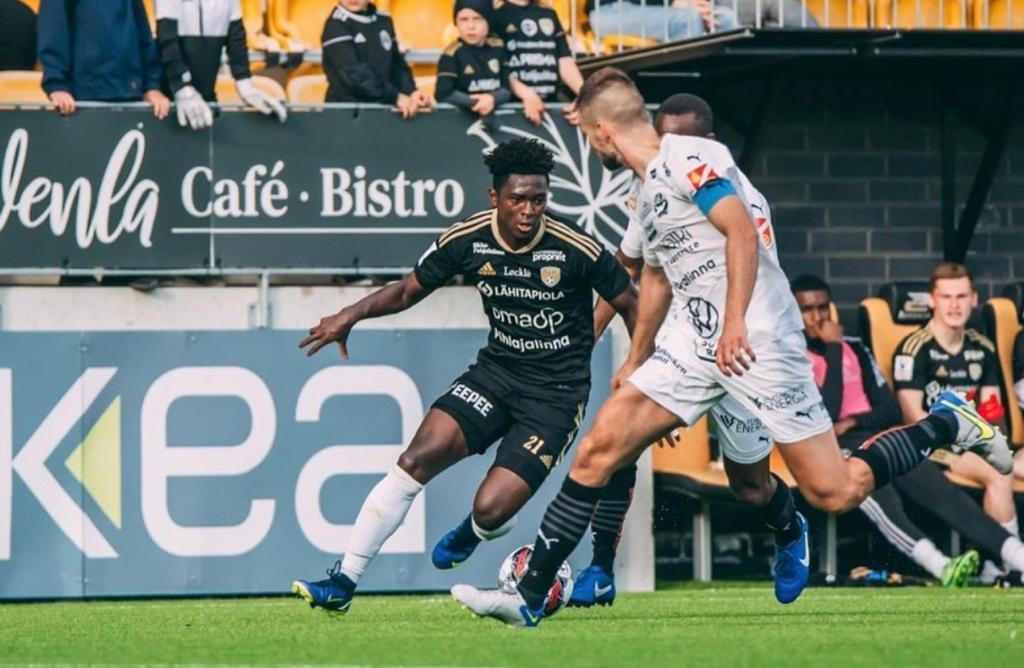
SJK Seinäjoki are the biggest surprise in the Nordic ranking.
With an average age of only 22.9 years, the Finnish club are not only the youngest team in the Nordic region.
They are also third in the entire global comparison.
SJK have a lower average age than several famous youth-development clubs, including:
- RB Salzburg
- AZ Alkmaar
- FC Nordsjælland
- FC Groningen
- Chelsea
- Anderlecht
SJK have created a clear pathway between their youth academy, development teams and senior side.
The low average age shows that young players are not simply invited to train with the first team.
They are given real minutes and meaningful responsibility in competitive matches.
FC Nordsjælland Have the Youngest Team in Denmark
FC Nordsjælland have a match-weighted average age of 24.1 years, making them the youngest Danish club in the database.
| Danish club | Average age |
|---|---|
| FC Nordsjælland | 24.1 |
| Viborg FF | 24.4 |
| FC Midtjylland | 24.6 |
| FC Fredericia | 24.8 |
| Sønderjyske | 25.9 |
| FC Copenhagen | 27.2 |
FC Nordsjælland’s position is not the result of a single unusually young season.
In a separate CIES study covering a five-year period, FC Nordsjælland had the highest percentage of league minutes played by under-21 players among clubs from 50 top divisions.
A remarkable 44.7 per cent of FC Nordsjælland’s league minutes were played by under-21 footballers.
The club had also used 63 different players who had not yet turned 21.
That was the highest number among all clubs included in the study.
It highlights the difference between simply having young players in the squad and genuinely building the first team around them.
The 20 Youngest Football Teams in Europe
European clubs dominate the global ranking.
The first 16 teams on the list all come from European leagues before New York Red Bulls become the first non-European club to appear.
| European rank | Club | Country | Average age |
|---|---|---|---|
| 1 | RC Strasbourg | France | 21.9 |
| 2 | NK Domžale | Slovenia | 22.7 |
| 3 | SJK Seinäjoki | Finland | 22.9 |
| 4 | Rukh Lviv | Ukraine | 23.3 |
| 5 | FK Kryvbas | Ukraine | 23.4 |
| 6 | AS Trenčín | Slovakia | 23.5 |
| 7 | KVC Westerlo | Belgium | 23.6 |
| 8 | NK Bravo | Slovenia | 23.7 |
| 9 | RB Salzburg | Austria | 23.7 |
| 10 | AZ Alkmaar | Netherlands | 23.7 |
| 11 | FC Ilves | Finland | 23.8 |
| 12 | FC Luzern | Switzerland | 23.8 |
| 13 | Aalesunds FK | Norway | 23.8 |
| 14 | Zalaegerszegi TE | Hungary | 23.8 |
| 15 | Kristiansund BK | Norway | 23.8 |
| 16 | NK Radomlje | Slovenia | 23.9 |
| 17 | Grasshopper Club Zürich | Switzerland | 24.0 |
| 18 | Paris Saint-Germain | France | 24.0 |
| 19 | Sandefjord Fotball | Norway | 24.0 |
| 20 | FC Nordsjælland | Denmark | 24.1 |
Slovenia Have Europe’s Youngest League
When the clubs are grouped by competition, Slovenia’s 1. SNL has the lowest average age among the 50 national top divisions included in the study.
| Rank | League | Country | League average age |
|---|---|---|---|
| 1 | 1. SNL | Slovenia | 24.9 |
| 2 | Veikkausliiga | Finland | 25.1 |
| 3 | Pro League | Belgium | 25.1 |
| 4 | Eredivisie | Netherlands | 25.6 |
| 5 | Allsvenskan | Sweden | 25.9 |
| 6 | Liga Portugal | Portugal | 25.9 |
| 7 | Bundesliga | Austria | 25.9 |
Slovenia have three clubs among Europe’s 16 youngest teams:
- NK Domžale
- NK Bravo
- NK Radomlje
Finland also have SJK Seinäjoki and FC Ilves near the very top of the European ranking.
Clubs in smaller European leagues are often more dependent on:
- Developing academy players
- Signing affordable young talents
- Giving players early first-team experience
- Selling players to larger leagues
- Reinvesting transfer income
This creates a very different age profile from leagues where clubs can afford to buy established, fully developed footballers.
RC Strasbourg Have the Youngest Team in Europe
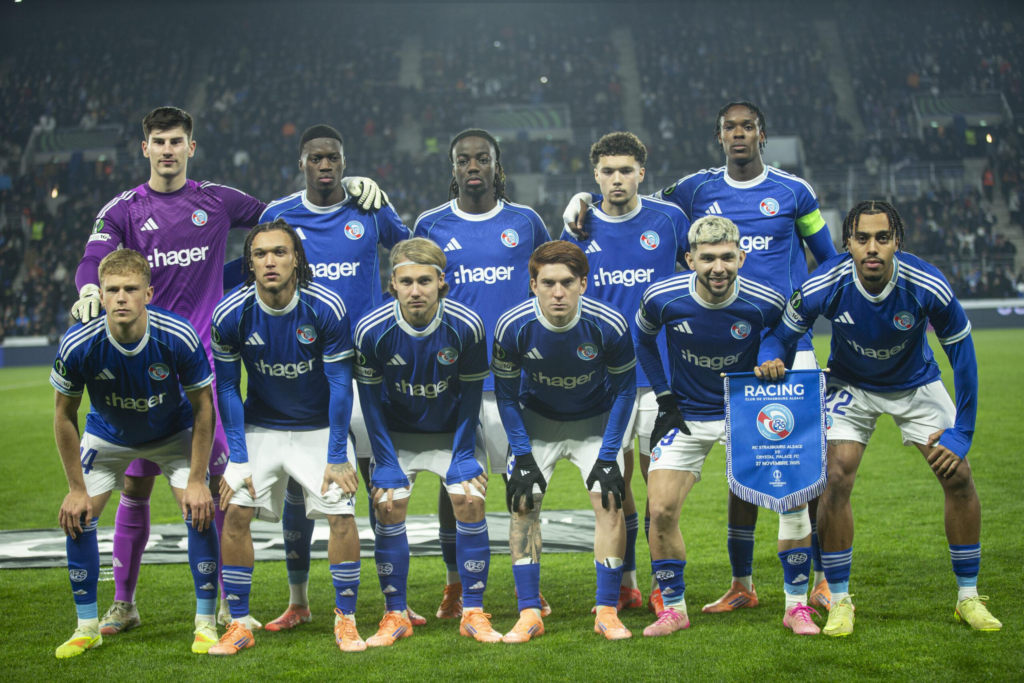
RC Strasbourg stand out dramatically from the rest of the ranking.
An average age of 21.9 years is extremely low for a club competing in one of Europe’s five biggest leagues.
The French club are several years younger than many of their direct rivals.
In 2025, Strasbourg were reported to have become the first club in Europe’s top five leagues to start a match with an entire starting eleven made up of players born in 2000 or later.
The club’s strategy is closely connected to the BlueCo ownership structure involving Chelsea.
Strasbourg have become a place where talented young players can receive high-level first-team football earlier than they might at one of Europe’s biggest clubs.
The strategy has also created controversy.
Some observers see Strasbourg as a modern development club with access to an outstanding pool of young talent.
Critics, however, fear that the club’s independence and local identity could be weakened by the relationship with Chelsea.
From a sporting perspective, one thing is clear:
Strasbourg give unusually large amounts of responsibility to young players.
The Youngest Clubs in Europe’s Top Five Leagues
A CIES measurement from the beginning of the 2025/26 season identified the youngest club in each of Europe’s five biggest leagues.
| League | Youngest club | Average age in the study |
|---|---|---|
| Ligue 1 | RC Strasbourg | 21.45 |
| Serie A | Parma | 24.26 |
| Premier League | Chelsea | 24.36 |
| Bundesliga | Eintracht Frankfurt | 24.48 |
| La Liga | FC Barcelona | 25.22 |
The same measurement placed Paris Saint-Germain at 24.09 years and Real Madrid at 25.67 years.
Average ages can change during a season because starting line-ups, substitutions, injuries, transfers and academy debuts all affect the calculation.
The Youngest Football Teams Outside Europe
European clubs dominate the top of the ranking, but several clubs from North America, South America and Asia also have very young teams.
| Club | Country | League | Average age |
|---|---|---|---|
| New York Red Bulls | United States | MLS | 24.0 |
| Termez Surkhon | Uzbekistan | Super League | 24.0 |
| Rayo Zuliano | Venezuela | Liga FUTVE | 24.0 |
| Colorado Rapids | United States | MLS | 24.3 |
| Monagas SC | Venezuela | Liga FUTVE | 24.5 |
| Defensor Sporting | Uruguay | Liga AUF | 24.6 |
| Boston River | Uruguay | Liga AUF | 24.6 |
| Racing Montevideo | Uruguay | Liga AUF | 24.7 |
| CF Montréal | Canada/United States | MLS | 24.8 |
New York Red Bulls’ position fits closely with the general Red Bull football philosophy.
Both Salzburg and New York prioritise:
- Energy
- Intensity
- Physical development
- Aggressive pressing
- Young players with major development potential
- Players whose market value can increase significantly
Why Do Football Clubs Build Such Young Teams?
1. Young Players Can Increase Dramatically in Value
A player aged 18, 19 or 20 can develop both technically and financially at the same time.
When a club gives a young player league matches, European experience and international exposure, the player’s transfer value can rise very quickly.
That is why clubs such as RB Salzburg, AZ Alkmaar, Genk and FC Nordsjælland view player development as a central part of their business model.
They recruit or develop young footballers, give them responsibility and later attempt to sell them for a significant profit.
2. Early First-Team Football Attracts More Talents
A talented teenager does not necessarily choose the biggest available club.
Young players often choose the club that offers the clearest route to first-team football.
A 17-year-old may therefore select FC Nordsjælland, Salzburg or AZ Alkmaar instead of joining a bigger club where several years of reserve football or repeated loan spells may follow.
When a club can prove that young players receive genuine first-team minutes, it becomes easier to attract the next generation of talent.
3. Young Teams Can Play With Great Intensity
Young players are often associated with:
- High pressing
- Large numbers of high-intensity runs
- Aggressive counter-pressing
- Fast transitions
- Courage in one-against-one situations
- A willingness to learn
- High physical energy
- The ability to adapt to new tactical systems
However, not every young team plays the same style of football.
The coach’s tactics and the individual qualities of the players remain decisive.
4. Youth Development Can Create a Strong Club Identity
When academy players are given opportunities, the connection between the academy, first team and supporters becomes stronger.
Fans can follow a player from youth football to a senior debut, a first-team breakthrough, international recognition and a potential transfer abroad.
This can create local pride and make the club’s long-term strategy easier for supporters to understand.
Is a Young Football Team Automatically Better?
No.
A low average age tells us something about a club’s strategy, but it does not automatically prove that the team is stronger.
Young teams can benefit from:
- Speed
- Energy
- Development potential
- Tactical flexibility
- High future market value
- Hunger for success
- Courage in attacking situations
However, young teams may also lack:
- Experience in decisive matches
- Consistency across an entire season
- Leadership after setbacks
- Experience in title races
- The ability to control the rhythm of matches
- European competition experience
- Tactical discipline under extreme pressure
The strongest squad is therefore not always the youngest or the oldest.
It is often the squad that finds the right balance between youth, quality and experience.
A team may use several young attacking players while relying on an experienced goalkeeper, centre-back and central midfielder to provide leadership and calmness.
FC Nordsjælland Show the Difference Between Talent and Talent Development
It is not enough for a club to own a large academy or register many young players in the first-team squad.
Genuine talent development requires:
- A clear pathway to the first team
- Coaches who accept development mistakes
- Minutes in meaningful matches
- Individual development plans
- Technical and tactical coaching
- Physical development without rushing the process
- Support from the club’s leadership
- The courage to start young players
- An environment where players are not afraid to make mistakes
- A long-term strategy
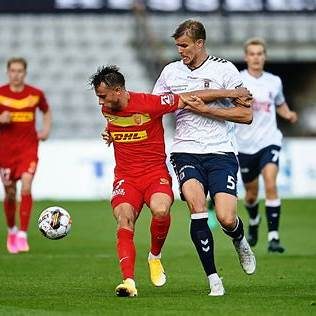
FC Nordsjælland’s relationship with Right to Dream has created a pathway between the academy in Ghana and professional football in Denmark.
Players such as Mohammed Kudus, Mikkel Damsgaard, Kamaldeen Sulemana and Ernest Nuamah are examples of major talents connected to the FC Nordsjælland or Right to Dream system.
FC Nordsjælland do not simply give young players their debuts.
The club frequently gives them central roles in which they are expected to influence and decide matches.
What Can Youth Coaches Learn From the World’s Youngest Professional Teams?
The models used by professional clubs cannot be copied directly by every grassroots or youth team.
However, many of the principles can be applied by coaches at almost every level.
Give Players Responsibility
Young players do not develop through instructions alone.
They must also make their own decisions in training and matches.
A coach should help players understand situations without controlling every pass and movement from the touchline.
Develop Game Intelligence
Technical quality is essential, but players must also learn to:
- Scan before receiving the ball
- Find space between opponents
- Evaluate risk
- React after losing possession
- Understand the movements of teammates
- Choose the right solution under pressure
- Recognise opportunities before receiving the ball
Accept Development Mistakes
A young player who is substituted immediately after making a mistake may quickly become afraid to take risks.
Clubs with strong development systems accept that mistakes are part of the learning process, provided the player tries to understand the situation and responds better the next time.
Mistakes should not be ignored, but they should be used constructively.
Create More Ball Contacts
Small-sided games, station training, one-against-one exercises and activities involving fewer players provide more decisions and more touches than drills with long queues.
Players improve through actions.
The more relevant passes, dribbles, shots, turns and decisions a player experiences, the greater the opportunity for development.
Measure Development Over Time
The best player at the age of 12 is not necessarily the best player at 18.
Physical maturity, motivation, training environment, game intelligence and mental strength can change the development process dramatically.
Coaches should therefore avoid selecting players only because they are currently the biggest, fastest or strongest.
Videos About Youth Development and Young Football Teams
Right to Dream and FC Nordsjælland – A Common Purpose
This video explores the relationship between FC Nordsjælland and the Right to Dream academy.
RB Salzburg’s Pathway From the Academy to International Football
RB Salzburg have become known as one of Europe’s leading clubs for developing young players.
The club combines academy coaching, a clear playing philosophy and early first-team football.
FC Nordsjælland and the Pathway to the First Team
FC Nordsjælland have spent many years establishing themselves as one of Europe’s leading clubs for giving responsibility to young players.
Find videos about FC Nordsjælland and Right to Dream
Read More About Talent Development and Football Training on Finter.dk
How to Identify Talent in Football
Right to Dream – The Football Academy Changing Lives
Football Clubs That Develop World-Class Talents
The 25 Best Youth Academies in World Football
DBU Academy Star Ratings 2026-2028
Danish Club Football – Club by Club
FC Midtjylland’s Talent Development Gold Mine
Lyngby Boldklub – The Story of Denmark’s Talent Factory
Denmark’s Youth National Teams and Clubs
The Relative Age Effect in Football
Why Many Elite Youth Talents Never Become Professionals
The 10,000-Hour Rule in Football
How to Become a Better Footballer Quickly
49 Football Drills for Technique and Game Intelligence
Game-Intelligence Drills for Young Players
Ball Contacts and Player Development
Football Warm-Up Drills With the Ball
Frequently Asked Questions About the World’s Youngest Football Teams
Which Football Club Has the Youngest Team in the World?
RC Strasbourg have the lowest average age in the CIES comparison of clubs from 50 national top divisions.
The French club have an average age of 21.9 years.
Which Football Club Has the Youngest Team in Europe?
RC Strasbourg are also the youngest team in Europe.
NK Domžale and Finnish club SJK Seinäjoki occupy the next positions.
Which Football Club Has the Youngest Team in Scandinavia and the Nordic Countries?
SJK Seinäjoki from Finland have the youngest team in the Nordic region, with an average age of 22.9 years.
Which Danish Football Club Has the Youngest Team?
FC Nordsjælland are the youngest Danish club, with an average age of 24.1 years.
Viborg FF follow with 24.4 years, while FC Midtjylland have an average age of 24.6 years.
Do FC Nordsjælland Have the Youngest Team in the World?
No, not in the current seasonal comparison.
However, FC Nordsjælland remain one of the most consistent youth-development clubs in world football and have given an unusually high percentage of league minutes to under-21 players over a longer period.
Are the Figures Based on the Entire Registered Squad?
No.
The CIES measurement is based on the players and line-ups actually used in league matches.
A club cannot create an artificially low average simply by registering several young players who never appear in competitive matches.
Is It an Advantage to Have a Young Team?
A young team may have major development and transfer potential, but it can also lack experience and consistency.
The ideal age profile depends on the club’s finances, playing style, sporting objectives and the quality of the individual players.
How Often Does a Team’s Average Age Change?
The average can change after almost every match.
Different starting line-ups, substitutions, injuries, transfers and academy debuts all affect the calculation.
Rankings of football teams by average age should therefore be understood as a snapshot rather than a permanent result.
Why Do Smaller Leagues Often Have Younger Teams?
Clubs in smaller leagues are often more dependent on youth development and transfer income.
They therefore give young players earlier debuts and more first-team minutes because player development is also an important part of their financial model.
Which Football League Has the Lowest Average Age?
Slovenia’s 1. SNL has the lowest combined average age in the ranking at approximately 24.9 years.
Finland’s Veikkausliiga and Belgium’s Pro League follow closely behind.
Conclusion: Young Players Are Becoming More Important in Modern Football
RC Strasbourg have created one of the youngest teams ever seen in one of Europe’s major leagues.
At the same time, SJK Seinäjoki, FC Ilves, Aalesunds FK, Kristiansund BK and FC Nordsjælland show that the Nordic region remains one of the strongest areas for youth development and early first-team football.
The most important findings are:
- RC Strasbourg have the youngest team in the global database at 21.9 years.
- SJK Seinäjoki have the youngest team in the Nordic region at 22.9 years.
- FC Nordsjælland have the youngest team in Denmark at 24.1 years.
- Slovenia have the youngest league with a combined average age of 24.9 years.
- Finland have the second-youngest league at 25.1 years.
- FC Nordsjælland have consistently given a very high percentage of minutes to young players.
A low average age does not guarantee victories.
However, it reveals a great deal about a club’s courage, strategy and willingness to invest in the future.
In modern football, young players are no longer simply substitutes waiting for an opportunity.
At the world’s best development clubs, they are the foundation of both the sporting project and the financial future.