
⚽ FINTER WORLD · PREMIUM FOOTBALL ACADEMY 2026/27
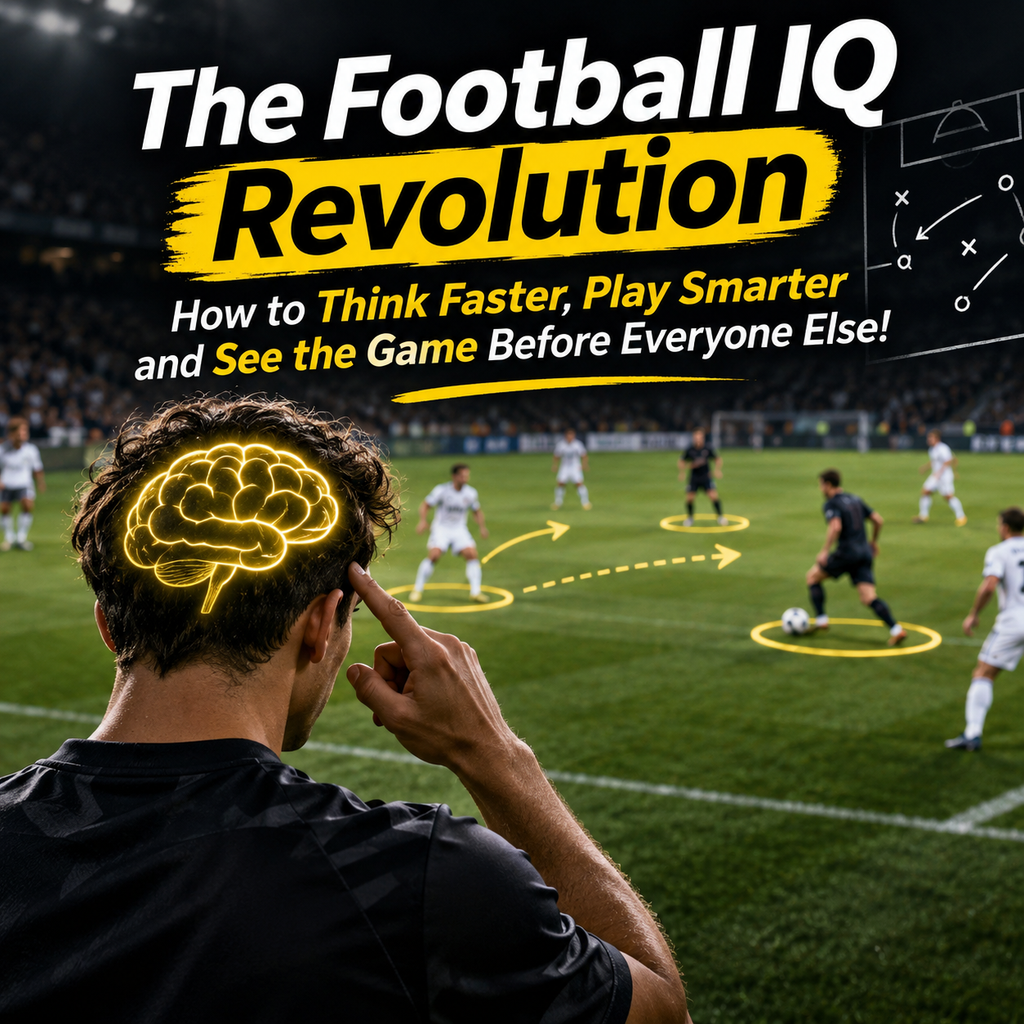
THE FOOTBALL IQ REVOLUTION
Think Faster. Play Smarter. See the Game Before Everyone Else.
FINTER’s Ultimate Interactive Football Intelligence Guide
🧠 Football IQ Tests · 👀 Scanning Challenges · ⚽ 20 Coaching Drills · 🎮 Tactical Decision Simulator · 🏆 Football Legends · 📅 30-Day Challenge
For players, coaches and parents. From U6 to senior football.
📘 DOWNLOAD FREE 11-PAGE COACHING PDF 🎮 TRY THE FOOTBALL IQ SIMULATOR🧠 What Is Football IQ?
Imagine two footballers with similar technical ability, speed and physical strength.
One repeatedly loses possession under pressure. The other seems to have more time, finds better passing options and escapes opponents.
What makes the difference?
Often, it is not simply how fast they move. It is how effectively they recognise information, anticipate situations and choose their next action.
Football intelligence is the ability to perceive, understand and respond to situations in the game.
It includes scanning, positioning, anticipation, decision-making, creativity and tactical awareness.
FINTER’s Football Intelligence Principle
SEE → UNDERSTAND → DECIDE → EXECUTE → ADAPT
These processes overlap continuously during football. Intelligent players connect what they notice with what they do.
Football IQ is not a scientifically established single-number measurement of football ability. It is an informal term for several related skills.
The interactive tests in this guide are educational activities rather than scientifically validated intelligence assessments.
🔬 1. The Science of Football Intelligence
Football is an unpredictable environment. Players must continuously respond to moving teammates, opponents, available space and changing game situations.
Football intelligence involves several interconnected capabilities.
👀 Perception
Identifying useful information before and during play.
🧠 Anticipation
Recognising patterns and predicting likely events.
⚽ Decision-Making
Choosing between passing, dribbling, shooting, pressing or moving.
🎯 Execution
Connecting decisions with suitable technical actions.
🔄 Adaptability
Finding another solution when circumstances change.
🤝 Tactical Awareness
Understanding how individual actions affect teammates and opponents.
Can Football Intelligence Be Trained?
Players can develop important capabilities such as awareness, anticipation, positioning and decision-making through suitable practice.
Small-sided games, realistic opponents, variable situations and thoughtful coaching can all contribute to learning.
However, improvement is not guaranteed by any single exercise or training method.
Do not simply tell players what to do. Design football situations that help them recognise problems, explore options and learn from the consequences.
🏆 2. Twenty Icons of Football Intelligence
This editorial selection celebrates players who demonstrate different forms of football intelligence.
It is not a scientific ranking. There is no universally accepted Football IQ score that can reliably compare players across generations.
1. Lionel Messi
Space recognition, deception and decisions.
2. Xavi Hernández
Scanning, passing angles and tempo.
3. Andrés Iniesta
Press resistance and body orientation.
4. Johan Cruyff
Positional understanding and innovation.
5. Luka Modrić
Awareness, movement and midfield control.
6. Sergio Busquets
Anticipation and defensive positioning.
7. Kevin De Bruyne
Vision, timing and penetrating passes.
8. Rodri
Positioning and game management.
9. Zinedine Zidane
First touch and creative execution.
10. Andrea Pirlo
Distribution and spatial awareness.
11. Thomas Müller
Movement and exploitation of space.
12. Toni Kroos
Passing rhythm and intelligent positioning.
13. Philipp Lahm
Defensive intelligence and versatility.
14. Dennis Bergkamp
First-touch intelligence and creativity.
15. Francesco Totti
Attacking combinations and vision.
16. Xabi Alonso
Game reading and long-range passing.
17. Carles Puyol
Defensive anticipation and leadership.
18. Alexia Putellas
Combination play and creative decisions.
19. Aitana Bonmatí
Scanning and positional movement.
20. Caroline Graham Hansen
One-on-one decisions and attacking timing.
👀 3. The Football Scanning Academy
Scanning means directing attention toward the surroundings to collect useful information.
Players frequently scan before receiving possession. They may look for opponents, teammates, space, passing lanes and approaching pressure.
Research discussed by the FIFA Training Centre shows that scanning patterns vary according to playing position and game context.
Scanning is not simply about turning your head as often as possible. The player must notice relevant information and use it effectively.
🎯 Interactive Scanning Challenge
A midfielder is about to receive a pass. An opponent approaches from behind. A teammate is free on the right. There is space to turn toward the left.
What should the midfielder do before receiving?
Five Scanning Habits
- Look around while the ball travels.
- Identify opponents and useful space.
- Adjust body position before receiving.
- Choose a suitable first touch.
- Reassess options as the situation changes.
🧠 4. Interactive Football IQ Test
Answer ten situations and discover how well you understand important football decisions.
Educational self-test only. The score is not a validated assessment of intelligence or football potential.
🎮 5. Interactive Football Decision Simulator
Enter ten fictional match situations inspired by the decision-making demands of elite football.
Study the tactical board, assess the situation and choose your next action.
Real matches can have several effective solutions. The simulator illustrates coaching principles rather than absolute rules.
⚽ FINTER MATCH INTELLIGENCE LAB
⚽ 6. Twenty Football IQ Training Drills
These exercises connect perception, decision-making and technical execution through game-like situations.
Coaches should adjust pitch size, duration, opposition and complexity to their players.
📘 FREE FINTER FOOTBALL IQ COACHING PACK
Take the Football IQ Academy to the training pitch.
Download the free 11-page FINTER Premium Coaching Pack with 20 training drills, tactical diagrams, three complete training sessions, a four-week development programme, coaching dilemmas and printable observation sheets.
📥 DOWNLOAD THE FREE 11-PAGE PDFFree · Printable A4 · U6 to Senior
🎛️ 7. Interactive Football IQ Training Generator
Build a training session based on age and the football intelligence skill you want to develop.
🏆 8. Fifteen-Question Football Intelligence Quiz
Test your knowledge of scanning, positioning, anticipation, pressing and decision-making.
👨🏫 9. Fifteen Football Coaching Dilemmas
Good coaching involves much more than telling players what to do.
Explore fifteen realistic situations and consider how you would respond.
📋 10. Three Complete Football IQ Training Sessions
Session A: U6–U8 | 60 Minutes
Theme: Look, move and choose.
- 10 minutes: Dribble and find open space.
- 10 minutes: Colour-gate decisions.
- 15 minutes: 2v2 to two goals.
- 15 minutes: 3v3 free play.
- 10 minutes: Small matches and reflection.
Coaching focus: Encourage players to look up, recognise space and try different solutions.
Session B: U9–U12 | 75 Minutes
Theme: Scan, pass and move.
- 10 minutes: Ball mastery with visual cues.
- 15 minutes: Scanning before receiving.
- 15 minutes: 3v2 decision game.
- 15 minutes: 3v3 with supporting players.
- 15 minutes: 4v4 directional match.
- 5 minutes: Reflection and feedback.
Coaching focus: Recognise when to pass, turn, dribble or move to support.
Session C: U13–Senior | 90 Minutes
Theme: Anticipation, transitions and intelligent positioning.
- 15 minutes: Scanning and passing warm-up.
- 15 minutes: Directional rondo.
- 20 minutes: 4v4 plus neutral players.
- 20 minutes: Transition and counterpressing game.
- 15 minutes: Tactical match.
- 5 minutes: Team reflection.
Coaching focus: Recognise pressure triggers, create passing options, protect central spaces and react after possession changes.
📈 11. Four-Week Football Intelligence Development Plan
Week 1: Awareness
Develop scanning habits, body orientation and awareness of space.
Use 2v2, 3v3 and simple receiving exercises.
Week 2: Decisions
Develop choices between passing, dribbling, turning and shooting.
Use 3v2 overload games and directional play.
Week 3: Anticipation
Develop defensive positioning, pressing triggers and transition reactions.
Use 4v4 and transition games.
Week 4: Match Intelligence
Connect awareness, decisions and tactical movement in realistic matches.
Use free play, video analysis and individual reflection.
How to Evaluate Progress
Observe whether players recognise pressure, create passing options, react to turnovers and choose useful actions.
Do not evaluate children only by goals, assists or the number of mistakes.
📅 12. The 30-Day Football IQ Challenge
Complete one football intelligence activity each day.
The challenge includes scanning, movement, decisions, anticipation and reflection.
Complete 30-Day Programme
🎥 13. Football Intelligence Video Academy
Video analysis can help players recognise important information and discuss decisions.
Pause a sequence before the player receives the ball and predict what might happen next.
Messi: Space and Decisions
▶ Explore Messi AnalysisXavi: Scanning
▶ Explore Xavi AnalysisIniesta: Playing Under Pressure
▶ Explore Iniesta AnalysisModrić: Midfield Intelligence
▶ Explore Modrić AnalysisBusquets: Positioning
▶ Explore Busquets AnalysisBonmatí: Intelligent Movement
▶ Explore Bonmatí AnalysisFINTER Video Analysis Challenge
- Where are the nearest opponents?
- Which teammate is available?
- Where is the useful space?
- What might happen next?
- What would you do?
Resume the video and compare your decision with what actually happened.
👨👩👧 14. Football Intelligence for Children and Parents
Football intelligence should never become another source of pressure for children.
Young players learn through exploration, repetition, creativity and mistakes.
Five Important Principles
- Give children opportunities to make their own decisions.
- Encourage experimentation instead of demanding perfection.
- Use small-sided games with many involvements.
- Ask open questions instead of constantly giving answers.
- Recognise intelligent actions even when execution fails.
Questions Parents Can Ask After Football
- What was your favourite moment?
- Did you discover a new way to solve a problem?
- What did you notice during the game?
- What would you like to try next time?
A slower decision does not mean that a child lacks football intelligence.
Development depends on experience, the learning environment, individual differences and the situation.
🏆 15. Who Has the Greatest Football Intelligence?
Which player impresses you most with their reading of the game?
Choose your favourite in this FINTER Football Intelligence Debate.
This browser-based poll is for entertainment. Votes are stored locally and are not combined across visitors.
📘 16. Download the Free Football IQ Coaching Pack
FINTER FOOTBALL IQ PREMIUM COACHING PACK 2026/27
11 Pages of Practical Football Intelligence Training
20 Football Drills · Tactical Diagrams · 3 Training Programmes · Four-Week Development Plan · 30-Day Challenge · Coaching Dilemmas · Printable Observation Sheets
📥 DOWNLOAD YOUR FREE FOOTBALL IQ PDFFree · Printable · For Coaches, Players and Parents
❓ 17. Frequently Asked Questions
What is Football IQ?
Football IQ is an informal term describing the ability to understand football situations, recognise information and make effective decisions.
Can Football IQ be improved?
Players can develop scanning, anticipation, positioning and decision-making through appropriate football practice.
Does scanning make footballers better?
Scanning can help players recognise space, opponents and teammates. Its usefulness depends on how the information influences their decisions.
Are small-sided games good for Football IQ?
Small-sided games provide repeated opportunities to recognise situations, make decisions and respond to opponents.
Who has the highest Football IQ?
There is no universally accepted scientific ranking. Messi, Xavi, Iniesta, Cruyff and Modrić are frequently admired for different forms of football intelligence.
Can children train football intelligence?
Yes. Age-appropriate games can support awareness, decision-making, movement and problem solving.
Is Football IQ more important than technique?
They work together. A good decision must be connected to the technical ability to perform it.
📚 18. Research and Official Coaching Resources
The training recommendations in this article are informed by established football coaching principles.
The interactive tests and scores are FINTER educational tools, not validated scientific assessments.
- FIFA Training Centre – Karl Aksum on Scanning
- FIFA Training Centre – Official Coaching Resources
- The FA – Coaching and Player Development
🔗 Continue Learning with FINTER
Explore more coaching resources, football exercises, training programmes and interactive football guides.
Small-Sided Football
Explore Small-Sided Games →Football Coaching Guides
Explore Coaching Resources →Free FINTER PDFs
Explore Printable Coaching Packs →FINTER Football Universe
Explore FINTER.dk →🏆 The Football IQ Revolution Starts on the Pitch
Football intelligence is not about memorising hundreds of tactical instructions.
It is about recognising information, understanding situations, making decisions and adapting to the game.
The best learning environments allow players to experience these situations repeatedly.
SEE MORE. THINK SMARTER. PLAY BETTER.
FINTER WORLD – Football Education for Everyone.
📘 DOWNLOAD FREE FOOTBALL IQ COACHING PDF