
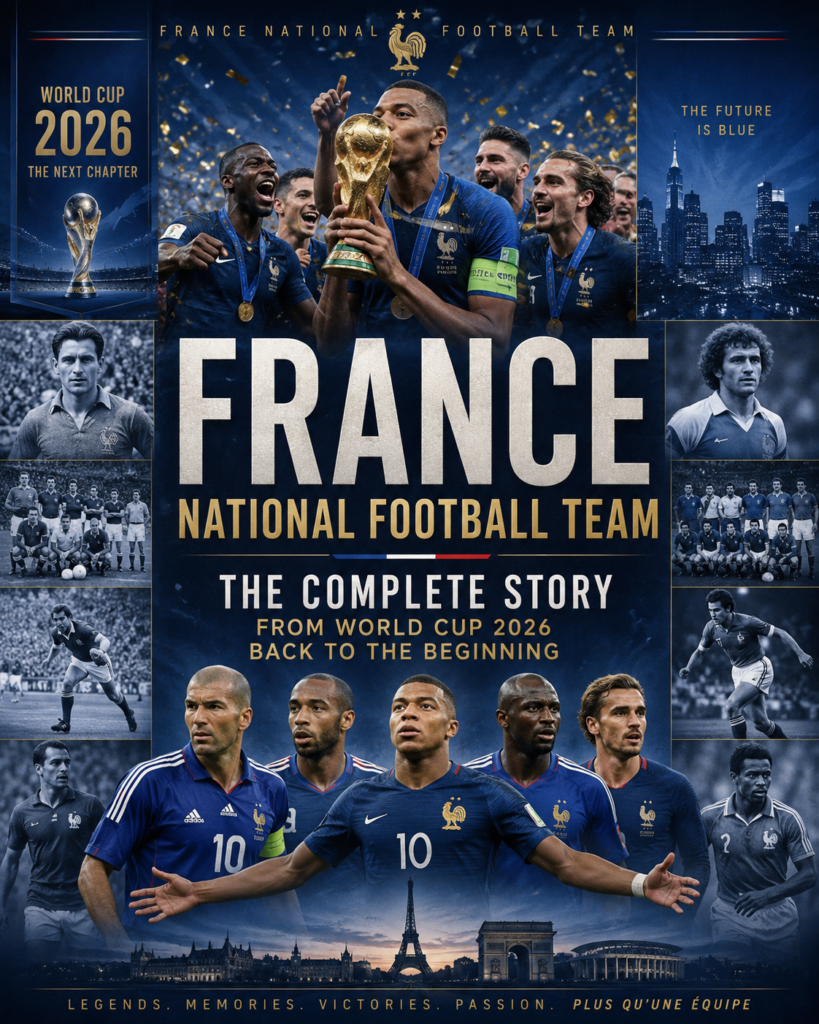
France are one of football’s great international teams.
Few nations can match the mix of talent, drama, history and tournament success that Les Bleus have produced. France have lifted the World Cup twice, won the European Championship twice, reached several major finals and created some of the most gifted players the game has ever seen.
There was Michel Platini controlling matches with his intelligence and free-kicks. There was Just Fontaine scoring an incredible 13 goals at one World Cup. There was Zinedine Zidane turning the 1998 World Cup final into his personal stage. There was Thierry Henry at full speed, Antoine Griezmann at his cleverest, N’Golo Kanté covering every blade of grass and Kylian Mbappé becoming a global superstar before most players reach their peak.
Now, in 2026, France are once again at the centre of the football world.
This is the complete story of the France national football team — starting with the current World Cup generation and moving backwards through the greatest matches, the biggest stars, the painful defeats and the moments that made Les Bleus one of international football’s true superpowers.
France at a Glance
| Category | France |
|---|---|
| Nickname | Les Bleus |
| Football federation | French Football Federation |
| First World Cup appearance | 1930 |
| World Cup titles | 2 — 1998 and 2018 |
| European Championship titles | 2 — 1984 and 2000 |
| Nations League titles | 1 — 2021 |
| Current captain | Kylian Mbappé |
| Current head coach | Didier Deschamps |
| World Cup 2026 status | Round of 16 |
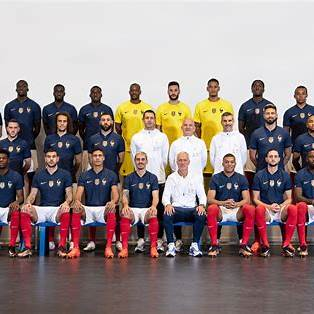
France at the 2026 World Cup: A New Chapter in a Famous Story
France entered the 2026 World Cup carrying huge expectations.
That is nothing unusual. Whenever France arrive at a major tournament with a fit Kylian Mbappé, elite defenders, creative wide players and midfielders capable of controlling the biggest matches, they belong in the conversation about the trophy.
But the 2026 team feels especially important.
It is the final World Cup for Didier Deschamps as France head coach. It is also the tournament where Mbappé has fully moved from being the young superstar to being the central leader of the national team. He is no longer simply the frighteningly quick forward who lit up the 2018 World Cup. He is the captain, the main scorer, the headline name and the player opponents fear most.
France topped Group I after beating Senegal 3–1, Iraq 3–0 and Norway 4–1. They then defeated Sweden 3–0 in the Round of 32 to set up a Round of 16 match against Paraguay.
The numbers are impressive, but the performances have been just as important.
France have looked fast, direct and dangerous. They have the ability to score from transitions, dominate possession when required and use their depth from the bench to change a match late on.
That balance is one of the main reasons why France are so difficult to beat in tournament football.
The Current France Team: More Than Just Mbappé
Kylian Mbappé is the face of the team, but France are not built around one player alone.
The 2026 squad has quality in every area of the pitch. Mike Maignan provides calmness and quality in goal. William Saliba, Dayot Upamecano, Ibrahima Konaté, Jules Koundé, Theo Hernández and Lucas Hernández give France strength, speed and experience in defence.
In midfield, Aurélien Tchouaméni brings control and tactical intelligence. Adrien Rabiot adds energy and balance. N’Golo Kanté remains a unique presence, able to win the ball, cover spaces and make difficult work look simple.
Further forward, the options are extraordinary.
Ousmane Dembélé can create chaos with either foot. Michael Olise brings calmness, technique and a brilliant left foot. Bradley Barcola attacks space relentlessly. Désiré Doué has the confidence and imagination to make something happen in tight areas. Rayan Cherki offers creativity that few players can match.
That is what makes this France team so dangerous.
They can win through pace.
They can win through individual brilliance.
They can win through control.
They can win through power.
And when one star has a quiet evening, another can take over.
France’s 2026 World Cup Squad: Experience and New Energy
France’s World Cup squad combines players who know what it takes to win major tournaments with younger players who are still writing the first chapters of their international careers.
Four members of the 2026 squad were part of the 2018 World Cup-winning team:
- Kylian Mbappé
- Ousmane Dembélé
- N’Golo Kanté
- Lucas Hernández
That connection matters.
These players understand the pressure of a World Cup. They have experienced the celebrations, the difficult moments, the knockout matches and the attention that comes with representing France.
Around them is a newer generation.
Michael Olise, Désiré Doué, Bradley Barcola, Warren Zaïre-Emery, Rayan Cherki, Manu Koné and Maghnes Akliouche represent the future of French football. They grew up watching Mbappé, Griezmann and Kanté. Now they are expected to carry the next era of Les Bleus.
France have never lacked talent. The real challenge has always been turning talent into a team.
In 2026, they appear to have found an exciting balance between established winners and fearless young players.
Kylian Mbappé: From Teenage Sensation to France Captain
Kylian Mbappé’s France story is already one of the greatest in football history.
He became a world champion in 2018 at the age of 19. He scored four goals at that tournament, including one in the final against Croatia. In 2022, he produced one of the greatest individual performances ever seen in a World Cup final, scoring a hat-trick against Argentina.
France lost that final on penalties, but Mbappé left the pitch having shown the world that he belonged among football’s biggest names.
By the 2026 World Cup, he had become France’s all-time leading scorer. He had also reached 100 international appearances during the group stage.
Those numbers are remarkable, but they do not fully explain his importance.
Mbappé gives France belief.
His speed changes the way opponents defend. His movement creates space for teammates. His finishing turns half-chances into goals. His confidence lifts the entire team.
Most importantly, he seems comfortable with responsibility.
When France need a goal, he wants the ball.
When the pressure rises, he wants the moment.
That is the difference between a brilliant player and a true national-team leader.
Kylian Mbappé’s France Legacy So Far
| Achievement | Why It Matters |
|---|---|
| World Cup winner in 2018 | Won football’s biggest trophy at 19 |
| World Cup final hat-trick in 2022 | One of the greatest final displays ever |
| France captain | Became the main leader of Les Bleus |
| France all-time top scorer | Passed legends including Thierry Henry and Olivier Giroud |
| 100 international appearances | Reached a major national-team milestone at a young age |
Didier Deschamps: The Man Connecting 1998, 2018 and 2026
Didier Deschamps is one of the most important figures in the history of French football.
As a player, he was the captain of the team that won the 1998 World Cup on home soil. Two years later, he helped France win Euro 2000.
As a coach, he led France to the 2018 World Cup title and the 2022 World Cup final.
That alone gives him a unique place in football history.
Deschamps has often been described as pragmatic. He is not a coach who chases beautiful football for its own sake. He wants balance. He wants discipline. He wants players to understand their roles.
Some fans want France to attack with even more freedom because the squad contains so much flair. But Deschamps understands something important about international football:
The best teams are not always the teams with the most beautiful players.
The best teams are often the ones that know exactly when to attack, when to defend and how to survive difficult moments.
That is why France have been so strong in major tournaments during his time in charge.
They have had explosive attackers, but they have also had structure.
They have had stars, but they have also had workers.
They have had individual magic, but they have also had a clear plan.
World Cup 2026 is expected to be Deschamps’ final tournament as France head coach. That gives this team an extra layer of emotion. The players are not only trying to win for themselves and for France. They are also trying to complete the extraordinary story of a man who has already given the country so much.
How France Play in 2026
France can change shape and style depending on the opponent, but several patterns remain clear.
1. Fast attacks after winning the ball
France are devastating when they recover possession and attack quickly.
Mbappé’s pace is the obvious weapon, but Barcola, Dembélé, Olise and Doué also give France the ability to turn one defensive action into a dangerous attack within seconds.
Against teams that push high up the pitch, France can be lethal.
2. Strong defenders who can play
France do not simply defend with power.
Saliba, Konaté, Upamecano and Koundé are all capable of starting attacks from the back. This allows France to remain calm under pressure and play through the first line of an opponent’s press.
3. Flexible attacking positions
Dembélé may start wide but drift inside. Olise can play from the right but move into central areas to create. Mbappé can lead the line or begin from the left. Doué can play between the lines and make unpredictable runs.
That movement makes France difficult to mark.
4. Tournament intelligence
France know how to manage a game.
They can score early and defend a lead. They can remain patient in a tight match. They can use set pieces. They can bring elite players from the bench.
This is not always spectacular, but it is often effective.
Why France Keep Producing Elite Players
France’s strength is not just about one golden generation.
The country has built a system that regularly produces high-level players from a wide range of clubs, academies and communities. Clairefontaine has become famous around the world, but France’s player development runs much deeper than one national academy.
French football has a huge talent pool.
There are excellent youth systems at clubs such as Paris Saint-Germain, Lyon, Rennes, Monaco, Lille, Lens, Toulouse and many more. Young French players also develop in major clubs across England, Spain, Germany and Italy.
The result is a national team with options everywhere.
When one defender is injured, another top-level defender is ready.
When a forward is out of form, another forward can take his place.
When an experienced player retires, a younger player is already waiting.
That depth is one of France’s greatest advantages.
France in the Modern Era: A Team Built for Big Nights
Since 1998, France have been one of the most consistent teams in world football.
They won the World Cup in 1998.
They won Euro 2000.
They reached the World Cup final in 2006.
They won the World Cup again in 2018.
They reached another World Cup final in 2022.
They won the UEFA Nations League in 2021.
There have been disappointments too. France went out early at the 2002 World Cup and suffered a famous collapse at the 2010 World Cup. But unlike many former champions, France always seem capable of rebuilding.
That is the key to their story.
France do not depend on one era.
They move from Platini to Zidane.
From Zidane to Henry.
From Henry to Griezmann.
From Griezmann to Mbappé.
And now, from Mbappé to the next generation around him.
Related Football Content on Finter.dk
Explore World Cup 2026 content
Football skills, tricks and technique
Dribbling guides and training ideas
The Story Continues
The France team of 2026 did not appear from nowhere.
Its confidence, depth and winning mentality come from decades of history: the first great French stars, the pain of missed chances, the genius of Platini, the drama of 1982, Just Fontaine’s impossible scoring record, Zidane’s golden generation and the World Cup triumph of 1998.
The next part of this story moves backwards into the teams and players who built the France national team into the giant it is today.
France at the 2022 World Cup: The Final Nobody Will Forget
Before France arrived at the 2026 World Cup with Mbappé as captain, they had already played one of the greatest matches in football history.
The 2022 World Cup final against Argentina was not simply a final. It was a match that changed Mbappé’s status forever.
For more than 75 minutes, France looked beaten.
Argentina were faster, sharper and more emotionally charged. Lionel Messi scored. Ángel Di María scored. France had barely created a chance, and the final seemed to be slipping away.
Then Mbappé changed everything.
In the 80th minute, he scored a penalty.
Less than two minutes later, he produced an astonishing volley to make it 2–2.
France had gone from almost invisible to completely alive.
The match went into extra time. Messi scored again for Argentina, but Mbappé answered once more from the penalty spot. It completed his hat-trick in a World Cup final — something no player had achieved since Geoff Hurst for England in 1966.
Argentina eventually won on penalties after a 3–3 draw, but Mbappé finished the tournament with eight goals and won the Golden Boot.
France lost the trophy, but they gained another defining chapter in their history.
Mbappé’s 2022 World Cup Final
| Moment | What Happened |
|---|---|
| 80th minute | Mbappé scored from the penalty spot |
| 81st minute | Mbappé equalised with a brilliant volley |
| Extra time | Mbappé scored another penalty |
| Final score | Argentina 3–3 France |
| Shoot-out | Argentina won 4–2 on penalties |
| Mbappé’s final total | 3 goals |
| Mbappé’s tournament total | 8 goals and the Golden Boot |
The final also proved something important about France.
They can look finished and still come back.
They can be outplayed and still find a route back into a game.
They can be under huge pressure and still produce individual brilliance.
That ability has become part of the modern French football identity.
The Road to the 2022 Final
France did not have an easy route to the final in Qatar.
They began the tournament with a 4–1 win over Australia, then beat Denmark 2–1 before resting players in a final group-stage defeat to Tunisia. In the Round of 16, France defeated Poland 3–1, with Mbappé scoring twice.
Then came England.
It was one of the most tense matches of the tournament. Aurélien Tchouaméni opened the scoring with a long-range strike. England equalised through Harry Kane, but Olivier Giroud headed France back in front.
England had one last opportunity to force extra time when Kane stepped up for another penalty.
He missed.
France were through to the semi-finals.
Against Morocco, France faced a fearless opponent backed by huge support. Theo Hernández scored early, and substitute Randal Kolo Muani added the second goal. France reached another World Cup final.
It was their fourth major final in less than two decades:
- World Cup 2006
- Euro 2016
- World Cup 2018
- World Cup 2022
That is extraordinary consistency.
Why France Were So Strong in 2022
The 2022 team had injuries and setbacks, but they still had elite quality.
Karim Benzema was ruled out before the tournament began. Paul Pogba was unavailable. N’Golo Kanté was injured. Christopher Nkunku was also forced out shortly before the World Cup.
Many national teams would have struggled badly after losing so many important players.
France did not.
Antoine Griezmann reinvented himself as a deeper creative midfielder. Olivier Giroud became the team’s reliable target man and passed Thierry Henry as France’s all-time top scorer during the tournament. Mbappé became the game-breaker. Tchouaméni and Adrien Rabiot gave the midfield balance, while Hugo Lloris brought experience in goal.
The lesson was clear:
France had not built a team around one or two players.
They had built a system with depth.
World Cup 2018: France Become Champions Again
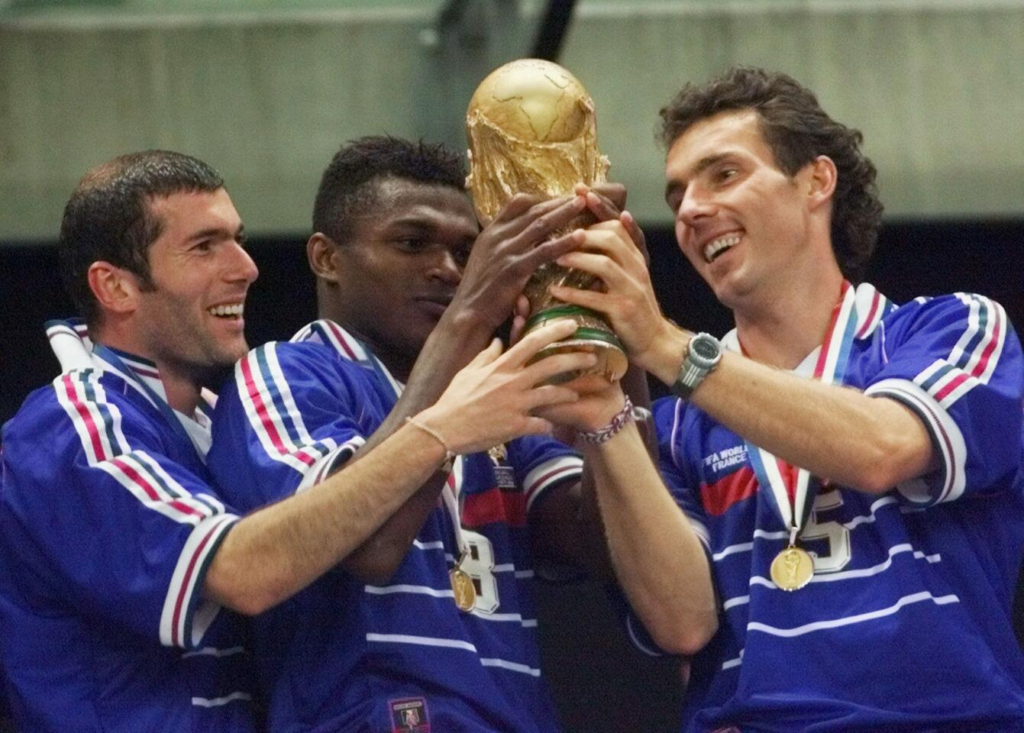
The 2018 World Cup in Russia was the tournament where France became world champions for the second time.
It was also the moment when the football world fully understood the scale of Mbappé’s potential.
France arrived in Russia with a talented but relatively young squad. The team had reached the Euro 2016 final two years earlier but lost to Portugal at home. There was still doubt about whether the players could handle the biggest moments.
By the end of the tournament, there was no doubt left.
France beat Croatia 4–2 in the final at the Luzhniki Stadium in Moscow to win their second World Cup.
The final had everything:
- A Mario Mandžukić own goal
- An Ivan Perišić equaliser
- A Griezmann penalty
- A stunning Paul Pogba goal
- Mbappé scoring in a World Cup final at 19
- A late Mandžukić goal after a Hugo Lloris mistake
France were not always the team with the most possession at the tournament.
They were simply the team that understood knockout football best.
They were compact.
They were fast.
They were disciplined.
And when the chance came, they were ruthless.
The Team That Won the 2018 World Cup
| Position | Key Players |
|---|---|
| Goalkeeper | Hugo Lloris |
| Defence | Benjamin Pavard, Raphaël Varane, Samuel Umtiti, Lucas Hernández |
| Midfield | N’Golo Kanté, Paul Pogba |
| Creative roles | Antoine Griezmann, Kylian Mbappé |
| Forward | Olivier Giroud |
| Important substitutes | Corentin Tolisso, Steven Nzonzi, Nabil Fekir, Thomas Lemar |
This was not a team built around one style of play.
Griezmann linked the midfield and attack.
Kanté won the ball and protected the defence.
Pogba could control the rhythm or deliver a decisive pass.
Varane and Umtiti formed a strong centre-back partnership.
Pavard and Lucas Hernández gave the team energy from full-back.
Giroud worked selflessly, often dragging defenders away to make room for Mbappé and Griezmann.
And Mbappé gave France an attacking weapon that almost no team could deal with.
Mbappé’s Breakthrough Against Argentina
France’s Round of 16 match against Argentina at the 2018 World Cup remains one of the great individual breakthrough performances.
Argentina had Lionel Messi.
France had an 19-year-old Mbappé.
Mbappé won a penalty after a remarkable run from deep inside his own half. He then scored twice as France won 4–3 in a breathless match.
His speed was frightening.
But the most impressive part was not only his pace.
It was his calmness in front of goal.
He did not look like a teenager playing in the biggest tournament in the world. He looked like someone who expected to decide it.
From that moment, Mbappé was no longer simply a promising young player.
He was a global football superstar.
The Goal That Defined France’s 2018 Tournament
Many people remember Mbappé’s final goal or Pavard’s famous strike against Argentina.
But Paul Pogba’s goal in the final against Croatia also captured what made France so strong.
The move began with a French counterattack.
The ball eventually came to Pogba near the edge of the penalty area. His first attempt was blocked, but the ball came back to him. This time he placed a controlled left-footed shot beyond the goalkeeper.
It was not just a goal.
It was a release of emotion.
Pogba ran toward the corner, shouting, celebrating and showing everything that the moment meant to him.
France had waited 20 years to win another World Cup.
Now they were close.
Didier Deschamps and the 2018 Masterplan
Deschamps understood his squad perfectly.
He knew France had players who could dominate the ball, but he also knew that his fastest attackers were most dangerous when space opened up behind the opposition defence.
So France did not always try to control games through possession.
Instead, they often stayed organised, waited for mistakes and attacked with extraordinary speed.
This made them difficult to play against.
Opponents could not commit too many players forward, because Mbappé would punish them.
They could not ignore Griezmann, because he could create chances from almost anywhere.
They could not dominate the midfield easily, because Kanté was always there.
They could not rely on crosses, because Varane and Umtiti were strong in the air.
France were not always flashy.
But they were complete.
That is why they won.
Euro 2016: The Home Final That Hurt
Two years before the 2018 triumph, France hosted Euro 2016.
The country was ready for a celebration.
France had a strong team, home support and Antoine Griezmann in the form of his life. Griezmann finished as the tournament’s top scorer with six goals.
France beat the Republic of Ireland, Iceland and Germany on the way to the final.
The semi-final against Germany was particularly important. Germany were world champions, but France won 2–0. Griezmann scored both goals and sent the country into a dream final at the Stade de France.
Portugal stood in the way.
Cristiano Ronaldo was injured early in the match and had to leave the field. Many expected France to take control and win the trophy.
But Portugal stayed disciplined.
France missed chances.
And in extra time, Éder scored with a long-range shot to give Portugal a 1–0 victory.
The Stade de France fell silent.
For French supporters, it was one of the most painful nights in modern football.
But it also helped build the hunger that drove the team in 2018.
Antoine Griezmann: The Star of Euro 2016
Euro 2016 was Antoine Griezmann’s tournament.
He scored twice against the Republic of Ireland in the Round of 16.
He scored against Iceland in the quarter-finals.
He scored both goals against Germany in the semi-finals.
He finished with six goals and was named Player of the Tournament.
Griezmann did not always look like the fastest or strongest player on the pitch.
But he was intelligent.
He found spaces between defenders and midfielders.
He timed his runs perfectly.
He knew when to pass, when to shoot and when to stay calm.
That football intelligence later became essential to France’s World Cup-winning team in 2018.
From Euro 2016 Pain to World Cup 2018 Glory
France’s defeat in the Euro 2016 final was devastating.
But it was also useful.
The players learned what it felt like to lose a final at home.
They learned that talent alone is not enough.
They learned that big tournaments can turn on one missed chance, one mistake or one moment of concentration.
Two years later, they were more mature.
Mbappé was more experienced.
Griezmann was more complete.
Pogba was more disciplined.
The defence was stronger.
And Deschamps had a clearer understanding of exactly what his team needed.
That is why the 2018 World Cup triumph felt like more than a single tournament win.
It felt like the final result of a journey that began with heartbreak in Paris.
The 2010 World Cup: France Hit Rock Bottom
Not every France story is a triumph.
The 2010 World Cup in South Africa was one of the darkest moments in the history of the national team.
France arrived with huge problems behind the scenes. The squad lacked unity, confidence and leadership. A public dispute between striker Nicolas Anelka and coach Raymond Domenech became a national scandal.
Anelka was sent home.
The players then refused to train in protest.
France drew with Uruguay, lost to Mexico and lost to South Africa. They finished bottom of their group and left the tournament without winning a match.
It was chaos.
For a country that had won the World Cup in 1998 and reached another final in 2006, the fall was shocking.
But the collapse forced French football to rebuild.
The federation had to reflect.
The players had to accept responsibility.
And the next generation had to create a different culture.
The rise of Deschamps as head coach later became one of the key answers.
He restored discipline.
He rebuilt trust.
And he created a group capable of winning again.
A Nation That Always Rebuilds
This is one of the most remarkable things about France.
The country has experienced brilliant generations and difficult collapses.
They have known the joy of 1998 and 2018.
They have felt the pain of 2006, 2010, 2016 and 2022.
But they always return.
That is because French football has a deep talent pool, a powerful development system and a history that keeps inspiring the next generation.
Mbappé grew up watching Zidane and Henry.
Olise, Doué, Barcola and Cherki grew up watching Mbappé.
The France story never stops.
One generation hands the blue shirt to the next.
Related Finter.dk Links
Read more World Cup 2026 stories
Explore football history on Finter.dk
Football skills, tricks and dribbling guides
Watch football videos on Finter.dk
Zinedine Zidane, the 2006 World Cup and France’s Return to the Final
Before Kylian Mbappé became France’s modern superstar, there was Zinedine Zidane.
Zidane was not simply a great French footballer. He was the player who made millions of people feel that anything could happen when he received the ball.
He played with balance, calmness and imagination. He could slow a match down, speed it up, escape pressure with one touch or decide the biggest game with a single pass.
By the 2006 World Cup in Germany, Zidane was 34 years old and approaching the end of his career. France had struggled badly in the group stage, drawing with Switzerland and South Korea before beating Togo to qualify for the knockout rounds.
Many people believed France were too old.
Many believed Zidane’s best days were gone.
Then the knockout stage began.
France beat Spain 3–1 in the Round of 16. Zidane scored the final goal after a brilliant late run, sending a clear message that he was not finished.
In the quarter-finals, France met Brazil.
Brazil were favourites. They had Ronaldinho, Kaká, Ronaldo, Adriano and a squad full of attacking stars. But the match became one of Zidane’s greatest performances.
He controlled the ball under pressure, found teammates in impossible spaces and dictated the rhythm of the game. France won 1–0 after Thierry Henry scored from Zidane’s free-kick. FIFA later described the performance as a Zidane masterclass.
France then defeated Portugal 1–0 in the semi-final, with Zidane scoring from the penalty spot.
Suddenly, France were back in the World Cup final.
The 2006 World Cup Final: Zidane’s Last Match
The final against Italy in Berlin remains one of the most dramatic matches in football history.
Zidane scored after just seven minutes with a daring Panenka penalty that bounced down from the crossbar and crossed the line.
Italy equalised through Marco Materazzi.
The match stayed tense and physical. Both sides had chances. Zidane almost scored again in extra time, but Gianluigi Buffon made a remarkable save from his close-range header.
Then came the moment nobody can forget.
Zidane headbutted Materazzi and was shown a red card.
It was the final act of his professional career.
France had to finish the match without their captain and most influential player. Italy won the penalty shoot-out 5–3 after the match ended 1–1.
It was a painful ending.
But it should not erase what Zidane did during that tournament.
He carried France past Spain.
He produced magic against Brazil.
He scored in the semi-final.
He scored in the final.
And he reminded the world why he remains one of football’s greatest players.
Zidane’s Greatest France Moments
| Tournament | Moment |
|---|---|
| World Cup 1998 | Two headers in the final against Brazil |
| Euro 2000 | Led France to the European Championship |
| World Cup 2006 | Inspired wins over Spain, Brazil and Portugal |
| World Cup 2006 Final | Scored a Panenka penalty against Italy |
| International career | Became France’s symbol of elegance and big-game quality |
Thierry Henry: France’s Fastest Football Artist
If Zidane was France’s footballing artist, Thierry Henry was their pure attacking elegance.
Henry could score in almost every way.
He could run behind defenders.
He could cut inside from the left.
He could finish calmly with the inside of his foot.
He could score from distance.
He could create chances for teammates.
He was fast, but he was never only fast. His intelligence was what made him special.
For France, Henry became the bridge between the 1998 World Cup generation and the teams that followed. He won the World Cup in 1998, Euro 2000 and played in the 2006 World Cup final.
He was part of a French attack that included David Trezeguet, Robert Pirès, Sylvain Wiltord and later Franck Ribéry.
France had never lacked great forwards, but Henry gave them something rare: a player who could create danger from almost nothing.
Related Finter.dk links:
Football skills and tricks
Dribbling guides and football technique
Football videos on Finter.dk
Euro 2000: France Become European Champions Again
France entered Euro 2000 as world champions.
Winning the World Cup in 1998 had already made them heroes at home. But winning the European Championship only two years later would prove that the 1998 triumph was not a one-off.
The tournament was held in Belgium and the Netherlands.
France had an extraordinary squad:
- Zinedine Zidane
- Thierry Henry
- David Trezeguet
- Robert Pirès
- Patrick Vieira
- Didier Deschamps
- Marcel Desailly
- Lilian Thuram
- Emmanuel Petit
- Fabien Barthez
France lost one group match against the Netherlands after qualification was already secured, but they beat Spain 2–1 in the quarter-finals and Portugal 2–1 after extra time in the semi-finals.
Then came the final against Italy.
France vs Italy in the Euro 2000 Final
Italy were seconds away from becoming European champions.
Marco Delvecchio had given Italy the lead in the second half. France pushed forward, but the Italian defence held firm.
Then, in stoppage time, Sylvain Wiltord scored.
It was 1–1.
The match went into extra time under the old golden-goal rule: the first goal would end the final immediately.
In the 103rd minute, David Trezeguet met Robert Pirès’ cross and volleyed the ball into the roof of the net.
Golden goal.
France 2–1 Italy.
European champions.
France became the first reigning World Cup holders to win the European Championship, completing one of the greatest international doubles in football history.
Why Euro 2000 France Were So Special
The France team of Euro 2000 had almost everything.
They had Zidane’s creativity.
They had Vieira’s power.
They had Henry’s speed.
They had Trezeguet’s finishing.
They had Desailly and Thuram in defence.
They had Deschamps as captain.
They had players who were already champions, but they still played with hunger.
Many great international teams have won one tournament.
Very few have managed to win the World Cup and the European Championship back-to-back.
France did it because they had world-class players in every position and a group that believed they could survive any situation.
The Euro 2000 final was proof.
They were losing.
They were nearly beaten.
Then Wiltord equalised.
Then Trezeguet ended it.
That team always had one more moment left.
World Cup 1998: The Tournament That Changed France Forever
The World Cup in 1998 was played in France.
For the country, it was much more than a football tournament.
France had never won the World Cup before.
The team had talented players, but there were doubts. Could they handle the pressure of playing at home? Could they beat the strongest nations? Could they turn a talented squad into champions?
Coach Aimé Jacquet built a team based on discipline, organisation and unity.
France were not always spectacular in the early rounds, but they were difficult to break down.
They won all three group matches, then needed a Laurent Blanc golden goal to beat Paraguay in the Round of 16. In the quarter-finals, France drew 0–0 with Italy before winning the penalty shoot-out 4–3.
The semi-final against Croatia produced one of the best stories in France’s World Cup history.
Lilian Thuram’s Unforgettable Semi-Final
France faced Croatia in the 1998 World Cup semi-final.
Croatia took the lead early in the second half through Davor Šuker.
France needed an answer.
Then Lilian Thuram did something almost nobody expected.
Thuram was one of the best defenders in the world. He was quick, powerful and brilliant in one-on-one situations. But he was not famous for scoring goals.
Against Croatia, he scored twice.
His first goal came almost immediately after Croatia had taken the lead. His second came after he won the ball, carried it forward and calmly placed the finish into the corner.
France won 2–1.
Those were the only two goals Thuram scored for France in his international career, and both came in a World Cup semi-final.
It was one of football’s perfect stories.
A defender who almost never scored became the unexpected hero in the biggest match of his life.
France vs Brazil: The 1998 World Cup Final
On 12 July 1998, France faced Brazil in the World Cup final at the Stade de France.
Brazil were the reigning world champions.
They had Ronaldo, Rivaldo, Cafu, Roberto Carlos and many of the world’s biggest stars.
France had home advantage, but the pressure was enormous.
Then Zidane took over.
He scored two goals before half-time, both headers from corners. The first came from an Emmanuel Petit delivery. The second came from a Youri Djorkaeff corner. Zidane remains the only player to score two headers in a World Cup final.
Brazil could not recover.
In stoppage time, Emmanuel Petit added a third goal.
France won 3–0.
Zidane became a national hero.
Didier Deschamps lifted the trophy as captain.
And France became world champions for the first time.
The Famous 1998 France Team
| Position | Key Players |
|---|---|
| Goalkeeper | Fabien Barthez |
| Defence | Lilian Thuram, Marcel Desailly, Laurent Blanc, Bixente Lizarazu |
| Midfield | Didier Deschamps, Emmanuel Petit, Christian Karembeu, Youri Djorkaeff |
| Playmaker | Zinedine Zidane |
| Attack | Stéphane Guivarc’h, Thierry Henry, David Trezeguet |
The team had stars, but the biggest strength was the balance.
Barthez gave confidence in goal.
Thuram, Blanc, Desailly and Lizarazu made the defence incredibly strong.
Deschamps organised the midfield.
Petit brought power and energy.
Zidane gave the team magic.
Henry added pace.
And Jacquet gave every player a clear role.
France did not win because they had one great match.
They won because they became harder and harder to beat throughout the tournament.
The Night France Became One Nation
The 1998 World Cup final became a huge moment in French history.
The team represented many different backgrounds, cities, families and stories. Players such as Zidane, Thuram, Desailly, Karembeu, Djorkaeff and Lizarazu showed a version of France that millions of people could identify with.
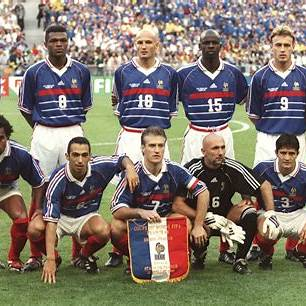
The image of the team celebrating in blue shirts after the 3–0 victory over Brazil became iconic.
For one night, football felt bigger than football.
It became a shared national celebration.
FIFA still describes the final as the day France’s World Cup dream came true.
From 1998 to Mbappé: The French Winning Tradition
The 1998 team created a standard.
The 2000 team confirmed it.
The 2006 team nearly repeated it.
The 2018 team brought the World Cup home again.
The 2022 team came within penalties of another title.
And the 2026 team is trying to add another chapter.
That is why France are different from many other football nations.
They do not only have one historic generation.
They have several.
Platini’s France.
Zidane’s France.
Henry’s France.
Griezmann’s France.
Mbappé’s France.
Every era has its own style, but all of them wear the same blue shirt and carry the same expectation.
YouTube Clips for This Section
France vs Italy – World Cup Final 2006 highlights
Zinedine Zidane vs Brazil – World Cup 2006
France vs Italy – Euro 2000 final
France vs Brazil – World Cup Final 1998
Lilian Thuram vs Croatia – World Cup 1998 semi-final
Zinedine Zidane – all France goals and highlights
Michel Platini and Euro 1984: France’s First Great Triumph
Before Zidane, Henry and Mbappé, there was Michel Platini.
Platini was France’s first true modern football superstar. He was a midfielder, but he scored goals like a striker. He could control a match with his passing, unlock a defence with one touch and punish opponents with some of the best free-kicks football has ever seen.
Euro 1984 was played in France.
It was the perfect stage for Platini.
France had never won a major international trophy before, but the team had a brilliant midfield built around Platini, Jean Tigana, Alain Giresse and Luis Fernández. The group became known as “Le Carré Magique” — The Magic Square.
They did not just play to survive.
They played with technique, confidence and imagination.
Platini scored nine goals in five matches, including hat-tricks against Belgium and Yugoslavia. It remains the highest goal total by a player at one European Championship finals tournament.
France’s Euro 1984 Results
| Match | Result | Key Detail |
|---|---|---|
| France vs Denmark | 1–0 | Platini scored |
| France vs Belgium | 5–0 | Platini hat-trick |
| France vs Yugoslavia | 3–2 | Platini hat-trick |
| France vs Portugal | 3–2 after extra time | Platini scored the winner |
| France vs Spain | 2–0 | Platini scored in the final |
The semi-final against Portugal remains one of the great European Championship matches.
France were leading, then losing, then level again. With penalties approaching, Platini arrived in the penalty area in the final minute of extra time and scored the winner. The Stade Vélodrome exploded.
Then came the final against Spain in Paris.
Platini scored from a free-kick, although Spanish goalkeeper Luis Arconada will always be remembered for letting the ball slip beneath him. Bruno Bellone added a late second goal.
France had finally won a major title.
Platini finished the tournament with nine goals, and France had found an identity that would inspire future generations.
Why Platini Was So Special
Platini was not built around raw speed or physical power.
His game was based on intelligence.
He always seemed to know where the next pass should go. He understood where the space would appear before anyone else did. He could arrive late in the box, score from distance or turn a set piece into a goal-scoring opportunity.
For a generation of French supporters, Platini was the player who proved that France could produce a footballer equal to any in the world.
He created the foundation.
Zidane later added another level of elegance.
Mbappé brought pace and goals.
But Platini was the original French maestro.
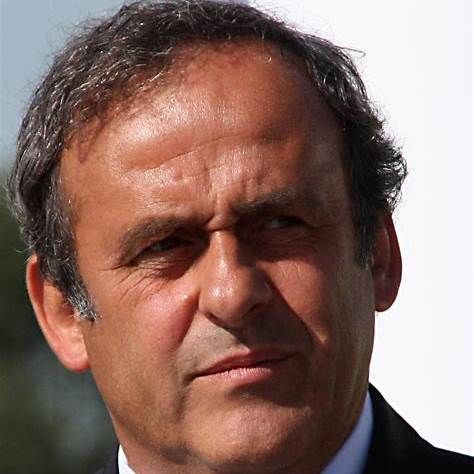
The 1982 World Cup: The Night of Seville
The 1982 World Cup semi-final between France and West Germany is one of the most famous matches in football history.
It is often called “The Night of Seville.”
France had an exciting and technically gifted team. Platini was the leader, while Tigana and Giresse controlled midfield. They played bold football and believed they could win the World Cup.
The semi-final began badly when Pierre Littbarski gave West Germany the lead.
Platini equalised from the penalty spot.
The match then became even more dramatic in extra time.
France scored twice and moved 3–1 ahead.
For a moment, they looked certain to reach the World Cup final.
But West Germany came back.
Karl-Heinz Rummenigge scored.
Then Klaus Fischer produced an extraordinary overhead kick to make it 3–3.
The match went to penalties.
It became the first penalty shoot-out in World Cup history. West Germany won 5–4, ending France’s dream in the most painful way possible.
Patrick Battiston and the Most Controversial Moment
The 1982 semi-final is also remembered for one of football’s most controversial incidents.
France midfielder Patrick Battiston ran through on goal. West Germany goalkeeper Harald Schumacher charged out and collided heavily with him.
Battiston was seriously injured.
Many people expected Schumacher to be sent off.
Instead, no card was shown.
The incident caused outrage in France and remains one of the most debated moments in World Cup history.
France eventually lost the match, but their style of football earned huge respect. The team had shown that they belonged among the best in the world again.
France at the 1986 World Cup
France returned to the World Cup in Mexico in 1986 with another powerful team.
Platini, Tigana and Giresse were still key figures. Jean-Pierre Papin was emerging. France had experience, quality and confidence after winning Euro 1984.
Their quarter-final against Brazil is remembered as one of the best World Cup matches ever played.
Brazil had Zico, Sócrates, Careca and Júnior.
France had Platini, Tigana, Giresse and an incredible ability to keep the ball.
The match finished 1–1 after extra time. Brazil missed a penalty during the match, and France eventually won the shoot-out.
France reached another World Cup semi-final.
But again, West Germany stopped them.
France lost 2–0 and later finished third after beating Belgium.
It was another talented French generation that came close without reaching the final.
But the football they played mattered.
They showed that France could be brave, creative and technically outstanding on the world stage.
Just Fontaine: The Record That Still Stands
Before Platini, before Zidane and long before Mbappé, France had Just Fontaine.
Fontaine produced one of the most astonishing individual tournaments in football history at the 1958 World Cup in Sweden.
He scored 13 goals in six matches.
Nobody has ever scored more goals at one World Cup.
Nobody has even come particularly close.
Fontaine scored:
- One goal against Scotland
- Two goals against Yugoslavia
- Hat-trick against Paraguay
- Two goals against Northern Ireland
- One goal against Brazil
- Four goals against West Germany in the third-place match
His total of 13 goals in six matches remains the record for a single World Cup tournament.
France at the 1958 World Cup
France finished third at the 1958 World Cup.
They had a thrilling attacking team, with Fontaine as the main scorer and Raymond Kopa as the creative leader.
France beat Scotland 2–1, drew 2–2 with Yugoslavia and beat Paraguay 7–3 in the group stage.
They then defeated Northern Ireland 4–0 in the quarter-finals.
Brazil stopped them in the semi-finals, winning 5–2.
But France recovered to beat West Germany 6–3 in the third-place play-off, with Fontaine scoring four times.
The tournament made Fontaine a legend.
It also showed the world that France could produce extraordinary attacking football.
The Incredible Just Fontaine Story
One of the most famous stories about Fontaine concerns his boots.
His own boots were damaged before the tournament, so he reportedly borrowed a pair from teammate Stéphane Bruey because they had the same shoe size.
Then he went out and scored 13 World Cup goals.
It is one of football’s greatest stories.
A player in borrowed boots.
A tournament nobody will ever forget.
A record that has lasted for generations.
France at the First World Cup in 1930
France were part of football history from the very beginning.
They took part in the first World Cup in Uruguay in 1930.
The journey to South America took nearly two weeks by ship. When France finally arrived, they played Mexico in the opening match of the tournament.
France won 4–1.
Lucien Laurent scored the first goal in World Cup history in the 19th minute.
That makes France one of the most important nations in the history of the competition.
They were not just present at the first World Cup.
They scored its first goal.
Jules Rimet and France’s Role in Creating the World Cup
The World Cup exists partly because of a Frenchman.
Jules Rimet was FIFA president when the first tournament was launched in 1930. The original World Cup trophy was later named after him: the Jules Rimet Trophy.
France therefore have a special connection to the competition.
They helped create it.
They played in the first edition.
They scored the first goal.
They hosted the tournament in 1938 and 1998.
And in 1998, they finally won it.
France at the 1938 World Cup
France hosted the 1938 World Cup.
Expectations were high, but the tournament ended in disappointment.
France beat Belgium 3–1 in the first round before losing 3–1 to eventual champions Italy in the quarter-finals.
Italy went on to retain the World Cup, while France had to wait another 60 years for their own global triumph.
Still, hosting the tournament mattered.
It helped strengthen football’s place in French culture and created more belief that France could one day become champions.
France’s Football Identity
French football has changed many times.
There have been elegant teams built around passing and technique.
There have been disciplined teams built around defensive strength.
There have been fast teams built around counter-attacks.
There have been young teams built around fearless talent.
But several qualities keep returning.
Technical midfielders
France have always produced outstanding midfield players.
Platini.
Tigana.
Giresse.
Zidane.
Vieira.
Pogba.
Kanté.
Tchouaméni.
Each had a different style, but all could influence the rhythm of a match.
Elite attackers
France have also produced attackers who can change games in one moment.
Fontaine.
Henry.
Trezeguet.
Griezmann.
Mbappé.
Dembélé.
They all offer something different, but they share the ability to make a difficult match suddenly feel easy.
Athletic defenders
From Thuram and Desailly to Varane, Saliba and Konaté, France have consistently produced defenders with speed, strength and composure.
That defensive quality is a major reason why France are so reliable in knockout football.
A deep talent pool
France do not rely on one club or one city.
Their players come from across the country and from academies throughout Europe.
That gives the national team a rare depth.
When one generation fades, another arrives.
France’s Greatest Tournament Moments
| Year | Tournament | Moment |
|---|---|---|
| 1930 | World Cup | Lucien Laurent scored the first World Cup goal |
| 1958 | World Cup | Just Fontaine scored 13 goals |
| 1982 | World Cup | The dramatic semi-final against West Germany |
| 1984 | European Championship | Platini led France to their first major trophy |
| 1998 | World Cup | Zidane scored twice in the final against Brazil |
| 2000 | European Championship | Trezeguet scored the golden goal against Italy |
| 2006 | World Cup | Zidane led France back to the final |
| 2018 | World Cup | Mbappé and France became world champions |
| 2022 | World Cup | Mbappé scored a final hat-trick against Argentina |
| 2026 | World Cup | Mbappé led a new France generation as captain |
France’s All-Time Greats
| Player | Main Legacy |
|---|---|
| Just Fontaine | 13 goals at the 1958 World Cup |
| Michel Platini | Nine goals at Euro 1984 |
| Zinedine Zidane | World Cup winner, Euro winner and iconic playmaker |
| Thierry Henry | France’s great modern forward |
| Didier Deschamps | World Cup winner as captain and coach |
| Lilian Thuram | Defensive legend and 1998 semi-final hero |
| Marcel Desailly | World-class defender and 1998 leader |
| Antoine Griezmann | Key player in the 2016, 2018 and 2022 eras |
| N’Golo Kanté | Midfield engine and World Cup winner |
| Kylian Mbappé | Captain, record scorer and World Cup superstar |
France’s Major Honours
| Competition | Titles |
|---|---|
| FIFA World Cup | 2 |
| UEFA European Championship | 2 |
| UEFA Nations League | 1 |
| World Cup runners-up | 2 |
| European Championship runners-up | 1 |
| World Cup third-place finishes | 2 |
France have won the World Cup in 1998 and 2018.
They won the European Championship in 1984 and 2000.
They won the UEFA Nations League in 2021.
Very few countries can match that combination of history, trophies and modern consistency.
Frequently Asked Questions About France National Team
How many World Cups has France won?
France have won the World Cup twice: in 1998 and 2018.
Who is France’s most famous player ever?
There is no single answer, but Zinedine Zidane, Michel Platini, Thierry Henry and Kylian Mbappé are usually placed at the top of the list.
Who scored the most goals at one World Cup?
Just Fontaine scored 13 goals for France at the 1958 World Cup. It remains the all-time record.
When did France win their first major trophy?
France won their first major international trophy at Euro 1984.
Who scored the first goal in World Cup history?
Lucien Laurent of France scored the first goal in World Cup history against Mexico in 1930.
Why are France so strong in football?
France combine excellent academies, a huge talent pool, strong tactical coaching, elite athletes and a long history of producing world-class players.
YouTube Clips for This Section
France vs Portugal – Euro 1984 semi-final
France vs Spain – Euro 1984 final
France vs West Germany – World Cup 1982
France vs Brazil – World Cup 1986
Just Fontaine – 13 goals at the 1958 World Cup
France vs Mexico – World Cup 1930
More Football Stories on Finter.dk
Conclusion
France are not simply a successful football nation.
They are one of the countries that helped create international football as we know it.
They scored the first goal in World Cup history.
They produced Just Fontaine’s untouchable record.
They created Platini’s magical Euro 1984.
They gave the world Zidane’s brilliance.
They won the World Cup at home in 1998.
They became champions again in 2018.
They watched Mbappé produce one of the greatest World Cup final performances ever in 2022.
And at the 2026 World Cup, another generation is trying to continue the story.
That is what makes France special.
Every era has different stars.
Every era has different heroes.
But the blue shirt always carries the same expectation:
France must compete for the biggest trophies.
And more often than not, they do.
France’s Tactical Evolution: From Platini’s Art to Mbappé’s Speed
France have never played exactly the same way for long.
Every great generation has had its own identity. The tactics changed, the formations changed and the stars changed. But the best France teams always shared a few qualities: technical quality, athletic strength, elite midfield players and attackers capable of deciding a match in one moment.
The 1980s: The Midfield Magicians
The France team of Michel Platini was built around control.
Platini, Jean Tigana, Alain Giresse and Luis Fernández formed the famous “Magic Square” midfield. They wanted the ball. They wanted to dictate the tempo. They wanted to pull opponents out of position through passing, movement and intelligence.
This was not a team that relied mainly on pace or physical power.
It was a team that believed football could be controlled through technique.
At Euro 1984, that approach worked perfectly. Platini scored nine goals, still the highest total by any player at one European Championship finals tournament.
The 1998 Team: Defensive Strength and Zidane’s Magic
The France team that won the World Cup in 1998 was more balanced and more disciplined.
Aimé Jacquet built an incredibly hard-to-break-down team.
Fabien Barthez gave confidence in goal.
Lilian Thuram, Marcel Desailly, Laurent Blanc and Bixente Lizarazu formed one of the best defensive units in international football.
Didier Deschamps and Emmanuel Petit protected the midfield.
Then Zidane created the magic.
France did not need to attack wildly. They knew that if they stayed organised, Zidane, Henry, Djorkaeff or Trezeguet could create one decisive moment.
That combination of discipline and individual brilliance became a blueprint for future France teams.
The 2018 Team: Counter-Attacking Perfection
France’s 2018 World Cup-winning team had a different identity.
They were fast.
They were powerful.
They were ruthless in transition.
Didier Deschamps understood that Mbappé was at his most dangerous when there was space behind the opposition defence. France therefore did not always dominate possession. Instead, they remained compact, won the ball and attacked at frightening speed.
N’Golo Kanté protected the midfield.
Paul Pogba added quality and long passing.
Antoine Griezmann linked everything together.
Olivier Giroud created space and worked for the team.
Mbappé destroyed teams when the game opened up.
It was one of the most effective tournament teams of the modern era.
The 2026 Team: More Creative Freedom
The 2026 France side has kept the athleticism and strength of previous Deschamps teams, but it also has more creative attacking options.
Mbappé remains the central threat.
But France can now use players such as Michael Olise, Ousmane Dembélé, Désiré Doué, Bradley Barcola and Rayan Cherki to create danger in different ways.
They can attack through speed.
They can use dribbling.
They can play through the middle.
They can overload the wings.
They can bring match-winners from the bench.
That flexibility makes France one of the most difficult national teams to prepare for.
France’s Most Important Individual Records
France’s history is filled with remarkable records.
| Record | Player | Achievement |
|---|---|---|
| Most World Cup goals in one tournament | Just Fontaine | 13 goals at the 1958 World Cup |
| Most goals at one EURO finals | Michel Platini | 9 goals at Euro 1984 |
| Most World Cup appearances for France | Hugo Lloris | 20 matches |
| Most captaincies for France | Hugo Lloris | 121 matches as captain |
| First World Cup goal in history | Lucien Laurent | Scored against Mexico in 1930 |
| World Cup-winning captain and coach | Didier Deschamps | Captain in 1998, coach in 2018 |
| World Cup final hat-trick | Kylian Mbappé | Three goals against Argentina in 2022 |
Hugo Lloris played 20 World Cup matches for France, more than any other French player at the competition. He is also France’s record captain, having worn the armband 121 times.
Just Fontaine’s 13 goals at the 1958 World Cup remain the record for one player at a single World Cup finals.
France’s All-Time Greatest XI
Choosing France’s greatest-ever team is almost impossible.
There are too many legends from different eras. But this XI shows the extraordinary level of talent France have produced.
France All-Time XI – 4-3-3
| Position | Player |
|---|---|
| Goalkeeper | Hugo Lloris |
| Right-back | Lilian Thuram |
| Centre-back | Marcel Desailly |
| Centre-back | Raphaël Varane |
| Left-back | Bixente Lizarazu |
| Midfield | Patrick Vieira |
| Midfield | Michel Platini |
| Midfield | Zinedine Zidane |
| Right wing | Kylian Mbappé |
| Striker | Thierry Henry |
| Left wing | Antoine Griezmann |
The Difficult Choices
This team leaves out huge names.
Just Fontaine deserves a place because of his World Cup record.
Didier Deschamps deserves recognition because of his leadership.
N’Golo Kanté could easily start in midfield because of what he did at the 2018 World Cup.
Olivier Giroud deserves respect for his goals and selfless work.
David Trezeguet scored one of the most important goals in France history.
Paul Pogba was magnificent in 2018.
Raymond Kopa was a French football pioneer.
The truth is that France could create several all-time XIs and every one of them would contain world-class players.
Five France Matches Every Football Fan Should Watch
France 3–0 Brazil, World Cup Final 1998
This is the match that made France world champions for the first time.
Zidane scored twice. Emmanuel Petit scored once. France produced one of the most famous final performances in World Cup history.
France 2–1 Italy, Euro 2000 Final
France were close to defeat, but Sylvain Wiltord equalised in stoppage time before David Trezeguet scored the golden goal.
France became European champions and completed the World Cup–EURO double.
France 3–2 Portugal, Euro 1984 Semi-Final
A wild match full of drama.
Platini scored the winning goal in the final minute of extra time and sent France into their first major international final.
France 4–3 Argentina, World Cup 2018
Mbappé announced himself to the entire world.
He won a penalty after a breathtaking run and scored twice as France defeated Messi’s Argentina in one of the best World Cup knockout matches ever.
Argentina 3–3 France, World Cup Final 2022
France lost on penalties, but Mbappé’s hat-trick turned the match into one of football’s greatest finals.
It was heartbreak for France.
It was history for Mbappé.
The France Shirt: Why Blue Means So Much
France are known as Les Bleus because of their blue home shirt.
The colour has become one of football’s great symbols.
The blue shirt has been worn by Fontaine, Platini, Zidane, Henry, Deschamps, Griezmann, Kanté and Mbappé.
For French supporters, it represents more than a national team.
It represents memories.
The celebrations of 1998.
The golden goal in 2000.
The pain of 2006.
The chaos of 2010.
The triumph of 2018.
The unbelievable final of 2022.
And the hope of another great run in 2026.
France played their first official international match on 1 May 1904, drawing 3–3 with Belgium. More than a century later, the blue shirt remains one of the most recognisable in world football.
Why France Will Remain a Football Superpower
France will always have pressure.
They have too much talent for expectations to ever be low.
But they also have the tools to remain among football’s strongest nations for many years.
They have elite academies.
They have players at the biggest clubs in Europe.
They have a deep pool of fast, technical and athletic young footballers.
They have tournament experience.
They have a culture of winning.
The next era may not look exactly like Zidane’s France or Mbappé’s France.
But another generation will arrive.
That is what French football does.
It creates players.
It creates teams.
And every few years, it creates a new reason for the world to watch Les Bleus.
Final Words
France’s national team story begins with the first World Cup goal in history and continues through every great era of international football.
Just Fontaine gave them an untouchable record.
Michel Platini gave them their first major trophy.
Zidane gave them the greatest night in French football history.
Didier Deschamps gave them leadership as both captain and manager.
Thierry Henry gave them elegance and goals.
Antoine Griezmann gave them intelligence and consistency.
Kylian Mbappé gave them a new global superstar.
At World Cup 2026, France are once again trying to add to that story.
And whether they win or lose, one thing is certain:
Les Bleus will always be one of football’s greatest national teams.
More Finter.dk Links
Dribbling guides and training ideas
Suggested Images and Alt Text for the Article
Featured image:
Kylian Mbappé in the France shirt, walking out for a major tournament match with the French flag or blue stadium lights in the background.
Alt text:
Kylian Mbappé leading the France national football team during the 2026 World Cup.
Image after the World Cup 2026 introduction:
A current France team photo with Mbappé, Dembélé, Olise, Saliba and Maignan.
Alt text:
France national football team squad at the 2026 World Cup.
Image in the Kylian Mbappé section:
Mbappé celebrating a goal for France.
Alt text:
Kylian Mbappé celebrating for France after scoring for Les Bleus.
Image in the Didier Deschamps section:
Didier Deschamps on the touchline or lifting the World Cup trophy in 2018.
Alt text:
Didier Deschamps, France head coach and World Cup winner in 1998 and 2018.
Image in the 2022 World Cup section:
Mbappé during the World Cup final against Argentina.
Alt text:
Kylian Mbappé during the Argentina versus France World Cup final in 2022.
Image in the 2018 World Cup section:
France lifting the World Cup trophy in Moscow.
Alt text:
France celebrating their 2018 World Cup victory over Croatia.
Image in the Euro 2016 section:
Antoine Griezmann celebrating during Euro 2016.
Alt text:
Antoine Griezmann celebrating for France at Euro 2016.
Image in the Zidane section:
Zinedine Zidane controlling the ball for France at the 2006 World Cup.
Alt text:
Zinedine Zidane playing for France during the 2006 World Cup.
Image in the 1998 World Cup section:
Zidane celebrating one of his two final goals against Brazil.
Alt text:
Zinedine Zidane celebrating after scoring for France in the 1998 World Cup final.
Image in the Platini section:
Michel Platini in the France shirt during Euro 1984.
Alt text:
Michel Platini playing for France during the 1984 European Championship.
Image in the Just Fontaine section:
A historic black-and-white photo of Just Fontaine at the 1958 World Cup.
Alt text:
Just Fontaine, France’s record-breaking scorer at the 1958 World Cup.
Image in the final section:
A collage featuring Just Fontaine, Michel Platini, Zinedine Zidane, Thierry Henry and Kylian Mbappé.
Alt text:
France national football team legends from Just Fontaine to Kylian Mbappé.
Suggested Pinterest and Facebook Caption
France have created some of football’s greatest teams and greatest players.
From Just Fontaine’s 13-goal World Cup record and Michel Platini’s magical Euro 1984 to Zidane’s 1998 final, Henry’s elegance, Deschamps’ leadership and Mbappé’s modern brilliance — this is the complete story of Les Bleus.
Read the full France national team guide on Finter.dk.
#France #LesBleus #KylianMbappe #Zidane #Platini #ThierryHenry #WorldCup #FootballHistory #Finter