
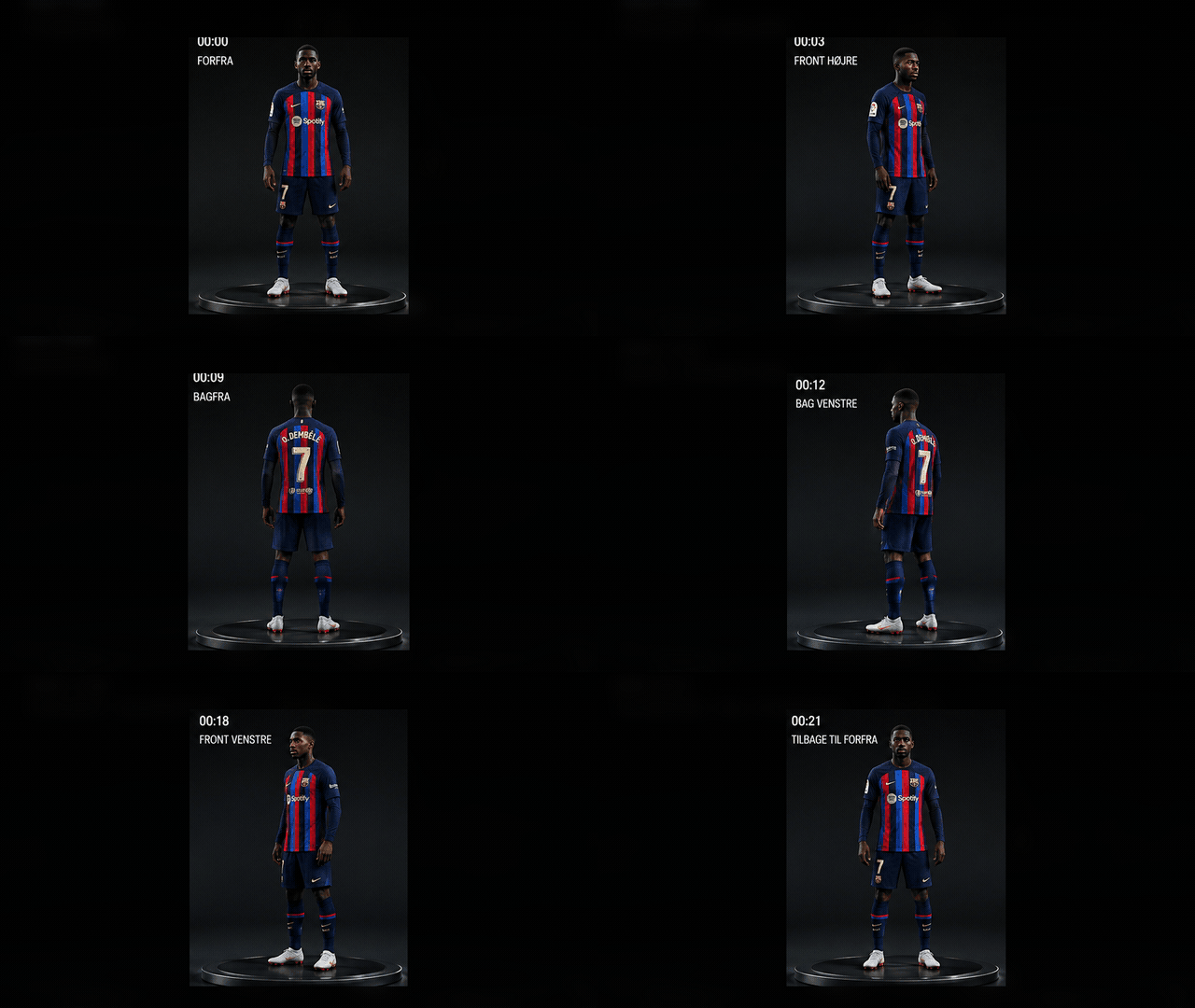
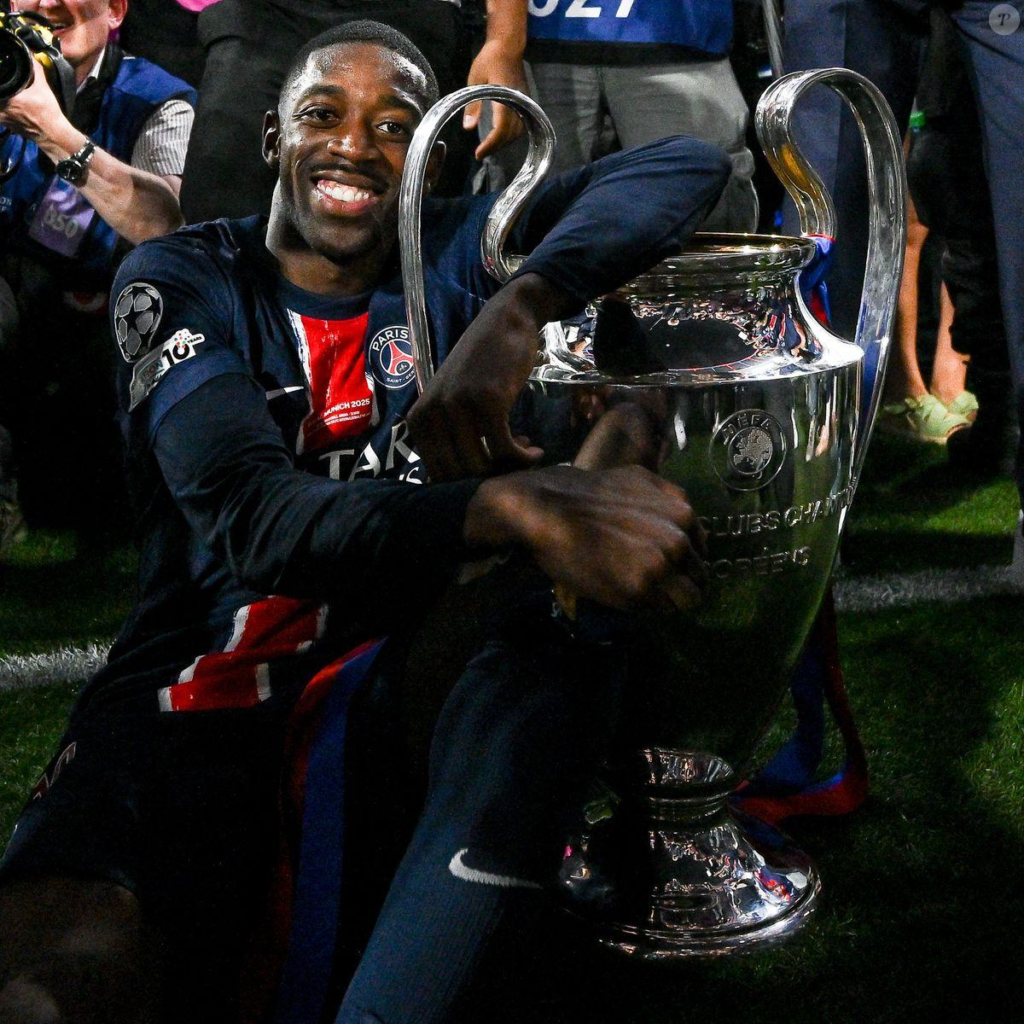
Meta title: Ousmane Dembélé: Career, Skills, Stats, Story & Ballon d’Or
Meta description: The complete story of Ousmane Dembélé: his childhood, futsal background, Rennes breakthrough, Borussia Dortmund rise, Barcelona journey, PSG transformation, skills, records and Ballon d’Or success.
Suggested URL: ousmane-dembele-career-skills-stats-ballon-dor
Last updated: June 2026
Ousmane Dembélé is one of the most unpredictable attacking footballers of his generation. He has played as a winger, a central forward, a creator and a match-winner. He has won the World Cup, domestic titles in France, Germany and Spain, the Champions League, and football’s biggest individual prize: the Ballon d’Or.
Yet his career has never been a simple straight line.
For years, Dembélé was known as one of the most naturally gifted players in world football. Supporters could see the speed, the dribbling, the imagination and the rare ability to use both feet almost equally well. At the same time, injuries and inconsistency meant that people kept asking the same question: would he ever turn enormous potential into regular world-class performances?
The answer came in Paris.
With Paris Saint-Germain, Dembélé developed from an exciting wide attacker into a complete attacking leader. He became more decisive in front of goal, more intelligent without the ball and more influential in the biggest matches. His 2025 Ballon d’Or win confirmed what many coaches and teammates had always believed: when Ousmane Dembélé is confident, fit and trusted, he can be one of the most difficult players in football to stop.
This is the complete story of Dembélé’s rise from Vernon to the top of world football.
Ousmane Dembélé: Quick Facts
| Fact | Information |
|---|---|
| Full name | Masour Ousmane Dembélé |
| Date of birth | 15 May 1997 |
| Place of birth | Vernon, France |
| Height | 178 cm |
| Position | Forward, winger, attacking midfielder |
| Club | Paris Saint-Germain |
| Shirt number | 10 |
| Strong foot | Both feet |
| Nickname | Dembouz |
| Major international honour | FIFA World Cup winner, 2018 |
| Major individual honour | Ballon d’Or winner, 2025 |
Why Is Ousmane Dembélé So Special?
Most wingers have a clear preferred foot.
A right-footed player on the left side often wants to cut inside and shoot. A left-footed player on the right side often wants to do the same in the opposite direction. Defenders study these patterns before matches and try to show attackers toward their weaker side.
That approach does not work easily against Ousmane Dembélé.
He can cross with his right foot from the right wing. He can cross with his left foot from the left wing. He can cut inside from either side, shoot from either side and play disguised passes with either foot.
This gives him a major advantage: defenders cannot predict his next move.
A full-back might expect him to go outside, only for Dembélé to cut inside. The defender may then expect the inside move, only for Dembélé to accelerate down the line. Even when he is not scoring or assisting, this uncertainty creates space for teammates.
Dembélé is not simply fast. His greatest weapon is doubt.
He makes defenders hesitate.
The Early Years in Vernon
Ousmane Dembélé was born in Vernon, a town in northern France. His first experiences of football came close to home, where he played for ALM Évreux before continuing at Évreux FC.
Like many technically gifted players, Dembélé also spent time playing futsal.
That detail matters.
Futsal is played in tighter spaces, with less time on the ball and more touches under pressure. Players need to control the ball quickly, use both feet, protect possession and make decisions in seconds. Those demands can help explain why Dembélé later became so comfortable in one-versus-one situations.
His style still carries many futsal qualities:
- Close control in crowded areas
- Fast feet and quick changes of direction
- Confidence using both feet
- Ability to protect the ball while turning
- Creative passing in tight spaces
- Calmness when defenders close him down
Dembélé did not become a great dribbler because he only ran fast. He learned how to manipulate the ball at speed.
The Value of Futsal for Young Footballers
Young players do not need to become professional futsal players to learn from the game.
A small-sided environment forces players to receive the ball more often. It gives them more one-versus-one duels, more decisions and more chances to practise first touches. There is nowhere to hide when the pitch is small.
Dembélé’s development shows why technical repetition matters.
A player may practise shooting for an hour, but football also requires turning, scanning, receiving under pressure and reacting to unpredictable moments. Futsal and small-sided football can help develop those skills.
For young wingers, the lesson is simple: do not only practise running down the line. Practise receiving the ball with pressure behind you, turning in tight spaces and using both feet.
The Move to Rennes
At the age of 13, Dembélé was spotted by Stade Rennais and moved to Brittany.
Rennes has developed many outstanding footballers over the years, but Dembélé quickly stood out. He had the courage to dribble, the confidence to take risks and the technical ability to create moments that other players could not see.
Five years after arriving at Rennes, he signed his first professional contract.
That journey is important. Dembélé did not become a world star overnight. He spent years learning in youth football, developing his body, improving his decisions and understanding how to use his talent in a team structure.
When he finally reached the first team, he was ready to make an impact.
Rennes Breakthrough: A Teenage Star Arrives
The 2015–16 Ligue 1 season was Dembélé’s breakthrough year.
Still a teenager, he scored 12 goals and provided five assists in 29 league appearances. He was named Ligue 1 Young Player of the Season, and Europe’s biggest clubs quickly began to take notice.
His numbers were impressive, but they did not tell the whole story.
Dembélé played with personality. He wanted the ball. He attacked defenders. He tried difficult passes. He took shots. He made mistakes sometimes, but he was never afraid to attempt something special.
That is one reason why he became so exciting to watch.
Many young players become cautious when they move closer to senior football. They worry about losing the ball or making the wrong decision. Dembélé was different. He had the bravery to play his own game.
What Young Players Can Learn From Dembélé’s Rennes Years
Dembélé’s rise at Rennes offers several important lessons.
1. Talent Needs Courage
Technical ability is not enough on its own. A player must also be brave enough to use it.
A winger who never tries to beat a defender may keep possession, but will rarely create something extraordinary. Dembélé accepted that dribbling involved risk.
2. Both Feet Create More Options
Young players often spend most of their time on their strongest foot. Dembélé’s example shows the value of practising both sides.
You do not need to become perfect with both feet immediately. Start with simple passes, first touches, crosses and finishes. Over time, the weaker foot becomes more natural.
3. Creativity Must Have a Purpose
The best dribblers do not dribble only to entertain. They dribble to create space, beat pressure, find a pass, win a foul or open a shooting lane.
Dembélé’s best actions often begin with a dribble but finish with a chance for the team.
Borussia Dortmund: The Perfect Next Step
In 2016, Dembélé joined Borussia Dortmund.
It was a bold move. He was leaving France after only one full senior season, but Dortmund had become one of Europe’s best clubs for developing young attacking talent. The club offered a high-tempo style, huge crowds, Champions League football and an environment where talented young players were trusted.
Dembélé immediately looked at home.
The Bundesliga gave him space to attack. Dortmund gave him quick teammates, attacking football and freedom to express himself. He could play on either wing, drift inside, combine in transition and attack defenders before they had time to settle.
His only season at Dortmund was extraordinary.
He scored 11 goals and registered 21 assists in all competitions. He also helped Dortmund win the DFB-Pokal, scoring in the final against Eintracht Frankfurt.
| Ousmane Dembélé at Borussia Dortmund | Record |
|---|---|
| Season | 2016–17 |
| Goals in all competitions | 11 |
| Assists in all competitions | 21 |
| Major trophy | DFB-Pokal |
| Key moment | Goal in the 2017 DFB-Pokal final |
Dembélé’s Dortmund season turned him from a brilliant prospect into one of the most wanted young players in world football.
Why Dortmund Suited Him So Well
Dortmund’s football suited Dembélé because the team attacked quickly and gave creative players permission to take responsibility.
He had room to run into. He had runners around him. He had midfielders who could find him early. Most importantly, he had a team that understood the value of transition football.
In transition, a defender has less time to prepare. That is where Dembélé can be devastating.
Give him the ball when the opposition are out of position, and he can:
- Accelerate past the first defender
- Carry the ball over long distances
- Play the final pass with either foot
- Create a shooting chance from almost any angle
- Force defenders to retreat rather than challenge
His Dortmund performances made it clear that he was not only a wide dribbler. He was becoming a complete attacking creator.
The Difference Between Speed and Explosiveness
Dembélé is fast, but raw top speed is only one part of his game.
The more important quality is explosiveness.
Explosiveness means the ability to change from stillness to full speed in a few steps. It means being able to stop, shift the ball and accelerate again before a defender can react.
That is why Dembélé can be dangerous even when he receives the ball standing still.
He often uses a small body feint, a touch with the outside of the foot or a sudden shift of weight before accelerating away. The move may look simple, but it is difficult to defend because the defender must react to several possible directions.
Dembélé-Inspired Training Exercise: Two-Footed Wing Play
Set up two cones around 10 metres apart. Place a small goal or target at the end of the dribbling lane.
Start on the right side:
- Dribble toward the first cone.
- Use your right foot to take the ball outside.
- Accelerate past the cone.
- Finish with your right foot.
Repeat the same pattern but cut inside and finish with your left foot.
Then move to the left side and complete both versions again.
The key is not simply to use both feet. The key is to make the final decision late, just as Dembélé does against defenders.
From Wonderkid to Global Star
By the summer of 2017, Dembélé had played only one full Ligue 1 season and one full Bundesliga season. Yet he had already won major individual recognition, lifted a cup in Germany and become one of Europe’s most exciting attackers.
Barcelona saw him as a player with the potential to reach the very top.
The move would bring massive pressure, huge expectations and difficult moments. It would also bring trophies, important lessons and the experiences that helped shape the more mature player who later returned to France with Paris Saint-Germain.
But before the difficult chapters came the promise: Dembélé had shown that a player from Vernon, developed through local football, futsal and Rennes, could light up some of Europe’s biggest stages.
More Football Stories in English
Discover more player stories, football history, skills guides and training inspiration here: https://finter.dk/front-page/
Paris Saint-Germain: The Return to France That Changed Everything
In the summer of 2023, Ousmane Dembélé returned to France.
After seven years away from Ligue 1, including successful but challenging spells at Borussia Dortmund and Barcelona, he signed for Paris Saint-Germain on a five-year contract.
For Dembélé, the move was much more than a transfer.
It was a new beginning.
He arrived in Paris as an experienced international footballer. He had won the World Cup with France, league titles in Spain, the German Cup and several domestic trophies. But he also arrived with something to prove.
People still knew how talented he was. The question was whether he could become the consistent leader of an elite team.
At PSG, he found the environment that helped him answer that question.
A New PSG and a New Role
Paris Saint-Germain were building a new identity.
The club wanted to become more than a collection of famous names. Under Luis Enrique, PSG aimed to become a high-intensity, hard-working and flexible team where every player contributed to the collective.
This suited Dembélé.
He was no longer simply asked to stay wide and create moments from the wing. He was asked to press, move centrally, link play, attack the penalty area and become a key figure in the team’s attacking structure.
That responsibility helped transform him.
At Barcelona, Dembélé had often been seen as a dangerous winger. At PSG, he became one of the main leaders of the attack.
The First PSG Season: Building the Foundation
Dembélé’s first season in Paris was important, even if it did not yet include the huge scoring numbers that arrived later.
He helped PSG win domestic trophies and became increasingly comfortable in Luis Enrique’s system. His dribbling, pace and ability to play on either side made him valuable immediately.
But the biggest development was tactical.
Dembélé began to understand how to influence matches from central positions.
Instead of always receiving the ball close to the touchline, he could move inside between the lines. He could drop toward midfield to connect the play. He could pull defenders away from their positions. He could make late runs into the box.
This made PSG harder to defend against.
From Winger to Central Attacker
One of the most important changes in Dembélé’s career was his use as a central attacker.
A traditional striker usually stays close to the opposition centre-backs. He makes runs behind the defence, attacks crosses and finishes chances in the penalty area.
Dembélé could do some of those things, but he offered something different.
He could start centrally, then drift away from the defenders. He could drop deep to receive the ball. He could carry it forward. He could combine with midfielders and create space for wide attackers to run into.
This role is often described as a false nine.
A false nine is not simply a striker who plays deeper. It is a player who creates confusion.
When Dembélé dropped into midfield, a centre-back had to decide whether to follow him or stay in position. If the defender followed, space opened behind him. If the defender stayed, Dembélé had time to turn and create.
That uncertainty became one of PSG’s biggest attacking weapons.
Why the False Nine Role Suited Dembélé
Dembélé’s skill set made him ideal for the role.
| Dembélé quality | Why it mattered centrally |
|---|---|
| Two-footed ability | He could pass, shoot or turn in either direction |
| Close control | He could receive the ball under pressure |
| Acceleration | He could burst past defenders after dropping deep |
| Vision | He could find runners from central areas |
| Dribbling | He could create danger without needing a perfect pass |
| Pressing energy | He could lead the press from the front |
| Movement | He could pull defenders out of position |
Playing centrally did not remove his freedom. It increased it.
From the centre, Dembélé could influence both sides of the pitch. He could combine with wide players, midfielders and overlapping full-backs. He could arrive in the box later than defenders expected.
Most importantly, he became more involved in the final actions that decide matches.
The 2024–25 Season: Dembélé Reaches Another Level
The 2024–25 season changed the way many people viewed Ousmane Dembélé.
He was no longer only an exciting player with exceptional technique. He became one of the most decisive attackers in world football.
For Paris Saint-Germain, he scored goals in Ligue 1, created chances in major European nights and helped drive the team through an unforgettable season.
He finished as Ligue 1’s top scorer with 21 goals.
Across all competitions for PSG, he produced 35 goals and 16 assists in 53 appearances.
| Ousmane Dembélé: PSG 2024–25 | Record |
|---|---|
| Matches | 53 |
| Goals | 35 |
| Assists | 16 |
| Ligue 1 goals | 21 |
| UEFA Champions League goals | 8 |
| UEFA Champions League assists | 6 |
| Champions League appearances | 15 |
These numbers showed a major change in his game.
Dembélé had always been capable of creating chances. Now he was also finishing them regularly.
The Importance of Better Finishing
Dembélé’s improved scoring was not only about shooting more often.
It was also about arriving in better positions.
As a winger, a player can receive the ball far from goal and still have a lot to do. As a more central attacker, Dembélé found himself closer to the penalty area more often.
He began making smarter movements:
- Arriving at the edge of the box at the right time
- Making diagonal runs behind defenders
- Attacking spaces created by teammates
- Staying calm after the first touch
- Finishing early before goalkeepers could set themselves
- Using either foot to make his shooting angle larger
The best goalscorers are not always the players who shoot hardest. They are often the players who understand where the next chance will appear.
Dembélé became much better at finding those spaces.
The Champions League Journey
Paris Saint-Germain’s 2024–25 Champions League campaign became the defining moment of Dembélé’s club career.
He scored eight goals and made six assists in 15 appearances in the competition.
He scored important goals against Manchester City, Stuttgart, Liverpool and Arsenal. These were not easy matches against weaker opponents. These were decisive nights against some of the strongest teams in Europe.
Dembélé showed that he could perform when the pressure was highest.
That was crucial.
Great players are judged by more than total numbers. They are also judged by when those numbers arrive.
A goal in a routine league match matters. But a goal in a Champions League knockout tie can change the history of a club.
PSG’s First Champions League Title
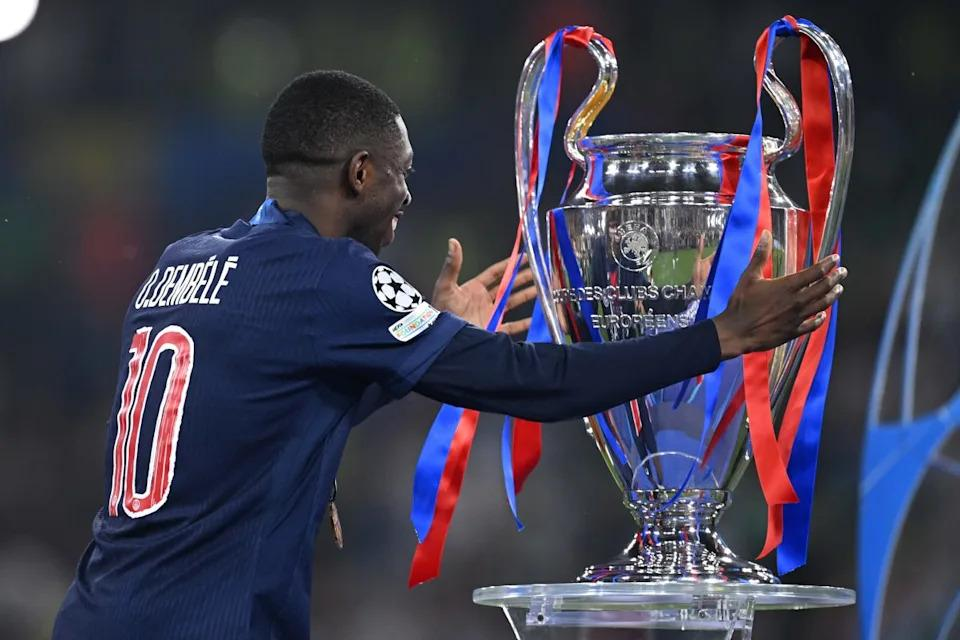
On 31 May 2025, Paris Saint-Germain defeated Inter Milan 5–0 in the UEFA Champions League final in Munich.
It was the club’s first Champions League title.
For PSG, it was a historic night. For Dembélé, it was the confirmation of his transformation.
He did not need to score in the final to show his importance. His movement, pressing and work rate helped set the tone for PSG’s performance.
He had become a forward who could influence a game in many ways.
He could score.
He could assist.
He could dribble.
He could press.
He could create space.
He could lead.
UEFA Champions League Player of the Season
After PSG’s Champions League triumph, Ousmane Dembélé was named UEFA Champions League Player of the Season for 2024–25.
The award recognised more than his goals and assists.
It recognised the complete version of Dembélé.
He had become a leader from the front. He pressed defenders, linked attacks, made clever movements and produced decisive moments in major matches.
The new Dembélé was still creative and unpredictable. But he was also more responsible.
That combination made him one of the best players in the world.
What Luis Enrique’s System Changed
Luis Enrique’s football required hard work from every attacker.
The team pressed high. Players had to react quickly after losing the ball. The forwards needed to defend from the front, not wait for midfielders to win the ball back.
Dembélé embraced that responsibility.
This was important because modern football does not allow attacking players to disappear when the opposition have possession. Elite teams need forwards who can recover the ball, block passing lanes and force defenders into mistakes.
Dembélé’s pressing became a major part of his value.
He was not only dangerous when PSG had the ball. He was dangerous when PSG did not have it.
The Dembélé Pressing Lesson
Young attackers often focus only on what they can do with the ball.
But coaches notice what players do without it.
A forward can help the team by:
- Closing down the nearest defender
- Blocking a passing lane
- Forcing the ball toward the touchline
- Pressing together with teammates
- Recovering quickly after losing possession
- Making defenders uncomfortable on the ball
Dembélé’s PSG role showed that attacking flair and defensive effort can work together.
The most exciting attackers are often the ones who work hardest to win the ball back.
Dembélé-Inspired Training Exercise: False Nine Movement
Set up a small pitch with two goals.
Use one player as a central attacker, two wide attackers and two defenders.
The central attacker begins near the opposition centre-backs. Instead of always running forward, the player drops into midfield to receive the ball.
When the central attacker receives the ball, one wide player makes a run inside.
The central attacker must choose between:
- Turning and dribbling forward
- Playing a through ball to the runner
- Switching play to the opposite side
- Returning the ball and making a late run into the box
This exercise teaches players how movement can create space.
The goal is not always to touch the ball first. Sometimes the smartest movement is the one that creates a chance for a teammate.
The Transformation Was Complete
At PSG, Dembélé found consistency.
He found a role that used his best qualities. He found a coach who trusted him. He found teammates who understood his movements. He found the confidence to take responsibility in the biggest matches.
The player who had once been described mainly as a brilliant dribbler became a complete attacking leader.
His 2024–25 season did not erase the difficult moments of his career.
It gave them meaning.
The injuries, pressure and criticism had all become part of the journey toward the top.
The Ballon d’Or: Ousmane Dembélé Reaches the Top of World Football
On 22 September 2025, Ousmane Dembélé won the Ballon d’Or.
For years, football supporters had known that he possessed rare talent. His pace, dribbling, close control and two-footed ability made him one of the most entertaining players in the game.
But the Ballon d’Or was about much more than talent.
It recognised the complete version of Ousmane Dembélé.
He had become more consistent. He had become more decisive. He had become a leader for Paris Saint-Germain in the biggest matches. He had helped PSG win their first UEFA Champions League title and produced goals and assists throughout an unforgettable season.
The player once described as a brilliant but unpredictable winger had become the best player in world football.
Why Dembélé Won the Ballon d’Or
Individual awards in football are never decided by one goal or one match.
To win the Ballon d’Or, a player usually needs an exceptional season, major trophies, unforgettable performances and a clear influence on his team.
Dembélé had all of those things.
During PSG’s historic campaign, he produced goals, assists, high-level pressing, brilliant dribbles and important performances against Europe’s strongest clubs.
His impact was not limited to one area.
| Dembélé’s strength | Why it mattered |
|---|---|
| Goals | He became far more decisive in front of goal |
| Assists | He continued creating chances for teammates |
| Dribbling | He could break defensive lines alone |
| Pressing | He helped PSG win the ball back high up the pitch |
| Movement | He created space for other attackers |
| Big-match mentality | He performed in major Champions League ties |
| Flexibility | He could play wide, centrally or between the lines |
The Ballon d’Or was the reward for a player who had developed every part of his game.
From Potential to Consistency
The most important change in Dembélé’s career was consistency.
At Rennes and Borussia Dortmund, everyone could see his potential.
At Barcelona, he showed flashes of brilliance but had difficult periods due to injuries and changing circumstances.
At PSG, he began to produce decisive performances week after week.
That is the difference between a talented player and a world-class player.
A talented player can create a special moment.
A world-class player can influence matches over an entire season.
Dembélé became more reliable because he improved his understanding of space, pressing, movement and finishing. He was no longer waiting for the match to come to him. He was actively shaping the match.
Ousmane Dembélé and France
Dembélé’s international career has included some of football’s biggest stages.
He made his senior debut for France in 2016, quickly becoming part of a generation filled with talent and ambition.
France had a remarkable group of attacking players, but Dembélé offered something different. His ability to play on both wings, use either foot and create something unexpected gave the team another attacking weapon.
He could stretch the pitch.
He could dribble past defenders.
He could combine with central players.
He could create chances for teammates such as Kylian Mbappé, Antoine Griezmann and Olivier Giroud.
Most importantly, he could change the rhythm of a match.
World Cup Winner in 2018
In 2018, Ousmane Dembélé became a FIFA World Cup winner with France in Russia.
France defeated Croatia 4–2 in the final in Moscow, lifting the trophy for the second time in the country’s history.
Dembélé played four matches during the tournament.
Although he was still young, being part of a World Cup-winning squad gave him experience that very few players ever receive. He trained every day with elite players, played under huge pressure and learned what it takes to win football’s biggest international prize.
Winning the World Cup at such a young age created huge expectations around him.
But it also gave him a foundation.
He had already seen what champions looked like.
The France 2018 World Cup Story
France’s 2018 squad was remembered for its blend of talent, youth, power and togetherness.
The team had defenders who could handle pressure, midfielders who could control matches and attackers who could destroy opponents in transition.
Dembélé was part of this attacking group.
He may not have been the main headline name during the tournament, but he was part of the squad that created one of the most important moments in modern French football history.
For any young player, this is a valuable lesson.
You do not always need to be the most famous player in the team to contribute to success.
A great squad needs different personalities, different skills and players who are ready when the opportunity arrives.
World Cup 2022: Another Final, Another Lesson
Four years later, Dembélé was again part of the France squad at the 2022 FIFA World Cup in Qatar.
France reached the final once more.
The final against Argentina became one of the most dramatic matches in World Cup history. France came back from two goals down, then came back again in extra time, before eventually losing in a penalty shoot-out.
It was a painful ending.
But it was also another major experience for Dembélé.
He had now been part of a World Cup-winning squad and a World Cup final defeat. He had seen both sides of elite football: the celebration and the disappointment.
That kind of experience can shape a player.
The best footballers do not avoid difficult moments. They learn from them.
The Importance of International Experience
Club football and international football are very different.
At club level, players train together every day. They know the system, understand each other’s movements and have more time to prepare.
International football is often faster and less forgiving.
Players arrive from different clubs. Coaches have limited training sessions. Matches can decide an entire tournament. Pressure is enormous.
Dembélé’s France career has helped him become more adaptable.
He has played with different teammates, in different systems and in matches with massive emotional pressure.
That experience has made him a more complete footballer.
Dembélé’s Role for France
For France, Dembélé can play several roles.
He can start wide and attack a full-back.
He can come inside and create from central areas.
He can play close to a striker.
He can press from the front.
He can be used as an impact substitute when the match becomes stretched.
This flexibility is extremely valuable in tournament football.
A player who can perform in several positions gives the coach more options. It also makes the team harder to predict.
What Makes Dembélé Difficult to Defend Against?
Defenders want certainty.
They want to know whether an attacker will go outside or inside. They want to know which foot the attacker prefers. They want to know whether he will shoot, cross or pass.
Dembélé gives them very little certainty.
He can receive the ball facing one direction and leave in another. He can use the inside or outside of either foot. He can slow the game down, then suddenly accelerate.
This is what makes him dangerous.
His style is built on movement, timing and surprise.
Dembélé’s Main Attacking Weapons
Pace and acceleration
Dembélé can attack open spaces quickly. He is especially dangerous when the opposition lose the ball and their defensive shape is not organised.
Two-footed dribbling
He can shift the ball in either direction without needing to adjust his body too much. This makes his first movement difficult to read.
Body feints
A small movement of the shoulders, hips or head can force a defender to move one way. Dembélé then attacks the space created by that reaction.
Quick decisions
The best dribblers do not only have fast feet. They also make fast decisions. Dembélé can recognise an opening before a defender has time to react.
Creative passing
He can create chances after beating the first defender. This is important because the first dribble often pulls another defender out of position.
Calmness in front of goal
As he became more central at PSG, Dembélé improved his ability to arrive in scoring positions and finish chances with either foot.
The Mental Side of Dembélé’s Success
Football fans often focus on skills, goals and highlights.
But Dembélé’s story is also about mentality.
He experienced injuries. He experienced criticism. He experienced difficult periods at one of the world’s biggest clubs. He had to prove himself again.
That required resilience.
Resilience does not mean never feeling disappointed. It means continuing to work even when things are not going perfectly.
Dembélé’s comeback showed that a football career can change quickly when a player finds confidence, fitness and the right environment.
Lessons Young Players Can Learn From Ousmane Dembélé
Practise with both feet
You do not need to become perfectly two-footed overnight. Start with simple things: passing, receiving, crossing and finishing.
Do not be afraid to dribble
A winger must sometimes take risks. You will lose the ball occasionally, but you can also create the moment that changes the match.
Work without the ball
Modern attackers must press, recover and help the team defend.
Be patient during setbacks
Injuries, poor form and mistakes are part of football. They do not decide your future.
Learn several positions
Dembélé has played on both wings and through the middle. Being flexible makes a player more valuable.
Turn skill into end product
A great dribble is exciting. A great dribble followed by a goal, assist or key pass is even better.
Dembélé-Inspired Training Exercise: The Unpredictable Attacker
Set up a one-versus-one area around 15 metres long.
Place two small goals at the end: one on the left and one on the right.
The attacker receives the ball facing the defender.
The attacker can:
- Dribble to either side
- Cut inside with either foot
- Stop and change direction
- Beat the defender with pace
- Finish in either goal
The defender should not know which goal the attacker is trying to reach until the final seconds.
This teaches the attacker to react rather than decide too early.
The most important part is the final decision. Look at the defender. Notice the space. Use the foot that gives you the best next action.
Ousmane Dembélé’s Legacy
Ousmane Dembélé’s legacy is not only about trophies.
It is about persistence.
He showed that a player can face setbacks, criticism and injuries, then still reach the very top of the game.
He showed that natural talent becomes more powerful when combined with hard work, tactical understanding and confidence.
He showed that being different can be an advantage.
In an era where many attackers become predictable, Dembélé became one of football’s most unpredictable players.
He can make defenders hesitate.
He can make supporters stand up.
And at his best, he can make football look impossible to defend.
More Football Stories in English
Read more football guides, player stories, football history and training inspiration here:
Visit Finter.dk’s English football page
Ousmane Dembélé’s Records, Trophies and Biggest Achievements
Ousmane Dembélé’s career has included difficult moments, but it has also included some of football’s greatest prizes.
He has won league titles in France and Spain, the German Cup, the FIFA World Cup, the UEFA Champions League and the Ballon d’Or.
That trophy list tells the story of a player who has competed at the highest level in several different countries.
More importantly, it shows how far he has come.
From his early breakthrough at Rennes to his explosive season at Borussia Dortmund, from the difficult years at Barcelona to his transformation at Paris Saint-Germain, Dembélé’s journey has been built on talent, resilience and an ability to keep improving.
Ousmane Dembélé’s Major Trophies
| Competition | Club or Country | Titles |
|---|---|---|
| FIFA World Cup | France | 1 |
| UEFA Champions League | Paris Saint-Germain | 1 |
| Ligue 1 | Paris Saint-Germain | 3 |
| La Liga | Barcelona | 3 |
| Coupe de France | Paris Saint-Germain | 2 |
| Copa del Rey | Barcelona | 2 |
| Trophée des Champions | Paris Saint-Germain | 3 |
| Spanish Super Cup | Barcelona | 2 |
| DFB-Pokal | Borussia Dortmund | 1 |
| UEFA Super Cup | Paris Saint-Germain | 1 |
| FIFA Intercontinental Cup | Paris Saint-Germain | 1 |
Dembélé’s trophy collection is impressive because it has been built across several different football cultures.
He won in Germany with Borussia Dortmund.
He won in Spain with Barcelona.
He returned to France and became the central figure in a historic Paris Saint-Germain team.
And with France, he became a World Cup winner.
The Ballon d’Or 2025
Winning the Ballon d’Or is one of the greatest individual achievements in football.
The award is given to the player considered to have had the best year in world football. It is not simply about scoring goals. It is about influence, performances, trophies, consistency and memorable moments.
Dembélé won the 2025 Ballon d’Or after leading Paris Saint-Germain through one of the greatest seasons in the club’s history.
He finished ahead of several of football’s biggest names.
| 2025 Ballon d’Or ranking | Player | Points |
|---|---|---|
| 1 | Ousmane Dembélé | 1,380 |
| 2 | Lamine Yamal | 1,059 |
| 3 | Vitinha | 703 |
| 4 | Mohamed Salah | 657 |
| 5 | Raphinha | 620 |
The result showed how clear Dembélé’s impact had been.
He was no longer judged only as an exciting winger with skill and pace. He was judged as the most complete and decisive player in the world.
UEFA Champions League Player of the Season
Dembélé’s Champions League campaign with PSG was one of the strongest of his career.
He was named UEFA Champions League Player of the Season after helping Paris Saint-Germain win the competition for the first time.
The award recognised his goals, assists, pressing, movement and influence in the biggest knockout matches.
He was especially important because PSG did not rely on one simple attacking pattern.
Sometimes Dembélé played as a central forward.
Sometimes he drifted wide.
Sometimes he dropped into midfield to receive the ball.
Sometimes he pressed the opposition defenders high up the pitch.
This flexibility made PSG extremely difficult to defend against.
A New PSG Milestone: 60 Competitive Goals
By June 2026, Dembélé had reached 60 competitive goals for Paris Saint-Germain.
That milestone is important because his first reputation was built mainly on creativity and dribbling.
He was often described as a provider rather than a regular goalscorer.
At PSG, that changed.
He became a player who could create the first chance, make the final run and score the goal himself.
His development into a more regular finisher made him much more dangerous.
Champions League Knockout Specialist
The biggest European matches often reveal the strongest players.
Dembélé’s Champions League record became especially impressive in knockout football.
He scored important goals in decisive ties and showed that he could perform when the pressure was highest.
A knockout match is different from an ordinary league game.
There is less room for mistakes.
The intensity is higher.
One moment can decide a season.
Dembélé learned how to influence these matches not only through goals, but also through movement, pressing and the ability to create chaos in the final third.
What Does Ousmane Dembélé Do Better Than Most Players?
Dembélé has several elite qualities, but the combination is what makes him special.
1. He can use both feet naturally
Many players can use their weaker foot for a simple pass. Dembélé can dribble, cross, shoot and play difficult passes with both feet.
That gives him more options than almost any defender wants to face.
2. He creates uncertainty
Defenders want to know what is coming.
Dembélé gives them very little information.
He can go outside, cut inside, stop, accelerate, shoot, cross or play a disguised pass. The defender must react, while Dembélé can choose.
3. He can beat players in tight spaces
His futsal background is visible in the way he moves with the ball.
He does not need a huge amount of space to create an advantage. A small touch, a quick body feint or a sudden change of pace can be enough.
4. He can play in several attacking positions
Dembélé has played as:
- Right winger
- Left winger
- Central forward
- False nine
- Second striker
- Attacking midfielder
This makes him valuable for coaches because he can change a match without needing to be substituted.
5. He works harder without the ball
The modern version of Dembélé is not only an attacker who waits for possession.
He presses defenders.
He chases lost balls.
He closes passing lanes.
He helps create turnovers high up the pitch.
This is one of the reasons he became so important under Luis Enrique.
The Dembélé Body Feint
A body feint is one of the simplest but most effective dribbling tools in football.
The player suggests that he will move one way, then attacks the other direction.
Dembélé uses this constantly.
He may move his shoulders to the left, shift his hips slightly and make the defender lean in that direction. The moment the defender reacts, Dembélé pushes the ball away with the opposite foot.
The move works because defenders must respond to body language.
They cannot wait forever.
For young players, the key is not to make a huge fake movement. A small and realistic movement is often better.
Dembélé-Inspired Training Exercise: The Body Feint
Set up one cone as a defender.
Start five metres away with the ball at your feet.
As you approach the cone:
- Slow down slightly.
- Move your shoulders to one side.
- Shift your body weight in the same direction.
- Push the ball past the cone with your other foot.
- Accelerate immediately for five to ten metres.
Practise the move with both feet.
First, work slowly so the movement feels natural. Then increase the speed.
The aim is not to copy every Dembélé move perfectly. The aim is to become harder to read.
Dembélé’s Top Qualities for Young Wingers
| Skill | Why it matters |
|---|---|
| First touch | Helps you escape pressure quickly |
| Both-footed passing | Gives you more passing angles |
| Acceleration | Helps you beat defenders after the first move |
| Body feints | Creates hesitation in one-versus-one situations |
| Scanning | Helps you spot teammates before receiving the ball |
| Final pass | Turns dribbles into real chances |
| Pressing | Makes you useful without possession |
| Confidence | Gives you the courage to try something creative |
A Message for Young Players
Dembélé’s story proves that development is not always smooth.
Some players improve quickly.
Some players need more time.
Some players face injuries.
Some players lose confidence.
Some players move clubs and need to start again.
None of that means the journey is finished.
Dembélé did not reach the top because every season was perfect. He reached the top because he continued learning, adapting and working through difficult moments.
That is why his story is so inspiring.
He was talented as a teenager.
But he became a champion because he developed patience, discipline and belief.
Frequently Asked Questions About Ousmane Dembélé
Is Ousmane Dembélé right-footed or left-footed?
Ousmane Dembélé is naturally comfortable with both feet. He can dribble, pass, cross and finish with either foot, which makes him very difficult for defenders to predict.
Which clubs has Ousmane Dembélé played for?
He has played senior football for Rennes, Borussia Dortmund, Barcelona and Paris Saint-Germain.
Did Ousmane Dembélé win the World Cup?
Yes. He won the FIFA World Cup with France in 2018.
Has Ousmane Dembélé won the Champions League?
Yes. He won the UEFA Champions League with Paris Saint-Germain in 2025.
Did Ousmane Dembélé win the Ballon d’Or?
Yes. He won the 2025 Ballon d’Or after an outstanding season with Paris Saint-Germain.
What position does Ousmane Dembélé play?
He can play as a winger, central forward, false nine, second striker or attacking midfielder.
Why is Ousmane Dembélé so hard to defend against?
His speed, close control, body feints and ability to use both feet make him unpredictable. Defenders cannot easily force him in one direction.
More Football Stories in English
Discover more football guides, player stories, tactics, skills and training inspiration here:
Visit Finter.dk’s English football page
Ousmane Dembélé Tactical Guide: How He Creates Chaos for Defenders
Ousmane Dembélé is difficult to defend against because he does not play in only one predictable way.
Some wingers want the ball to feet. Some want to run behind the defence. Some are goalscorers. Some are creators.
Dembélé can do all of these things during the same match.
He can receive the ball wide, dribble inside, create a chance and then appear centrally for the next attack. He can drop deep like a midfielder, turn quickly and play a pass behind the defensive line. He can press a centre-back, win the ball and attack the penalty area seconds later.
That freedom is a major reason why he became so important for Paris Saint-Germain.
Where Does Ousmane Dembélé Play?
Dembélé can play in several positions, depending on the team’s needs.
| Position | What he offers |
|---|---|
| Right winger | Can go outside, cross or cut inside onto his left foot |
| Left winger | Can attack the byline, shoot or create with his right foot |
| False nine | Drops between midfield and defence to link the attack |
| Central forward | Makes diagonal runs and arrives in scoring positions |
| Second striker | Combines with a traditional striker and attacks spaces |
| Attacking midfielder | Creates chances between the opposition’s lines |
This flexibility makes him a dream for coaches.
A manager can begin a match with Dembélé on the right wing, move him centrally during the second half and then use him on the left when the opposition are tired. The defenders must constantly adjust.
The False Nine Explained
A false nine is an attacker who starts in a central forward position but does not stay there all the time.
Instead of waiting between the centre-backs, the player drops deeper to receive the ball.
This causes a problem for defenders.
Should a centre-back follow the player into midfield?
Or should he stay in the defensive line?
If the centre-back follows, space opens behind him. If he stays, the false nine has room to turn and create.
Dembélé is excellent in this role because he can receive under pressure, turn quickly and use either foot.
He can drop toward midfield, attract a defender and then release a teammate into the space that has opened.
Dembélé’s Movement Without the Ball
The best attacking players do not wait for the ball.
They move before the pass arrives.
Dembélé’s movement is often subtle, but it creates major problems for defenders.
He may start on the wing, then drift toward the centre at the exact moment a midfielder receives the ball. He may move away from the centre-back just before a cross comes into the box. He may drop deep, then sprint behind the defence once the defender steps forward.
These movements give him several advantages:
- He receives the ball facing forward
- He creates passing lanes for teammates
- He pulls defenders out of position
- He finds spaces between midfield and defence
- He arrives late in the penalty area
- He makes it harder for opponents to mark him
Why Dembélé Is So Dangerous in Transition
Transition is the moment immediately after a team wins or loses the ball.
This is where Dembélé can be devastating.
When a team loses possession, the defenders may be spread out. The full-backs may be high up the pitch. The midfield may not be in position to protect the defence.
Dembélé sees these moments quickly.
He can receive the ball and attack before the opposition have organised themselves. His pace is important, but his decision-making matters just as much.
He knows when to dribble.
He knows when to release the ball.
He knows when to make a run without it.
The Three-Second Decision
A useful way to understand Dembélé’s game is the “three-second decision”.
When he receives the ball, he often has only a few seconds to decide:
- Can I turn and attack?
- Is there space behind the defender?
- Is a teammate making a better run?
- Should I dribble, pass or shoot?
Young players often hold the ball too long because they decide after receiving it.
The best players scan before the ball arrives.
Dembélé often looks around before his first touch. This helps him make faster decisions once he has the ball.
How to Scan Like Ousmane Dembélé
Scanning means looking around before receiving the ball.
Try this simple habit during training:
- Look over one shoulder before the ball arrives
- Check the other shoulder
- Notice the nearest defender
- Notice the nearest teammate
- Decide your possible first action before the pass reaches you
You will not always have time to see everything, but even one quick look can make a huge difference.
A player who scans early can turn faster, pass earlier and avoid pressure.
Dembélé’s First Touch
Dembélé’s first touch is not always about stopping the ball.
Often, his first touch is designed to create the next action.
He may push the ball into space rather than control it directly under his feet. He may touch it away from the defender. He may use the outside of the foot to create a new passing angle.
This is one reason he can look so quick.
He does not take an extra touch unless he needs it.
Training Exercise: First Touch Into Space
Set up a square with four cones.
Ask a teammate or coach to pass the ball into the square.
Before receiving:
- Scan over both shoulders.
- Take your first touch toward an open cone.
- Accelerate for three or four steps.
- Pass the ball back with the opposite foot.
- Repeat from different angles.
Practise using the inside, outside and sole of both feet.
The aim is to make your first touch useful.
Do not simply stop the ball. Use the first touch to escape pressure.
Ousmane Dembélé’s Dribbling Patterns
Dembélé does not rely on one signature trick.
That is part of his strength.
A defender can prepare for a step-over or a certain cut inside. It is much harder to prepare for a player who changes the move every time.
His most effective dribbling patterns include:
Stop and go
Dembélé slows down slightly, encourages the defender to relax, then accelerates suddenly.
Body feint
He moves his shoulders or hips one way before pushing the ball in the opposite direction.
Outside-of-the-foot touch
He uses the outside of either foot to move the ball away from the defender quickly.
Double movement
He starts toward one side, changes direction and then accelerates again.
Inside cut
He appears ready to go down the line but cuts inside to create a shooting or passing lane.
Late decision
He waits until the defender commits before choosing whether to pass, shoot or continue dribbling.
Training Exercise: The Dembélé Dribbling Circuit
Set up five cones in a straight line, each around two metres apart.
Dribble through the cones using different touches:
- First run: right foot only.
- Second run: left foot only.
- Third run: alternate feet.
- Fourth run: use only the outside of both feet.
- Fifth run: add a body feint before the final cone and sprint away.
Finish each run with a pass, cross or shot.
The purpose is not to move through the cones perfectly. The purpose is to become comfortable changing direction with either foot.
Finishing With Both Feet
One of Dembélé’s biggest advantages near goal is that he does not need to change his body shape dramatically before shooting.
A defender may think the shooting lane is blocked because the ball is on one side. Dembélé can often use the other foot immediately.
This gives him extra time.
It also gives goalkeepers less information.
A goalkeeper may expect a right-footed finish, only for Dembélé to strike with his left. That split-second of uncertainty can be enough.
Training Exercise: Two-Footed Finishing
Set up a goal with three shooting zones:
- Left side of the penalty area
- Central area
- Right side of the penalty area
From every zone, take four finishes:
- Right-footed finish across goal
- Left-footed finish across goal
- Right-footed near-post finish
- Left-footed near-post finish
Keep the shots controlled.
The aim is not to hit the ball as hard as possible. The aim is to be balanced, composed and ready to use either foot.
Dembélé’s Pressing Role
The modern Ousmane Dembélé is not only an attacking creator.
He also works hard when his team loses the ball.
Pressing begins with the forwards.
When Dembélé presses a centre-back, he is not always trying to win the ball instantly. Sometimes he is trying to force the opponent into a less dangerous pass.
He may block the pass into midfield.
He may direct the defender toward the sideline.
He may force a rushed long ball.
This helps the entire team.
Pressing Basics for Young Attackers
When pressing, remember these simple rules:
- Do not sprint without a plan
- Approach the defender at an angle
- Try to block the easiest passing lane
- Press together with teammates
- React immediately after losing the ball
- Stay balanced so you can change direction
A clever press can be more valuable than a wild sprint.
Dembélé’s Matchday Mindset
Dembélé’s later career shows the value of confidence.
Confidence is not about believing that every dribble will work.
Confidence is about being willing to try again after the last dribble failed.
A creative player will lose the ball sometimes. That is part of taking responsibility.
The key is to respond well.
Miss a chance? Keep moving.
Lose a dribble? Press to win it back.
Make a bad pass? Demand the ball again.
This attitude helped Dembélé move from a talented player with difficult periods to a leader on the biggest stage.
Five Habits Young Wingers Can Copy
- Use both feet every day.
Do simple passes and first touches with your weaker foot before practising difficult skills. - Scan before receiving.
Look around before the ball arrives. - Attack with a purpose.
Dribble to create space, a shot, a pass or a better position. - Work without the ball.
Press, recover and help your full-back. - Keep taking responsibility.
Creative players must not disappear after a mistake.
YouTube Videos: Ousmane Dembélé Skills, Goals and Tactical Analysis
Ousmane Dembélé – Best Goals and Skills
https://www.youtube.com/results?search_query=Ousmane+Demb%C3%A9l%C3%A9+best+goals+and+skills
Ousmane Dembélé – PSG Highlights
https://www.youtube.com/results?search_query=Ousmane+Demb%C3%A9l%C3%A9+PSG+highlights
Ousmane Dembélé – Two-Footed Finishing
https://www.youtube.com/results?search_query=Ousmane+Demb%C3%A9l%C3%A9+two+footed+finishing
Ousmane Dembélé – Tactical Analysis
https://www.youtube.com/results?search_query=Ousmane+Demb%C3%A9l%C3%A9+tactical+analysis
Ousmane Dembélé – PSG Champions League Highlights
https://www.youtube.com/results?search_query=Ousmane+Demb%C3%A9l%C3%A9+PSG+Champions+League+highlights
More Football Stories in English
Discover more player guides, football history, training ideas and tactical articles here:
Ousmane Dembélé Career Timeline: From Vernon to World Football
Ousmane Dembélé’s career is a story of rapid rises, difficult setbacks and an extraordinary return to the top.
He did not take the easiest path.
He became a professional footballer at Rennes, exploded at Borussia Dortmund, faced huge pressure at Barcelona and then reinvented himself at Paris Saint-Germain.
Every stage added something new to his game.
| Year | Career moment | Why it mattered |
|---|---|---|
| 1997 | Born in Vernon, France | The beginning of one of modern football’s most unusual attacking careers |
| Early years | Played local football and futsal | Developed close control, creativity and confidence with both feet |
| 2010 | Joined Rennes academy | Entered one of France’s strongest development environments |
| 2015 | Made Rennes first-team debut | Began his senior career |
| 2015–16 | Broke through in Ligue 1 | Became one of Europe’s most exciting teenage players |
| 2016 | Signed for Borussia Dortmund | Took his game to the Bundesliga and Champions League level |
| 2017 | Won the DFB-Pokal | Scored in the final and announced himself on a major stage |
| 2017 | Joined Barcelona | Faced the largest challenge of his early career |
| 2018 | Won the FIFA World Cup with France | Became a world champion at just 21 years old |
| 2018–23 | Won major trophies with Barcelona | Developed tactical awareness and resilience through difficult periods |
| 2023 | Signed for Paris Saint-Germain | Returned to France for a new chapter |
| 2024–25 | Led PSG’s historic season | Became a central attacking leader |
| 2025 | Won the UEFA Champions League | Helped PSG lift the trophy for the first time |
| 2025 | Won the Ballon d’Or | Reached the highest individual level in football |
| 2026 | Reached 60 competitive PSG goals | Confirmed his importance in the club’s modern era |
The Complete Ousmane Dembélé Career Story
Dembélé’s journey is different from the story of a player who succeeds immediately and never struggles.
He had talent from the beginning.
But talent alone did not make him a Ballon d’Or winner.
He had to learn how to handle pressure. He had to return from injuries. He had to improve his tactical discipline. He had to become more decisive in front of goal. He had to accept that football at the highest level requires more than individual skill.
His career can be divided into four major chapters.
Chapter One: The fearless teenager at Rennes
At Rennes, Dembélé played with freedom.
He was young, direct and fearless. He wanted to dribble, shoot, create and make things happen. His breakthrough proved that he had the technical level to become a professional footballer.
Chapter Two: The Dortmund explosion
At Borussia Dortmund, Dembélé became a European star.
The speed of Bundesliga football suited him. He attacked open spaces, created chances and became one of the most exciting young players in the Champions League.
Chapter Three: The difficult Barcelona years
Barcelona brought trophies, pressure and setbacks.
Dembélé learned that football at the very top is about more than talent. He had to become stronger physically, mentally and tactically.
Those difficult seasons helped build the mature version of the player.
Chapter Four: The PSG transformation
At Paris Saint-Germain, Dembélé became the complete attacker.
He became more central. He pressed more aggressively. He scored more goals. He created more chances. He took responsibility in major matches.
This was the period when he turned potential into greatness.
Why Ousmane Dembélé Is a Modern Footballer
Modern football demands more from attacking players than ever before.
A winger cannot only dribble.
A striker cannot only score.
A forward must press, move, create, defend, adapt and understand the tactical plan.
Dembélé became one of the best players in the world because he developed all of these areas.
He can play wide or centrally.
He can score or assist.
He can attack a defender one-versus-one or combine with teammates.
He can create something from nothing or work hard to recover possession.
That versatility is one reason why he has succeeded for both club and country.
The Most Important Lesson From Dembélé’s Story
The biggest lesson is simple:
A difficult period does not decide your future.
Dembélé had injuries.
He had criticism.
He had moments when people questioned whether he would ever reach the level expected of him.
But he kept developing.
He did not stop being creative because he made mistakes. He did not stop believing because he faced setbacks. He continued to work until his game became more complete.
That is why his story matters to young footballers.
Not every player will become as fast, skillful or famous as Ousmane Dembélé.
But every player can learn from his attitude:
- Keep improving both feet
- Keep working after mistakes
- Keep learning new positions
- Keep helping the team without the ball
- Keep believing through difficult periods
- Keep taking responsibility
A Simple Weekly Dembélé-Inspired Training Plan
This plan is designed for young attacking players who want to improve creativity, weak-foot ability, speed and confidence.
| Day | Main focus | Simple session idea |
|---|---|---|
| Monday | First touch | Receive passes with both feet and turn into space |
| Tuesday | Dribbling | One-versus-one moves, body feints and acceleration |
| Wednesday | Finishing | Shoot with both feet from different angles |
| Thursday | Passing and vision | Scan before receiving, play quick passes and through balls |
| Friday | Speed | Short sprints, changes of direction and explosive starts |
| Saturday | Match skills | Small-sided games with extra points for assists and weak-foot goals |
| Sunday | Recovery | Light movement, stretching and watching football for learning |
The important part is consistency.
It is better to train both feet for 15 focused minutes every day than to practise once a week without concentration.
Ousmane Dembélé FAQ
How old is Ousmane Dembélé?
Ousmane Dembélé was born on 15 May 1997.
Where was Ousmane Dembélé born?
He was born in Vernon, France.
Which club does Ousmane Dembélé play for?
He plays for Paris Saint-Germain.
Which teams has Ousmane Dembélé played for?
He has played senior football for Rennes, Borussia Dortmund, Barcelona and Paris Saint-Germain.
Is Ousmane Dembélé left-footed or right-footed?
He is comfortable with both feet. This is one of his greatest strengths.
What position does Ousmane Dembélé play?
He can play as a right winger, left winger, false nine, central forward, second striker or attacking midfielder.
Did Ousmane Dembélé win the World Cup?
Yes. He won the 2018 FIFA World Cup with France.
Did Ousmane Dembélé win the Champions League?
Yes. He won the UEFA Champions League with Paris Saint-Germain in 2025.
Did Ousmane Dembélé win the Ballon d’Or?
Yes. He won the 2025 Ballon d’Or after helping Paris Saint-Germain complete a historic season.
Why is Ousmane Dembélé difficult to defend against?
He is fast, unpredictable and comfortable with either foot. Defenders cannot easily force him onto one side because he can dribble, pass, cross and shoot with both feet.
What can young footballers learn from Ousmane Dembélé?
Young players can learn to practise both feet, scan before receiving the ball, take creative risks, work hard without possession and stay patient through difficult periods.
Final Verdict: Ousmane Dembélé’s Place in Football History
Ousmane Dembélé will be remembered as one of the most naturally gifted attacking players of his era.
His speed, dribbling and two-footed ability made him special from the beginning.
But his resilience made him great.
He did not allow injuries or criticism to become the final chapter of his story. Instead, he turned those difficult moments into motivation.
At Paris Saint-Germain, he became more than a winger.
He became a leader.
He became a Champions League winner.
He became a Ballon d’Or winner.
And he became proof that a football career can change completely when talent is matched by patience, discipline and belief.
Finter.dk
Streetsoccer med lækre skills vidoer
Driblinge forklaringer med videor alle spillere bør lære (med videoer og forklaringer)
🇺🇸 Top 15 vildeste MLS-øjeblikke nogensinde
🇩🇰 EM 1992 – Danmarks største fodboldsensation nogensinde
⚽ Johan Cruyff – Spilleren, Træneren og Manden der Opfandt Moderne Fodbold
⚽🎶 Anholt United – 60 år uden nederlag, vilde historier og Danmarks mest unikke fodboldklub