
🇩🇰 Til vores danske læsere
Denne artikel er skrevet på engelsk for at hjælpe endnu flere fodboldspillere, trænere og forældre verden over. Finter udgiver både danske og engelske guides, så endnu flere kan få glæde af vores viden om talentudvikling, træning og fodbold.
🇬🇧 Welcome to Finter – Your Home for Football Development
Before you dive into this guide, we’d like to welcome you to Finter – your home for football development.
Finter is dedicated to helping football players, coaches, parents and clubs improve every aspect of the beautiful game. Whether you’re taking your first steps in football or chasing your dream of becoming a professional player, you’ll find practical advice, expert analysis and proven training methods to help you improve every day.
Our growing library features hundreds of in-depth football articles covering technical skills, football intelligence, scanning, tactics, finishing, dribbling, academy football, coaching and player development.
Whether you’re a player, coach or football parent, Finter is here to inspire, educate and help you reach the next level.
🌍 Explore hundreds of football guides, player analyses and coaching resources:
Now, let’s dive into today’s gui🇩🇰 Derfor virker verdens bedste fodboldspillere altid rolige på bolden
Hvorfor ser nogle spillere ud til altid at have masser af tid på bolden, mens andre mister overblikket, så snart de bliver presset?
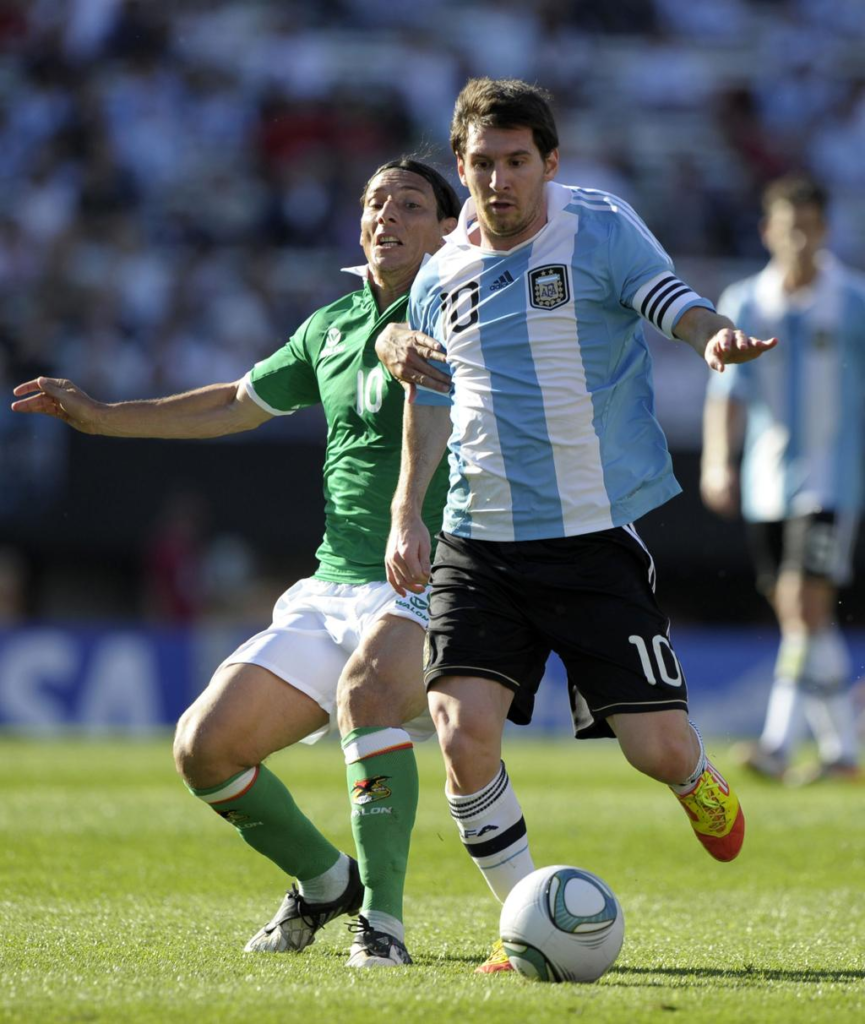
Når man ser Lionel Messi, Andrés Iniesta, Luka Modrić, Sergio Busquets eller Zinedine Zidane spille, virker det næsten, som om de spiller en anden kamp end alle andre. De bliver presset af flere modstandere, men finder alligevel den rigtige aflevering, vender væk fra presset eller dribler elegant fri.
Det skyldes ikke held.
Det skyldes heller ikke kun talent.
Det er resultatet af tusindvis af timers målrettet træning af teknik, spilforståelse, scanning, førsteberøring og evnen til at træffe hurtige beslutninger.
I denne guide lærer du, hvorfor de bedste spillere næsten aldrig går i panik, hvad forskningen siger om football IQ, og hvordan du selv kan udvikle de samme færdigheder.
🇬🇧 English
Why do Lionel Messi, Luka Modrić, Andrés Iniesta and other world-class footballers always seem to have more time on the ball?
This complete guide explains the science behind football composure, scanning, first touch, decision-making and game intelligence. Discover why elite players stay calm under pressure and learn practical training methods that can improve your own performance. Whether you’re a player, coach or football fan, this article reveals the hidden skills that separate good players from world-class footballers.
Why Composure Is One of Football’s Greatest Superpowers
Many people believe that speed, strength or dribbling make the biggest difference in football.
But ask almost any elite coach, and they will tell you something different.
The players who reach the highest level usually possess one quality that cannot easily be measured:
Composure.
Composure is the ability to stay calm, think clearly and execute the correct action even when the game is moving at incredible speed.
It allows players to:
- Keep possession under pressure.
- Make better decisions.
- Play forward instead of backwards.
- Avoid panic.
- Improve passing accuracy.
- Create scoring chances.
- Control the tempo of a match.
This is why football intelligence often beats raw athleticism.
The Biggest Myth in Football
Many young players think elite footballers have more time on the ball.
They don’t.
Professional football is actually faster than youth football.
Players close space quicker.
Defenders press harder.
Passing lanes disappear within seconds.
So why do elite players look relaxed?
Because they have already solved the problem before receiving the ball.
Their brain works several steps ahead.
Football Starts Before Your First Touch
One of the greatest differences between amateur and professional football is what happens before the ball arrives.
Elite players constantly gather information.
They look over both shoulders.
They scan the pitch.
They memorise teammate positions.
They analyse defender movements.
They identify space.
When the pass finally arrives, they already know exactly what they want to do.
Their first touch simply confirms the decision.
Scanning – The Hidden Skill That Changes Everything
Scanning is one of the least glamorous but most important skills in football.
It simply means checking your surroundings before receiving the ball.
Watch any top midfielder closely.
They rarely stare at the ball.
Instead, they constantly move their head to gather information.
This allows them to know:
- Where defenders are.
- Where teammates are moving.
- Which passing lanes are open.
- Which spaces will appear next.
- Whether they should turn, pass or dribble.
Research on elite football consistently shows that top players scan significantly more often than lower-level players, giving them a crucial advantage in decision-making.
The Brain Is Faster Than The Feet
People often say football is played with your feet.
In reality, football is played with your brain.
Every action begins with information.
Information becomes a decision.
The decision becomes movement.
Movement becomes execution.
Players who process information faster appear calmer because they rarely have to improvise.
Instead of reacting late, they anticipate what will happen next.
That is one of the greatest secrets behind football composure.
Why the First Touch Solves Most Problems
The world’s best first touch doesn’t just control the ball.
It changes the entire situation.
A great first touch can:
- Escape immediate pressure.
- Open a new passing lane.
- Create space to shoot.
- Eliminate one or two defenders instantly.
- Buy valuable extra time.
Many elite coaches believe that the first touch is actually the beginning of the next action—not the end of the previous one.
That mindset transforms the way football is played.
Calm Players Often Look Slow
One of football’s biggest paradoxes is that the calmest players often appear slower than everyone else.
Think about Messi, Iniesta or Busquets.
They rarely sprint unnecessarily.
Instead, they:
- Pause.
- Wait.
- Invite pressure.
- Use the defender’s movement against them.
- Accelerate only when it matters.
Because they choose the perfect moment, they often seem faster than naturally quicker players.
Timing beats rushing.
Football IQ Creates Time
Football IQ is not about tricks or fancy skills.
It is about solving problems before they happen.
Players with high football intelligence:
- Read the game earlier.
- Predict movements.
- Position themselves better.
- Choose simpler solutions.
- Waste fewer touches.
- Keep possession longer.
That is why they always seem to have more time than everyone else.
In reality, they simply use their brain more efficiently.
Lionel Messi – The Master of Calm Under Pressure
When football fans talk about composure, one player stands above almost everyone else:
Lionel Messi.
Messi rarely looks rushed.
He almost never appears stressed.
Even when surrounded by three or four defenders, he somehow finds space that nobody else can see.
Many people believe this comes from natural talent alone.
It doesn’t.
His composure is built on thousands of hours of developing scanning, balance, first touch, body positioning and decision-making.
Messi constantly gathers information before the ball arrives.
By the time he receives possession, his next move has often already been decided.
That is why he seems to play football in slow motion while everyone else is rushing.
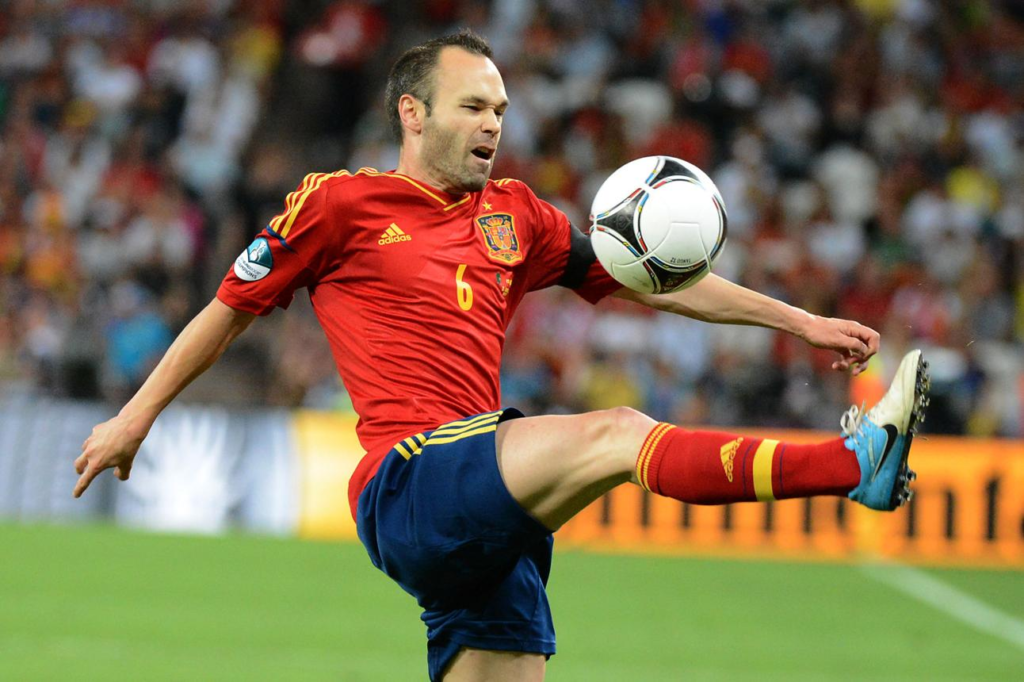
Andrés Iniesta – Simplicity Creates Brilliance
If football had a definition of elegance, Andrés Iniesta would be near the top.
He was never the fastest player.
He wasn’t the strongest.
Yet he consistently escaped pressure against the world’s best opponents.
His secret?
He almost never needed spectacular skills.
Instead, he mastered:
- Perfect body orientation.
- Outstanding first touch.
- Constant scanning.
- Short, intelligent movements.
- Calm decision-making.
Iniesta proved that football intelligence can outperform physical strength.
Sergio Busquets – The Genius Nobody Notices
Many young players overlook Sergio Busquets because he rarely performs flashy tricks.
Yet coaches around the world often describe him as one of football’s smartest players.
Why?
Because Busquets solves problems before they even appear.
He knows:
- Where pressure is coming from.
- Which passing lane will open.
- Which teammate needs support.
- When to play one touch.
- When to slow the game down.
His famous quote perfectly reflects elite football thinking:
“If you watch the game, you don’t see Busquets. If you watch Busquets, you see the whole game.”
That ability comes from awareness—not speed.
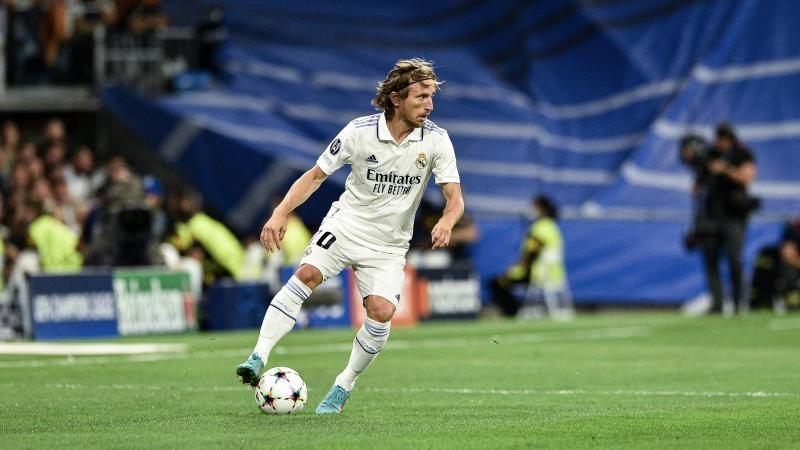
Luka Modrić – Playing One Step Ahead
Luka Modrić rarely loses the ball because he constantly prepares for the next situation.
Instead of reacting, he predicts.
Every movement has a purpose.
Every touch creates a better angle.
His game is built on:
- Continuous scanning.
- Excellent balance.
- Intelligent positioning.
- Perfect timing.
- Decision-making under pressure.
This allows him to dominate matches against younger and faster opponents.
Why Elite Players Scan So Often
Watch any Champions League midfielder closely.
Before receiving the ball, they constantly move their head.
This habit is called scanning.
Elite players scan because football changes every second.
A passing lane that exists now may disappear two seconds later.
By scanning continuously they always know:
- Where space is.
- Where defenders are moving.
- Which teammate is available.
- Whether they should turn.
- Whether they should protect the ball.
- Whether they should play one touch.
The more information the brain receives, the calmer the player becomes.
The Three-Step Decision Process
Every great footballer follows the same invisible process.
Step 1 – Observe
Scan the environment.
Collect information.
Step 2 – Decide
Choose the highest-quality option.
Step 3 – Execute
Perform the action with confidence.
Young players often skip the first step.
That is why they panic.
Why Panic Causes Mistakes
Panic changes both the body and the brain.
Players who panic often:
- Stop scanning.
- Rush their first touch.
- Force difficult passes.
- Look only at the ball.
- Ignore teammates.
- Lose technical quality.
Confidence disappears.
Decision-making slows.
Mistakes increase.
The world’s best players are not fearless.
They simply trust their preparation.
Your First Touch Should Have a Purpose
Many players think controlling the ball is enough.
Elite players think differently.
Every first touch should achieve something:
- Escape pressure.
- Face forward.
- Open a passing lane.
- Prepare a shot.
- Attack space.
The first touch is never random.
It is the beginning of the next action.
Simple Football Is Often Better Football
One of the biggest lessons from Messi, Iniesta, Xavi and Busquets is this:
Simple football wins.
Instead of difficult tricks every time, they choose:
- One-touch passing.
- Two-touch combinations.
- Quick support.
- Intelligent movement.
- Correct timing.
Football is not about making the hardest decision.
It is about making the smartest one.
The Science Behind Football Composure
Sports scientists have spent decades studying one fascinating question:
Why do elite footballers consistently make better decisions under pressure?
The answer lies inside the brain.
Professional players develop stronger connections between perception, memory, anticipation and movement.
Instead of reacting to situations, they predict them.
This ability allows elite footballers to appear calm even during the fastest moments of a match.
Football is often called “physical chess played at sprint speed.”
Your Eyes Control Your Game
Many people think football begins with the feet.
Elite coaches disagree.
Football begins with your eyes.
Every glance around the pitch provides your brain with new information.
The more information you collect, the better your decisions become.
Players who keep looking only at the ball often lose possession because they receive information too late.
That is why almost every professional academy trains visual awareness every single week.
Awareness Is a Trainable Skill
One of football’s greatest myths is that awareness is something players are born with.
Research and elite coaching show otherwise.
Awareness improves through deliberate practice.
Examples include:
- Scanning before every pass.
- Playing in tight spaces.
- Small-sided games.
- One-touch exercises.
- Decision-making games.
- Position-specific training.
Like dribbling or passing, awareness becomes better the more you train it.
Why Small-Sided Games Create Smarter Players
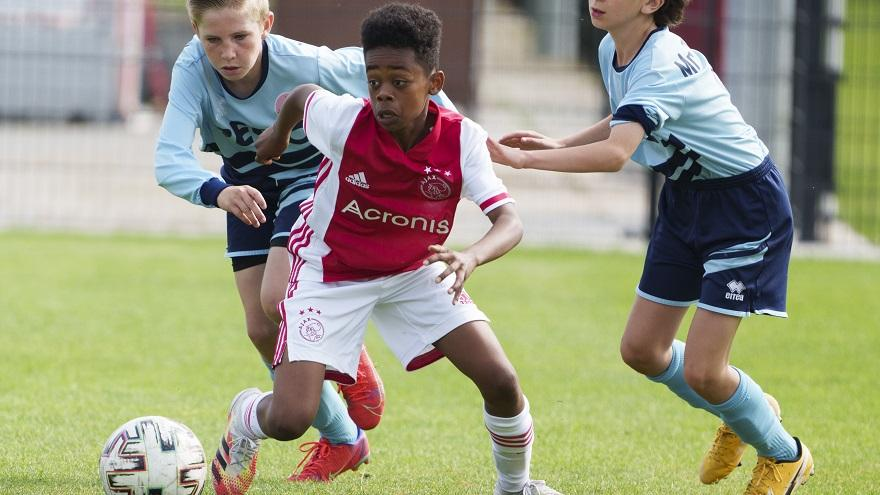
One reason many elite academies love 3v3, 4v4 and 5v5 is simple:
Players receive far more football situations every minute.
Compared with an 11v11 match, players experience:
- More touches.
- More passes.
- More decisions.
- More defensive actions.
- More attacking opportunities.
- More scanning moments.
Every additional action becomes another learning opportunity for the brain.
This is why many youth coaches believe that intelligence develops faster in smaller formats.
Pressure Is the Best Teacher
Many coaches try to remove pressure during training.
Elite academies often do the opposite.
They deliberately create difficult environments.
Examples include:
- Limited touches.
- Smaller playing areas.
- Numerical disadvantages.
- Faster transitions.
- Time restrictions.
- Directional games.
Why?
Because players only learn composure by repeatedly experiencing pressure.
Comfort rarely creates improvement.
Why Confidence Creates Better Decisions
Confidence does not simply improve motivation.
It changes behaviour.
Confident players:
- Scan more often.
- Demand the ball.
- Turn under pressure.
- Attempt forward passes.
- Stay relaxed.
Fearful players usually:
- Hide behind opponents.
- Play backwards.
- Rush decisions.
- Avoid responsibility.
Building confidence therefore improves technical performance as well as psychology.
The Importance of Playing With Both Feet
One overlooked reason elite players stay calm is their ability to use either foot.
If you only trust one foot, your options become limited.
Defenders quickly recognise this.
Players comfortable with both feet can:
- Turn both directions.
- Escape pressure more easily.
- Pass at better angles.
- Finish from more positions.
- Keep possession longer.
Every additional option reduces panic.
Body Position Solves Problems Before They Exist
Watch elite midfielders closely.
Notice how they receive the ball.
Their hips are usually half-open.
Their shoulders already point toward the next action.
Their first touch moves away from danger.
This body orientation creates more passing angles immediately.
Many professional coaches believe body shape is one of football’s most underrated technical skills.
Why Simplicity Wins Matches
Young players often believe complicated skills impress coaches.
Most elite coaches actually value something else.
Consistency.
The world’s best players usually make the simplest effective decision.
Simple football includes:
- Playing the free teammate.
- Keeping possession.
- Moving after passing.
- Creating triangles.
- Supporting teammates.
Simple decisions repeated consistently often outperform spectacular moments.
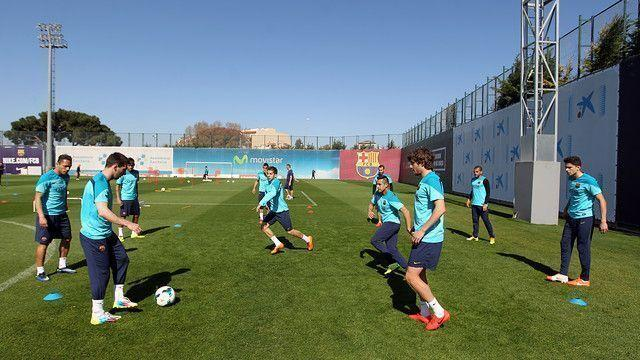
Training Exercise 1 – Scan Before Every Pass
Players: 4–12
Age: U8–Senior
Set up a rondo or possession game.
Before every pass, players must quickly look over both shoulders.
Coaches should encourage scanning rather than shouting instructions.
Goal:
Create automatic scanning habits before receiving possession.
Training Exercise 2 – Colour Call
Players dribble inside a square.
The coach holds up coloured cones behind them.
Before changing direction, players must quickly scan behind them and shout the colour.
This develops:
- Awareness.
- Peripheral vision.
- Head movement.
- Concentration.
- Decision-making speed.
Many professional academies use similar visual-reaction exercises.
Training Exercise 3 – Two-Touch Escape
Create a 4v2 possession game.
Players only have two touches.
First touch:
Escape pressure.
Second touch:
Find the correct pass.
This teaches players that the first touch should always improve the next action.
How to Train Football Composure at Every Age
One of the biggest mistakes in youth football is assuming composure develops naturally.
It doesn’t.
Like passing, dribbling or shooting, composure must be trained consistently from an early age.
The methods simply change as players get older.
U6–U8: Learn to Love the Ball
At this age, results don’t matter.
Confidence does.
Young players should receive thousands of touches every training session.
Focus on:
- Ball mastery.
- Fun dribbling games.
- 1v1 situations.
- Small-sided games.
- No fear of mistakes.
- Using both feet.
The goal is simple:
Create players who enjoy having the ball.
Confident children become calmer teenagers.
U9–U10: Introduce Scanning
Players now begin understanding space.
Training should encourage:
- Looking over both shoulders.
- Receiving on the back foot.
- Turning away from pressure.
- Playing forward whenever possible.
Coaches should praise good decisions—not only successful passes.
Decision-making is becoming more important than technique alone.
U11–U12: Increase Decision Speed
The game becomes faster.
Training should include:
- Limited-touch possession.
- Rondos.
- Positional games.
- Quick transitions.
- Numerical overloads.
Players now learn that football is about recognising situations before they happen.
U13–U15: Train Like Elite Academies
This is where football intelligence often accelerates.
Sessions should include:
- High-pressure rondos.
- Directional possession games.
- Third-man combinations.
- Scanning challenges.
- First-touch under pressure.
- Small-sided transition games.
Mistakes should be viewed as learning opportunities.
Players who never lose the ball in training are usually not challenging themselves enough.
U16–Senior Football
At higher levels every action happens faster.
Training should focus on:
- Match realism.
- Decision-making under fatigue.
- Tactical awareness.
- Playing with fewer touches.
- Video analysis.
- Position-specific scenarios.
The best players make the correct decision instinctively because they have experienced similar situations thousands of times.
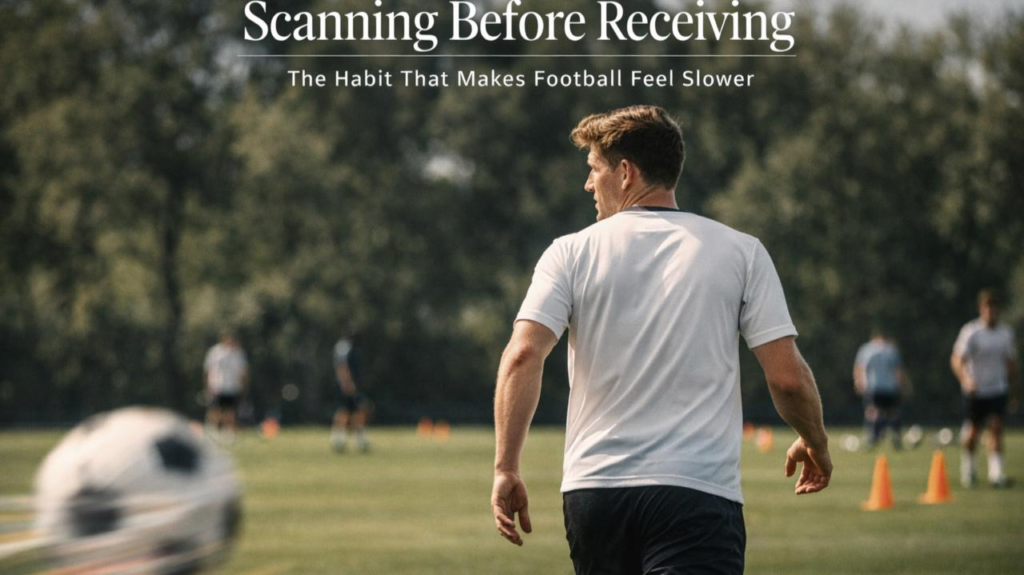
The Biggest Coaching Mistake
Many coaches stop play every few seconds.
Although well intentioned, this often reduces learning.
Elite coaches frequently allow players to solve problems themselves.
Instead of giving answers, they ask questions:
- What did you see?
- Why did you choose that pass?
- What other options were available?
This develops independent thinkers rather than players waiting for instructions.
Why Street Football Created So Many Legends
Many football legends grew up playing informal football for hours every day.
Street football naturally teaches:
- Creativity.
- Awareness.
- Improvisation.
- Tight-space control.
- Quick reactions.
- Confidence under pressure.
There are no coaches shouting instructions.
Players solve problems themselves.
Many of the world’s greatest technicians developed these qualities long before joining professional academies.
Why Mistakes Are Essential
Fear of mistakes destroys composure.
The world’s best players lose possession too.
The difference is what happens next.
Elite players:
- Recover quickly.
- Continue demanding the ball.
- Learn from errors.
- Stay confident.
Young players who become afraid of mistakes often stop developing.
Mistakes are information.
Nothing more.
Weekly Composure Training Plan
Monday
Ball mastery and first touch.
Tuesday
Scanning exercises and rondos.
Wednesday
Recovery and video analysis.
Thursday
Small-sided games with limited touches.
Friday
Position-specific decision-making drills.
Saturday
Match day.
Sunday
Review the game and identify three good decisions and three situations to improve.
This simple structure develops both technical ability and football intelligence over time.
Habits of Every Calm Footballer
Elite players usually share the same habits:
- They scan before receiving.
- They communicate constantly.
- They trust both feet.
- They stay on their toes.
- They receive side-on.
- They protect the ball with their body.
- They think one action ahead.
- They keep demanding possession.
- They remain emotionally controlled.
- They simplify the game.
These habits separate composed players from panicked players.
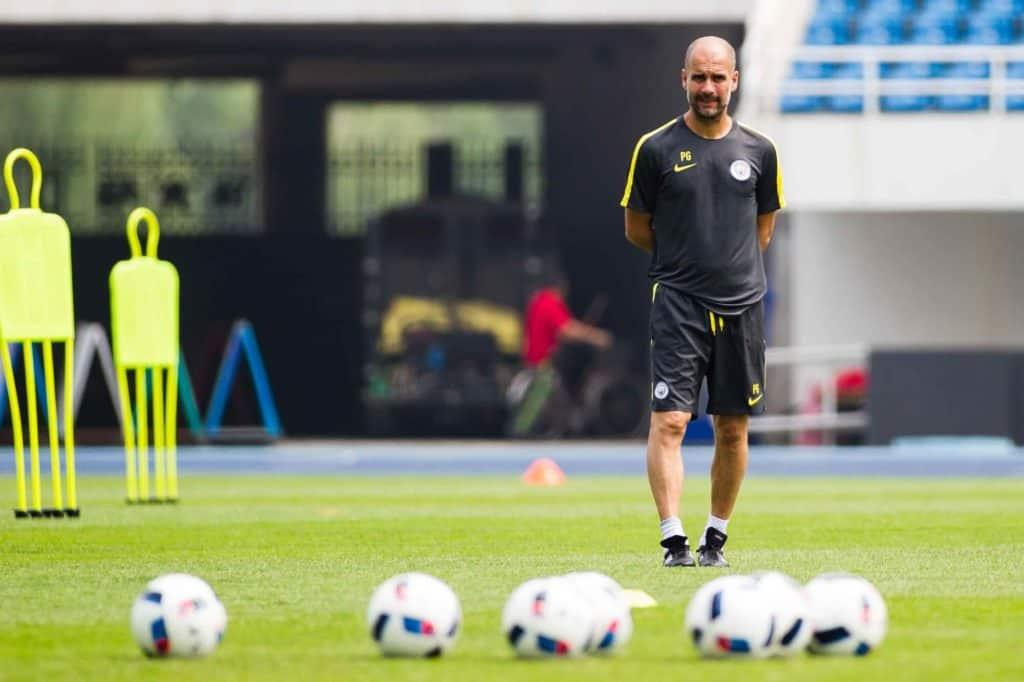
Elite Training Drills Used Around the World
Many of the world’s leading football academies—including those inspired by Barcelona, Ajax, Sporting CP, Benfica and Manchester City—share several common principles when developing composed footballers.
Instead of focusing only on technical ability, they train players to think faster.
Typical training methods include:
- High-speed rondos.
- Position games with overloads.
- Directional possession.
- Transition games.
- Tight-space football.
- Constant scanning exercises.
- Receiving under pressure.
- Decision-making challenges.
The objective is always the same:
Make better decisions, faster.
How Parents Can Help Young Players
Parents have a huge influence on confidence.
Instead of asking:
“Did you win?”
Try asking:
- What did you learn today?
- What was your best decision?
- When did you stay calm under pressure?
- What would you do differently next time?
This creates players who enjoy learning rather than fearing mistakes.
Confidence grows much faster in a positive environment.
Mental Habits of Elite Footballers
The calmest players in football often share similar mental routines before every match.
Many of them:
- Visualise successful actions.
- Stay focused on the next situation.
- Ignore previous mistakes.
- Control their breathing.
- Communicate positively.
- Stay emotionally balanced.
Their greatest strength is not avoiding mistakes.
It is recovering immediately after making one.
Quotes From Football Legends
Johan Cruyff
“Before I make a mistake, I don’t make that mistake.”
One of football’s greatest quotes about anticipation and decision-making.
Xavi Hernández
“Football is played with your head. Your feet are only the tools.”
A perfect summary of football intelligence.
Arsène Wenger
“The speed of thought is the most important speed in football.”
Modern football rewards players who think quickly.
Pep Guardiola
“The best decision is often the simplest one.”
Elite football is rarely complicated.
Simple football performed consistently wins matches.
Frequently Asked Questions
Can composure be trained?
Absolutely.
Like passing or dribbling, composure improves through repeated practice under realistic pressure.
At what age should scanning be introduced?
Children naturally begin developing awareness from around U8, but simple head-checking habits can already be encouraged in younger age groups through fun games.
Is composure more important than speed?
At elite level both matter.
However, many outstanding players have reached the highest level primarily because of superior decision-making rather than exceptional sprint speed.
Does playing small-sided games improve football IQ?
Yes.
More touches and more decisions generally accelerate learning.
That is one reason why elite academies use so many possession games and small-sided formats.
Can adults improve football intelligence?
Definitely.
Players of all ages continue improving through:
- Video analysis.
- Scanning habits.
- Better positioning.
- Faster decision-making.
- Match experience.
- Purposeful training.
Football intelligence never stops developing.
Final Thoughts
The greatest footballers in history are not simply gifted technicians.
They are exceptional thinkers.
Every scan.
Every first touch.
Every body position.
Every movement.
Every pass.
Every decision.
All of these moments combine to create the illusion that elite players have more time than everyone else.
In reality, they have trained themselves to process information faster than their opponents.
That is the true secret behind football composure.
Whether you are six years old or playing senior football, these habits can be learned.
Train your brain as often as you train your feet.
The results will surprise you.
football vision
ball control
receiving under pressure
football mindset
elite football training
football coaching
youth football development
football first touch drills
football scanning drills
how Messi stays calm
Iniesta football intelligence
Busquets awareness
Modrić vision
Xavi decision making
improve football IQ
improve first touch
how to play under pressure
best football habits
ball retention
possession football
football training exercises
Read More at Finter.dk
Want to improve every aspect of your game?
Visit Finter.dk for hundreds of free football articles covering:
- Dribbling
- Ball mastery
- First touch
- Passing
- Finishing
- Football IQ
- Small-sided games
- 1v1 skills
- Training exercises
- Coaching ideas
- Self-training
- Professional player guides
Whether you’re a player, coach or parent, you’ll find practical advice to become a smarter footballer every day.
Recommended YouTube Videos
🎥 Why Messi Always Looks Like He Has More Time
https://www.youtube.com/results?search_query=Lionel+Messi+vision+scanning+analysis
🎥 The Science Behind Football Scanning
https://www.youtube.com/results?search_query=football+scanning+analysis
🎥 Xavi – Football IQ Explained
https://www.youtube.com/results?search_query=Xavi+football+IQ
🎥 Andrés Iniesta Vision & First Touch
https://www.youtube.com/results?search_query=Iniesta+vision+first+touch
🎥 Luka Modrić Masterclass
https://www.youtube.com/results?search_query=Luka+Modric+vision+passing
🎥 Sergio Busquets Intelligence
https://www.youtube.com/results?search_query=Sergio+Busquets+football+intelligence
🎥 Best First Touch Compilation
https://www.youtube.com/results?search_query=best+first+touch+football
🎥 Improve Your First Touch
https://www.youtube.com/results?search_query=first+touch+training+football
🎥 Improve Scanning
https://www.youtube.com/results?search_query=scan+before+receiving+football
🎥 Decision Making Training
https://www.youtube.com/results?search_query=football+decision+making+training
🎥 Awareness Training
https://www.youtube.com/results?search_query=football+awareness+training
🎥 Ball Mastery Training
https://www.youtube.com/results?search_query=ball+mastery+training
🎥 Rondo Training
https://www.youtube.com/results?search_query=football+rondo+training
🎥 Barcelona Rondo Exercises
https://www.youtube.com/results?search_query=Barcelona+rondo+training
🎥 Elite Midfielders Under Pressure
https://www.youtube.com/results?search_query=best+midfielders+under+pressure
🎥 Playing Out of Pressure
https://www.youtube.com/results?search_query=playing+out+of+pressure+football
🎥 Stay Calm on the Ball
https://www.youtube.com/results?search_query=stay+calm+on+the+ball+football
🎥 How Professionals Scan Every Few Seconds
https://www.youtube.com/results?search_query=football+head+checks+scanning
🎥 Vision Training for Footballers
https://www.youtube.com/results?search_query=vision+training+football
🎥 Improve Football IQ
https://www.youtube.com/results?search_query=football+IQ+training